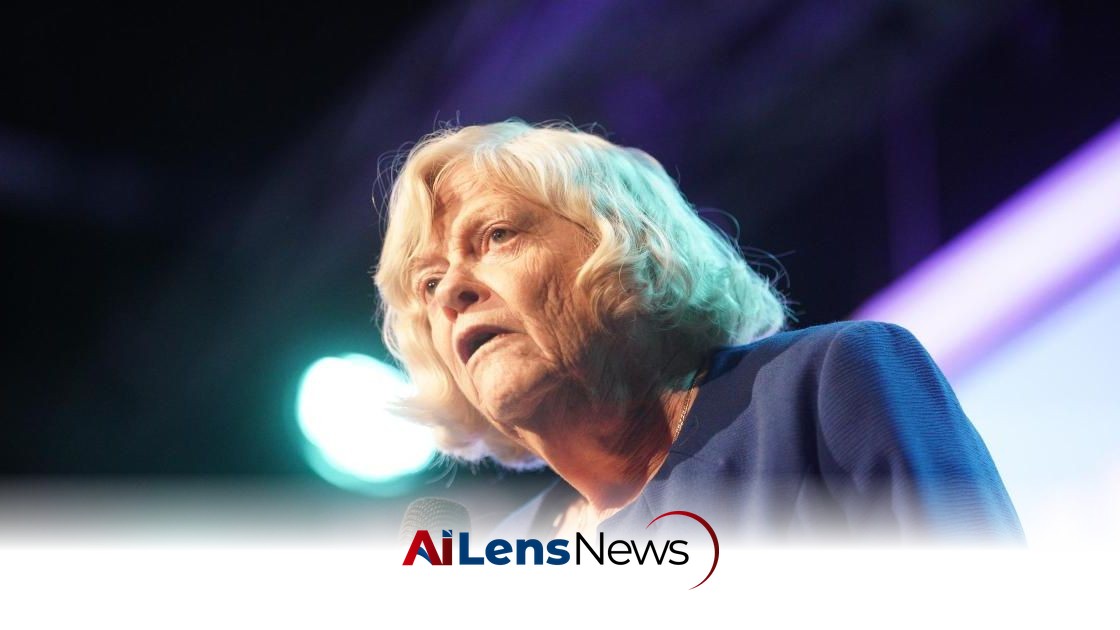


An Aberdeen University employee faces scrutiny after wishing Ann Widdecombe an 'extremely painful death' following her tragic passing, prompting a police investigation.
London, United Kingdom Jul 12, 2026 ALN: The recent death of former MP Ann Widdecombe has sparked a significant controversy involving an employee of Aberdeen University. This incident highlights the complexities surrounding public discourse, especially in the context of political figures and the emotional responses they can evoke.
Ann Widdecombe, a prominent figure in British politics, served as a Member of Parliament for the Conservative Party from 1987 to 2010 and later as a Member of the European Parliament. Known for her outspoken views, particularly on social issues, Widdecombe was often a polarizing figure. Her conservative stances on matters such as same-sex marriage and abortion garnered both support and opposition throughout her political career. She was a vocal advocate for traditional values, which resonated with a significant segment of the British population, while simultaneously drawing criticism from progressive and liberal factions.
Following her death, which was discovered at her home in Dartmoor, the circumstances surrounding her passing led to a police investigation, including the arrest of a 28-year-old man. This development has raised questions regarding the nature of her death, with authorities treating it as a potential homicide. The investigation is ongoing, and police have requested the public's assistance in gathering evidence, particularly from any surveillance footage that may have captured relevant activity around the time of her death.
In the wake of Widdecombe's passing, a significant outpouring of tributes was observed, reflecting her impact on British politics. Political leaders and constituents alike acknowledged her contributions and the legacy she left behind. However, the reaction from Heather Herbert, an employee at Aberdeen University, starkly contrasted the general sentiment. Herbert's comments on social media, where she expressed a desire for Widdecombe to suffer an "extremely painful death," sparked outrage and led to an internal investigation by the university.
Herbert, who identifies as a transgender activist, articulated her views in a manner that many have deemed inflammatory. Her remarks, which included graphic descriptions of suffering, have been condemned by university officials and the broader community. Iona Fyfe, the rector of Aberdeen University, publicly denounced Herbert's comments, reinforcing the institution's commitment to a culture of respect and non-violence. Fyfe's statement underscored the importance of maintaining a safe and supportive environment for all individuals, regardless of their political beliefs.
In response to the situation, the university has initiated a review process to address the comments made by Herbert. They have made it clear that her views do not represent the institution's values. This incident raises critical questions about the boundaries of free speech, particularly in academic settings where diverse opinions are often expressed. The university's stance reflects a broader societal concern regarding hate speech and the responsibilities that come with public expression.
Herbert's comments were particularly provocative given the context of the ongoing murder investigation. While she later clarified that she does not advocate for violence, her statements reveal a deep-seated animosity towards Widdecombe's political views. This animosity is not uncommon in politically charged environments, where individuals may feel compelled to express their frustrations in extreme ways. Herbert's assertion that Widdecombe's policies contributed to the suffering of ordinary people highlights the emotional weight that political discourse can carry.
The implications of this situation extend beyond the university and into the realm of public discourse. As society grapples with issues of free speech and the potential for incitement, this incident serves as a case study in the complexities of expressing dissenting opinions. The balance between advocating for one's beliefs and promoting violence or hatred is a delicate one, and many are calling for a reevaluation of how such expressions are handled in both academic and public spheres.
Moreover, the response from political figures, including tributes from leaders across the spectrum, underscores the need for unity in the face of tragedy. Nigel Farage, leader of Reform UK, described Widdecombe as a "remarkable individual" and a staunch defender of free speech. His comments reflect a recognition of the importance of respectful dialogue, even amidst political disagreements. The heightened security measures for high-profile politicians, as mentioned in light of the investigation, also indicate a growing concern about the safety of public figures in an increasingly polarized political climate.
As the investigation into Ann Widdecombe's death continues, the ramifications of this incident will likely resonate throughout the political landscape. The university's commitment to addressing the situation and promoting a culture of non-violence is crucial in navigating the challenges posed by extreme political rhetoric. This case serves as a reminder of the impact that words can have and the responsibility that comes with freedom of expression.
In summary, the investigation into the circumstances surrounding Ann Widdecombe's death and the subsequent comments made by an Aberdeen University employee have ignited a broader conversation about the nature of political discourse, the responsibilities of public figures and institutions, and the delicate balance between free speech and the promotion of violence. As the situation develops, it will be essential for all parties involved to engage in constructive dialogue and to seek resolutions that uphold the values of respect and understanding within society.
To understand the broader implications of this incident, it is essential to consider the current state of political discourse in the UK and beyond. In recent years, political polarization has intensified, with individuals increasingly expressing extreme views on social media platforms. This trend has raised concerns about the potential for incitement and the normalization of hostility towards opposing viewpoints. The case of Heather Herbert illustrates how personal animosity towards a political figure can manifest in public statements that may cross the line into hate speech.
The role of universities in fostering a climate of open dialogue while also ensuring a safe environment for all students and staff is increasingly under scrutiny. Academic institutions are often seen as bastions of free thought, where diverse opinions should be encouraged. However, this freedom comes with the responsibility to engage in discourse that does not promote violence or hatred. The challenge for universities is to navigate these complexities while upholding their core values of respect and inclusion.
Furthermore, the incident raises questions about the accountability of individuals in positions of influence, particularly in academia. As public figures, university employees are often held to higher standards of conduct, and their statements can have far-reaching consequences. The university's response to Herbert's comments may set a precedent for how similar situations are handled in the future, potentially influencing the behavior of other employees and students when expressing their views.
As the investigation into the circumstances of Ann Widdecombe's death unfolds, it remains to be seen how the findings will impact public perception of her legacy and the political landscape as a whole. Widdecombe's career was marked by her unwavering commitment to her beliefs, which resonated with many but also alienated others. The reactions to her death, both positive and negative, reflect the deep divisions within society regarding key social issues.
Ultimately, the ongoing dialogue surrounding this incident serves as a critical reminder of the power of words and the importance of fostering a culture of respectful engagement. As individuals navigate their political beliefs and express their opinions, it is vital to consider the impact of their words on others and the broader societal implications. In an era where political discourse is increasingly fraught with tension, finding common ground and promoting understanding will be essential for bridging divides and fostering a more inclusive society.
To learn more about the latest developments in Crime & Law, stay updated with our exclusive reports and analyses on AiLensNews.

