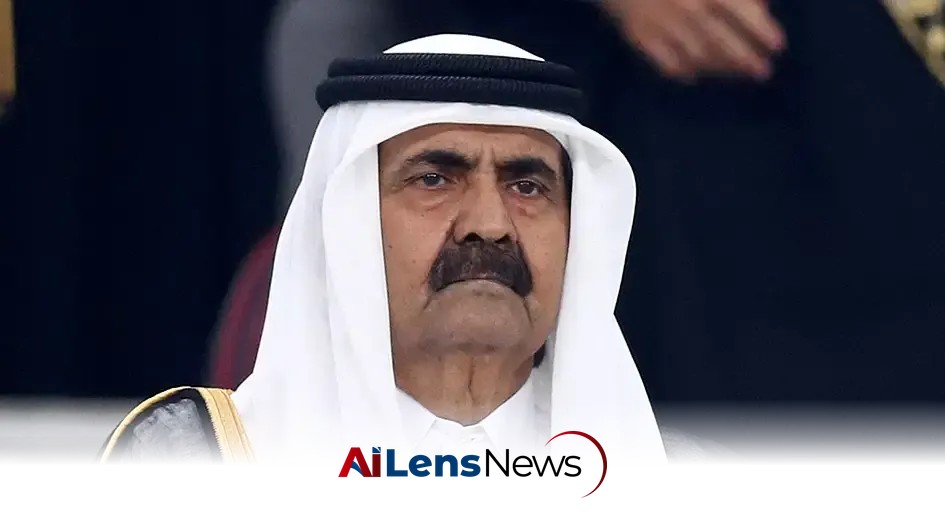


Sheikh Hamad bin Khalifa Al Thani, who ruled Qatar from 1995 until his abdication in 2013, has died at the age of 74, leaving behind a significant legacy.
Abu Dhabi, United Arab Emirates Jul 12, 2026 ALN: Sheikh Hamad bin Khalifa Al Thani, the former Emir of Qatar, has passed away at the age of 74. His leadership spanned nearly two decades, during which he transformed Qatar into a prominent player on the global stage. Sheikh Hamad's tenure was characterized by a remarkable transformation of the country, both economically and socially, which has left a lasting impact on the nation and the region.
Sheikh Hamad ascended to the throne in 1995 following a bloodless coup against his father, Sheikh Khalifa bin Hamad Al Thani. This transition of power was not just significant in terms of familial succession; it marked the beginning of a new era for Qatar. Under Sheikh Hamad's leadership, Qatar underwent significant economic growth and modernization efforts that diversified the country’s economy beyond its traditional reliance on oil and gas. This diversification was crucial in positioning Qatar as a robust economy capable of weathering fluctuations in global energy markets.
Under Sheikh Hamad's rule, Qatar experienced rapid development, including the establishment of world-class infrastructure and educational institutions. The ambitious infrastructure projects included the construction of modern highways, transportation systems, and various public facilities that enhanced the quality of life for Qatari citizens. In addition, Sheikh Hamad was instrumental in launching the Qatar National Vision 2030, a strategic framework aimed at sustainable development that sought to reduce the country's dependence on hydrocarbons and promote economic, social, and environmental sustainability.
One of the most notable achievements of Sheikh Hamad's reign was the establishment of Al Jazeera, the influential news network that has changed the landscape of media in the Arab world. Launched in 1996, Al Jazeera provided a platform for diverse voices and perspectives, fostering a more vibrant media environment in the region. The network's impact extended beyond Qatar, influencing public discourse and political developments across the Middle East and North Africa.
Sheikh Hamad also played a vital role in enhancing Qatar's international relations, positioning the country as a mediator in regional conflicts and a host for international events. His diplomatic approach allowed Qatar to engage with various global powers and regional actors, establishing the country as a key player in international diplomacy. This was particularly evident during events such as the Arab Spring, where Qatar actively supported various movements and sought to mediate conflicts in the region.
In a historic move, Sheikh Hamad abdicated the throne in 2013, passing leadership to his fourth son, Sheikh Tamim bin Hamad Al Thani. This transition was seen as a significant moment in Qatari history, marking the first time a sitting Emir voluntarily relinquished power. Sheikh Hamad's decision to step down was perceived as a forward-thinking move, aimed at ensuring a smooth and stable transition of power that would enable the younger generation to lead the country into the future.
Since taking over, Sheikh Tamim has continued his father’s legacy, focusing on furthering Qatar’s development and maintaining its role in international diplomacy. Under Sheikh Tamim's leadership, Qatar has continued to invest heavily in infrastructure, education, and health care, while also enhancing its global standing through hosting major international events, including the FIFA World Cup 2022. This event marked a significant milestone for the country, showcasing its capabilities on the world stage and highlighting the progress made under the leadership of both Sheikh Hamad and Sheikh Tamim.
The news of Sheikh Hamad's passing has prompted an outpouring of condolences from leaders around the world. Many have praised his contributions to Qatar and the broader Middle East, recognizing his efforts in fostering peace and stability in the region. His leadership style, characterized by a blend of traditional values and modern governance, has garnered respect and admiration both domestically and internationally.
As Qatar mourns the loss of a pivotal figure in its history, Sheikh Hamad's legacy will undoubtedly continue to influence the nation for years to come. His contributions to the country and the region will be remembered as a significant chapter in Qatar's journey towards modernization and global engagement. The impact of his policies and initiatives will be felt for generations, as Qatar continues to navigate the complexities of a rapidly changing global landscape.
In conclusion, Sheikh Hamad bin Khalifa Al Thani's passing marks the end of an era for Qatar. His vision and leadership have set the foundation for a prosperous and dynamic nation, and as the country reflects on his achievements, it is poised to carry forward his legacy of progress and development. The future of Qatar, shaped by the principles he instilled, will continue to evolve, driven by the aspirations of its people and the strategic direction laid out during his reign.
Sheikh Hamad's influence extended beyond domestic affairs; his international relations strategy not only solidified Qatar's position but also facilitated dialogue on pressing global issues. His administration was marked by a commitment to diplomacy and mediation, often acting as a neutral ground for discussions among conflicting parties. This approach not only enhanced Qatar's reputation but also fostered a sense of stability in a region often characterized by turmoil.
Furthermore, Sheikh Hamad's emphasis on education reform cannot be overlooked. His government invested heavily in educational institutions, leading to the establishment of several universities and research centers in Qatar. This focus on education aimed to cultivate a knowledge-based economy and empower the younger generation to take on leadership roles within the country and beyond. The establishment of institutions such as Education City, which hosts branch campuses of several prestigious international universities, exemplifies this commitment.
As Qatar continues to adapt to the changing dynamics of the global economy and political landscape, Sheikh Hamad's legacy will remain a guiding force. His vision for a diversified economy, robust educational system, and active international engagement laid the groundwork for Qatar to emerge as a significant player on the world stage. The nation’s ability to leverage its natural resources while investing in human capital and infrastructure development reflects the forward-thinking policies initiated during his reign.
In the aftermath of Sheikh Hamad's passing, discussions surrounding his legacy are likely to intensify. Scholars, political analysts, and citizens alike will engage in a dialogue about the future direction of Qatar. With a new generation of leaders now at the helm, the challenge will be to honor Sheikh Hamad's vision while navigating the complexities of modern governance and international relations.
In summary, Sheikh Hamad bin Khalifa Al Thani's life and leadership have left an indelible mark on Qatar and the region. As the nation reflects on his contributions, it is essential to recognize the multifaceted aspects of his legacy, from economic diversification to media innovation and diplomatic engagement. The future of Qatar, shaped by his principles and policies, will continue to unfold as the country strives to maintain its position as a leader in the Gulf and beyond.
To learn more about the latest developments in World News & International Affairs, stay updated with our exclusive reports and analyses on AiLensNews.

