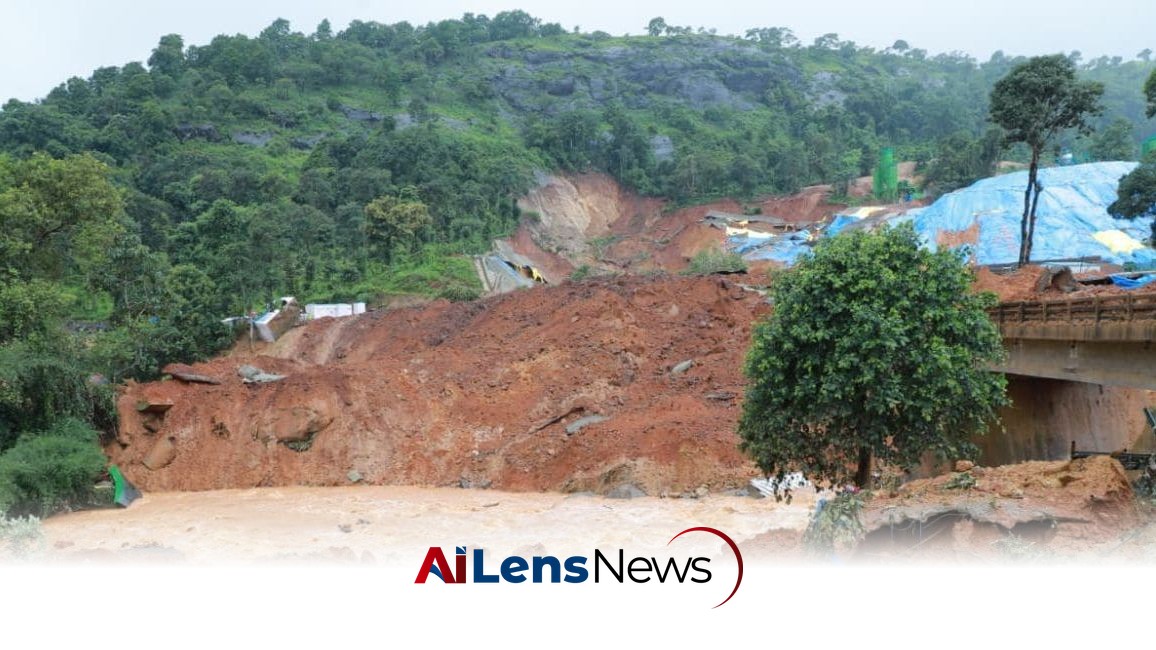


The Konkan Railway Corporation attributes a deadly landslide in Wayanad to heavy rainfall, despite a favorable forecast from the Geological Survey of India.
Doha, Qatar Jul 12, 2026 ALN: The recent tragic incident in Wayanad, which resulted in the loss of seven lives, has raised significant concerns about the accuracy of weather forecasts and the safety protocols in place for construction projects in vulnerable geographical areas. The Konkan Railway Corporation Limited (KRCL), which is responsible for the construction of the Wayanad twin tunnel, has attributed the fatal accident at Kalladi to a landslide triggered by heavy rainfall. However, this assertion has come under scrutiny as it contradicts the landslide forecast provided by the Geological Survey of India (GSI) for the same day, July 7, which had indicated a low risk of landslides in the region.
According to GSI sources, there was no forecast of a landslide in Wayanad on that fateful day. The GSI had issued a green forecast, suggesting that the risk of landslides was minimal. In the aftermath of the incident, a field-level inspection suggested that the slope failure was indeed a result of heavy rainfall; however, the KRCL described the incident as an unusual occurrence, indicating that such a landslide was not anticipated given the forecasts. They reported that 240 mm of rainfall was recorded within a 24-hour period leading up to the incident, with the landslide occurring just 240 meters from the excavated area of the tunnel project.
The discrepancies between the KRCL's claims and the GSI's forecasts have raised eyebrows among experts and officials involved in disaster management. While KRCL cited substantial rainfall as a contributing factor to the landslide, officials from weather forecasting and disaster management agencies noted that despite the rainfall recorded in Wayanad, there were no reports of erosion or landslides in surrounding areas. For instance, in 2024, when significant landslides occurred in the nearby Chooralmala and Mundakkai regions, a staggering 572 mm of rainfall was recorded over a 48-hour period, highlighting that the rainfall on July 7 was not unprecedented in terms of landslide risk.
On July 7, approximately 30 mm of rainfall was recorded per hour, which officials deemed insufficient to trigger a landslide in the Kalladi area. This raises questions about the thresholds established for landslide risks and whether the rainfall amounts recorded should have warranted a more cautious approach to construction activities in the region.
Compounding the situation is the fact that the KRCL has not disclosed the rainfall data recorded by the weather station operated by the contractor, Dilip Buildcon Limited, on the day of the accident. This lack of transparency raises concerns about the adequacy of environmental monitoring protocols in place for the project. Two critical conditions for granting Environmental Clearance for the Wayanad twin tunnel project included the necessity for micro-scale mapping of landslide-vulnerable zones and the installation of automated weather stations to provide early warning signals regarding extreme rainfall events.
The absence of such data during a critical incident like this further complicates the investigation into the causes of the landslide and highlights the importance of maintaining rigorous environmental and safety standards in construction projects, especially in areas prone to natural disasters.
In the report submitted by the state government to the High Court, it was indicated that the 24-hour rainfall measured until 11:30 am on July 7 was 226 mm at the weather station located at the site of the debris collapse. The slope failure at Kalladi occurred around 11 am, and officials stated that there was no prior indication of a landslide in the region. They attributed the incident to saturated soil failure, which can occur when the soil becomes too wet to support the weight above it, leading to a collapse.
Minutes from a meeting held shortly after a site visit by senior Public Works Department (PWD) officials on June 25 highlighted concerns regarding accumulated soil at the project site. Officials noted the necessity of removing excess soil to mitigate erosion risks. One official commented on the situation, stating, "The soil had begun to sag due to saturation from heavy rainfall. It wasn't adequately packed. This type of slope failure is expected during such constructions, raising questions about why personnel were present when work was halted." This statement underscores the need for stringent safety measures and adherence to protocols that prioritize worker safety, especially during adverse weather conditions.
The KRCL reported that technical staff were present in the morning to monitor any slope movements in the muck disposal area. High-level meeting minutes indicate that there were clear instructions to halt all work when rainfall exceeds 250 mm. However, the effectiveness of these safety protocols is now under scrutiny, particularly in light of the tragic consequences of the landslide.
As investigations into the incident continue, it is imperative to assess the adequacy of the monitoring systems in place and whether they were effectively implemented. The focus must remain on ensuring that safety protocols are not only established but also rigorously followed to prevent future tragedies.
The tragic incident in Wayanad raises critical questions regarding the accuracy of weather forecasts, disaster management protocols, and the safety measures in place for construction projects in vulnerable areas. The conflicting reports from the KRCL and GSI highlight the need for a thorough investigation into the circumstances surrounding the landslide. As the community mourns the loss of lives, the focus remains on ensuring the safety of workers and the local community in future projects. This incident serves as a stark reminder of the inherent risks associated with construction in geologically unstable areas and the importance of proactive measures to mitigate such risks.
To learn more about the latest developments in Science & Environment, stay updated with our exclusive reports and analyses on AiLensNews.

