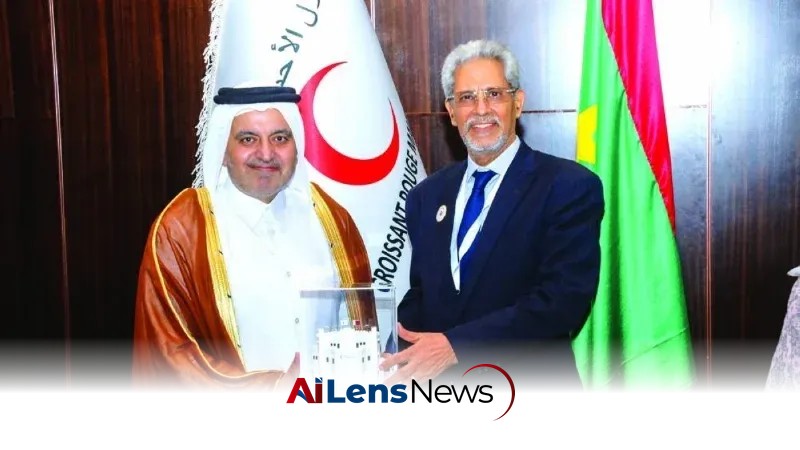


The Qatar Red Crescent Society attended the 50th General Assembly in Mauritania, focusing on regional humanitarian priorities and coordination.
Doha, Qatar Jul 12, 2026 ALN: The Qatar Red Crescent Society (QRCS) recently participated in the 50th General Assembly of the Arab Red Crescent and Red Cross Organisation (ARCO), which took place over three days in Nouakchott, Mauritania. This assembly is a significant event in the humanitarian calendar, bringing together various stakeholders from the Arab world to discuss pressing humanitarian issues and coordinate efforts across the region.
The assembly was attended by senior representatives from the Mauritanian government, including officials from the ministries of Social Affairs and Health, as well as leaders from Arab National Societies and representatives from the International Red Cross and Red Crescent Movement. The presence of such a diverse group underscores the importance of collaboration in addressing humanitarian challenges that affect millions of people across the Arab region.
The discussions during the assembly were centered on several key themes, including regional humanitarian priorities, organizational governance, and strategies to enhance humanitarian coordination among member countries. As the humanitarian landscape continues to evolve, it becomes increasingly critical for organizations like QRCS and its counterparts to align their efforts and resources to maximize their impact.
QRCS was represented by Mohamed Ahmed Al-Beshri, who serves as the Assistant Secretary-General for Communication and Resource Development, and Dr. Aiham Ismail Al-Sukhni, the Head of International Relations. Their participation highlights QRCS's commitment to engaging with regional partners to tackle humanitarian issues effectively.
During their visit, the QRCS delegation met with Shaheen bin Ali Al-Kaabi, Qatar’s Ambassador to Mauritania, at the Qatari embassy in Nouakchott. This meeting was an opportunity to discuss QRCS’s ongoing humanitarian operations in Mauritania, which aim to support vulnerable communities in the country. The discussions also touched on future expansion plans that could enhance QRCS's capacity to deliver aid and services, as well as ways to strengthen collaboration between the embassy and QRCS on joint humanitarian initiatives.
In a gesture of goodwill, Al-Beshri presented an honorary gift to the ambassador, recognizing his support for humanitarian work and the bilateral cooperation between Qatar and Mauritania. Such gestures are important in fostering strong relationships that can facilitate humanitarian efforts and ensure that assistance reaches those in need efficiently.
The General Assembly's procedural session was marked by the approval of the agenda, the election of its office bearers, and a review of the General Secretariat’s performance and financial reports. These procedural elements are crucial for maintaining transparency and accountability within the organization, ensuring that member states have confidence in the governance of ARCO.
Additionally, the assembly considered nominations for international constitutional positions and appointed a deputy secretary-general for ARCO. These appointments are vital for the leadership of the organization and play a significant role in shaping its strategic direction and operational effectiveness.
The plenary session saw participation from various stakeholders, including representatives from the International Federation of Red Cross and Red Crescent Societies (IFRC), the International Committee of the Red Cross (ICRC), the Standing Commission of the Red Cross and Red Crescent, and the League of Arab States. This diverse representation reflects the collaborative spirit of the assembly and the shared commitment to addressing humanitarian needs across the region.
Delegates took the time to review reports from the Executive Committee, the General Secretariat, and ad hoc committees, which provided insights into the various initiatives and challenges faced by National Societies. This sharing of information is essential for fostering a culture of learning and continuous improvement within the humanitarian sector.
Moreover, the assembly discussed proposed amendments to ARCO’s statutes and regulations, as well as draft amendments to the IFRC constitution. These discussions are crucial for ensuring that the governance structures of these organizations remain relevant and effective in the face of changing humanitarian dynamics.
Participants also reviewed the implementation of resolutions adopted during the 49th General Assembly, assessing progress and identifying areas for further action. This follow-up is a key aspect of organizational accountability, ensuring that commitments made are translated into tangible outcomes.
A significant portion of the discussions focused on the humanitarian situation in several Arab countries, including Palestine, Lebanon, Syria, Yemen, Sudan, Somalia, and Djibouti. The challenges faced by these nations are immense, with ongoing conflicts, natural disasters, and economic instability exacerbating the plight of vulnerable populations. The assembly provided a platform for delegates to explore ways to enhance coordination among National Societies and improve the humanitarian response to these growing regional needs.
At the closing ceremony of the assembly, Al-Beshri presented an honorary gift to the President of the Mauritanian Red Crescent, acknowledging the organization’s role in hosting the assembly and promoting solidarity among Arab National Societies. Such recognition is important for fostering goodwill and collaboration among member organizations, as they work together to address shared challenges.
Overall, the 50th General Assembly of ARCO served as a vital gathering for stakeholders in the humanitarian sector, providing a forum for dialogue, collaboration, and strategic planning. As the region continues to face complex humanitarian challenges, the importance of such gatherings cannot be overstated. They not only facilitate the sharing of best practices and experiences but also strengthen the collective commitment to addressing the needs of those most affected by crises.
As QRCS and its partners move forward from this assembly, the focus will undoubtedly remain on enhancing their capacity to respond effectively to humanitarian needs, fostering collaboration among National Societies, and advocating for the rights and dignity of vulnerable populations across the Arab region. The outcomes of this assembly will likely influence the strategic priorities and operational plans of QRCS and its counterparts in the months and years to come.
To learn more about the latest developments in World News & International Affairs, stay updated with our exclusive reports and analyses on AiLensNews.

