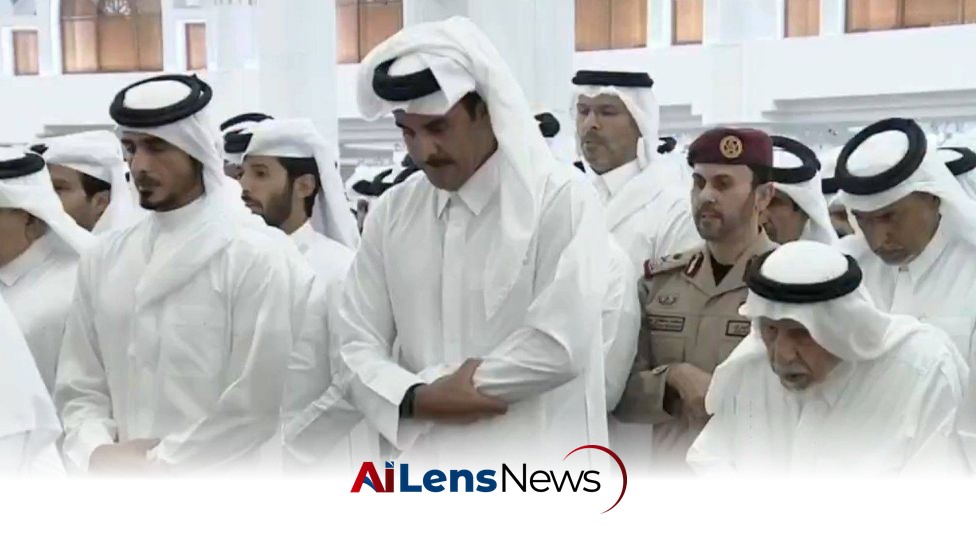


Sheikh Tamim bin Hamad Al Thani performed the funeral prayer for Sheikh Hamad bin Khalifa Al Thani at the Imam Muhammad bin Abdul Wahhab Mosque.
Doha, Qatar Jul 13, 2026 ALN: His Highness the Amir of the State of Qatar, Sheikh Tamim bin Hamad Al Thani, performed the funeral prayer for the late Father Amir Sheikh Hamad bin Khalifa Al Thani, may God have mercy on him, at the Imam Muhammad bin Abdul Wahhab Mosque. This solemn occasion marked a significant moment in the history of Qatar, as it not only honored the legacy of a former leader but also brought together various segments of society to pay their respects. The gathering was a testament to Sheikh Hamad's enduring influence on the nation and its people.
The funeral prayer took place after the Maghrib prayer, a time when many Muslims gather for prayer and reflection. The attendance at the mosque was substantial, reflecting the profound impact that Sheikh Hamad had on the nation and its people. Alongside Sheikh Tamim, notable figures included Deputy Amir His Highness Sheikh Abdullah bin Hamad Al Thani; His Excellency Sheikh Khalid bin Hamad Al Thani; Personal Representative of the Amir His Highness Sheikh Jassim bin Hamad Al Thani; His Excellency Sheikh Abdulaziz bin Khalifa Al Thani; His Highness Sheikh Abdullah bin Khalifa Al Thani; His Highness Sheikh Mohammed bin Khalifa Al Thani; His Excellency Sheikh Jassim bin Khalifa Al Thani; Prime Minister and Minister of Foreign Affairs His Excellency Sheikh Mohammed bin Abdulrahman bin Jassim Al Thani; Speaker of the Shura Council His Excellency Hassan bin Abdullah Al Ghanim; and many other dignitaries, officials, and members of the diplomatic corps.
The late Father Amir, Sheikh Hamad bin Khalifa Al Thani, ruled Qatar from 1995 until his abdication in 2013. His reign was marked by significant economic growth, modernization, and an assertive foreign policy that elevated Qatar's status on the global stage. Under his leadership, Qatar transformed from a relatively small and less influential state into a prominent player in regional and international affairs. This transformation was largely driven by the country's vast natural gas reserves, which were developed into one of the world's leading liquefied natural gas (LNG) exporters. The economic policies instituted during his rule not only bolstered the state’s financial standing but also enhanced its global influence.
Sheikh Hamad's era saw the establishment of various social and economic reforms aimed at improving the quality of life for Qatari citizens. His vision for Qatar included investments in education, healthcare, and infrastructure, which laid the groundwork for the country's future development. The establishment of Qatar University and the Qatar Foundation are examples of his commitment to fostering education and research, positioning Qatar as a hub for knowledge and innovation in the region. The focus on education was not merely a means of improving individual lives but also a strategic move to ensure the nation could compete on a global scale.
Moreover, Sheikh Hamad was instrumental in promoting Qatar's cultural identity and heritage. His support for the arts, education, and sports helped to cultivate a sense of national pride among Qataris. The development of the Museum of Islamic Art and the Qatar National Museum are testaments to his dedication to preserving and showcasing the rich history and culture of the region. This cultural investment was part of a broader initiative to position Qatar as a center for cultural dialogue and exchange, attracting international attention and fostering a deeper understanding of its heritage.
In addition to his domestic achievements, Sheikh Hamad's foreign policy initiatives were notable. He played a key role in mediating regional conflicts and promoting dialogue among various factions in the Middle East. His approach was often characterized by a willingness to engage with diverse political groups, which has been both praised and criticized by various observers. The establishment of Al Jazeera, the state-funded news network, under his leadership also transformed the media landscape in the Arab world, providing a platform for a range of voices and perspectives. This initiative not only reshaped the media narrative in the region but also positioned Qatar as a key player in the global discourse on freedom of expression and information dissemination.
The funeral service for Sheikh Hamad was attended not only by members of the royal family and government officials but also by a large congregation of citizens and residents, highlighting the deep respect and admiration that the public held for him. The presence of diplomatic representatives underscored Qatar's international relations and the respect that Sheikh Hamad garnered on the global stage. His passing is seen as a moment of reflection for many in Qatar, who remember his contributions and the foundation he laid for the current leadership. This gathering served as a reminder of the unity and collective identity of the Qatari people, who came together to honor a leader that had significantly shaped their nation.
The implications of Sheikh Hamad's legacy continue to resonate in Qatar today. His son, Sheikh Tamim, has inherited a nation that is navigating the complexities of modern geopolitics, economic diversification, and social change. As Qatar prepares for the future, the principles and values instilled by Sheikh Hamad will likely guide the young Amir in his decision-making processes. The ongoing development projects, such as those linked to the FIFA World Cup 2022, are part of this broader vision for a prosperous and progressive Qatar. These initiatives not only aim to enhance the nation’s infrastructure but also to promote tourism and global engagement, further solidifying Qatar's position on the world stage.
In the wake of Sheikh Hamad's passing, there may also be discussions about the future direction of Qatar's policies, both domestically and internationally. The leadership transition and the continuity of Sheikh Hamad's vision will be closely watched by analysts and observers, as they assess how Sheikh Tamim will navigate the challenges and opportunities that lie ahead for the nation. The expectations for Sheikh Tamim are high, as he is seen as a leader who must balance tradition with innovation while maintaining the stability and prosperity that his father championed.
As the country mourns the loss of its Father Amir, the collective memory of his contributions will continue to shape the identity of Qatar. The funeral prayer at the Imam Muhammad bin Abdul Wahhab Mosque serves as a poignant reminder of the bond between the leadership and the people, and the enduring legacy of Sheikh Hamad bin Khalifa Al Thani will remain a cornerstone of Qatar's narrative for years to come. His vision for a modern, prosperous, and influential Qatar is a legacy that will influence future generations and guide the nation as it continues to evolve in an increasingly complex global environment.
To learn more about the latest developments in Politics, stay updated with our exclusive reports and analyses on AiLensNews.

