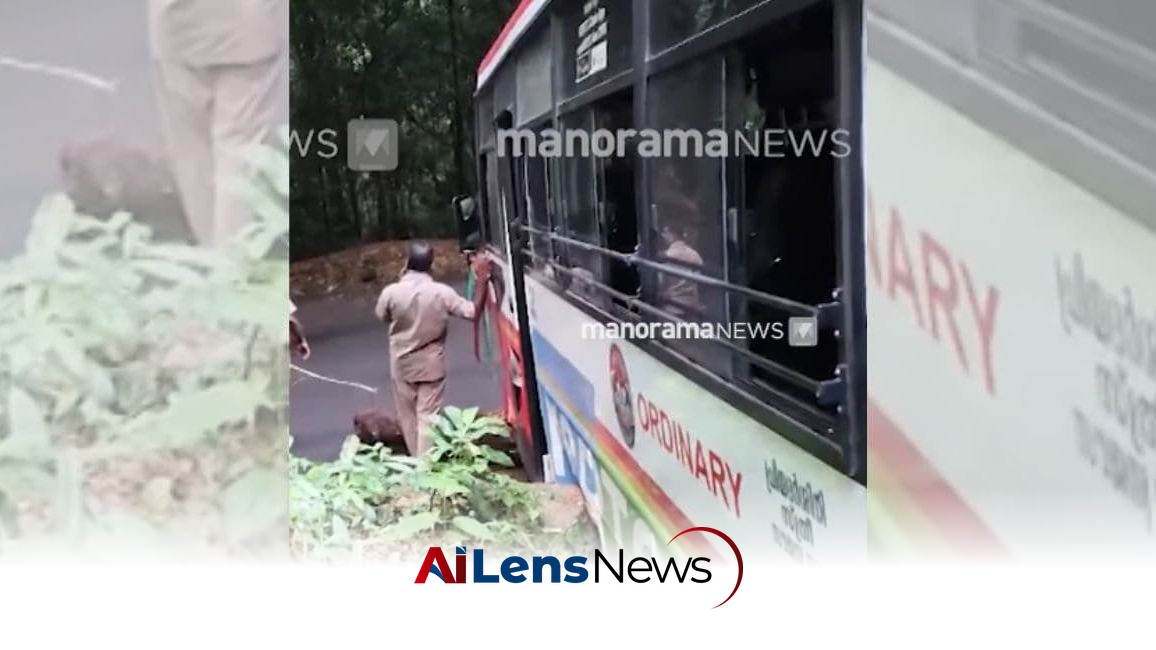


A KSRTC bus carrying 80 passengers crashed into a concrete barrier near Ponmudi due to brake failure, but no injuries were reported thanks to the driver's quick actions.
Doha, Qatar Jul 12, 2026 ALN: Thiruvananthapuram: A KSRTC Priyadarshini bus carrying around 80 passengers crashed into a concrete barrier at Aaramvalavu near Ponmudi here on Saturday. No injuries have been reported, the police said.
The accident occurred around 5 pm when the bus was returning to Thiruvananthapuram from Ponmudi. The driver reportedly lost control after the vehicle's brakes failed while negotiating a steep curve during the descent. The bus hit a concrete barrier on the roadside, preventing it from veering further on the road. This incident highlights the inherent risks associated with driving on hilly terrains, where sharp turns and steep gradients can pose significant challenges, particularly for larger vehicles such as buses.
An officer from Ponmudi Police Station said the driver's timely action helped avert a major disaster. The road has several steep curves and the bus was heavily crowded at the time of the incident. The quick response from the driver, who managed to steer the bus towards the barrier rather than allowing it to careen off the road, was crucial in preventing potential injuries or fatalities.
Police said most of the passengers were women and all of them escaped without injuries. This outcome is particularly fortunate given the circumstances of the crash. The KSRTC (Kerala State Road Transport Corporation) Priyadarshini buses are known for their reliability and safety, but this incident raises questions about the maintenance and safety protocols in place for public transport vehicles, especially those operating in challenging geographical conditions.
Accidents involving public transport vehicles can have significant implications, not only for the passengers involved but also for the broader community. In regions like Kerala, where tourism is a major economic driver, incidents like these can impact public perception of safety in travel, potentially discouraging visitors from exploring the scenic routes that the state is known for. The lush landscapes, hills, and backwaters of Kerala attract millions of tourists each year, and any perception of risk can deter potential visitors, thereby affecting local businesses reliant on tourism.
Moreover, the incident serves as a reminder of the importance of regular vehicle maintenance and safety checks, particularly for buses that traverse difficult terrains. The KSRTC has a responsibility to ensure that all its vehicles are in optimal condition, and this crash may prompt a review of their maintenance schedules and safety protocols. This could include a comprehensive audit of the fleet to identify any vehicles that require immediate attention or upgrades.
In the aftermath of the crash, it will be essential for authorities to conduct a thorough investigation to determine the exact cause of the brake failure. Understanding whether this was a mechanical issue, a result of inadequate maintenance, or a combination of factors will be crucial in preventing future incidents. The investigation may involve examining the bus's maintenance records, interviewing the driver, and assessing the condition of the road at the time of the accident. Such investigations often take time and require collaboration between various agencies, including vehicle manufacturers, regulatory bodies, and local authorities.
The KSRTC has a long history of providing public transport services across Kerala, and while the organization has made strides in improving safety and efficiency, incidents like this can tarnish its reputation. The corporation may need to engage in public relations efforts to reassure the community and travelers about the safety of their services. Transparency regarding the findings of the investigation and any subsequent actions taken will be crucial in restoring public confidence.
Furthermore, the incident could lead to increased scrutiny from transport regulatory bodies. Authorities may consider implementing stricter regulations regarding vehicle maintenance and driver training, especially for those operating in hilly or difficult terrains. This could involve enhanced training programs for drivers on how to handle emergency situations, as well as regular assessments of their skills and decision-making abilities. Training sessions could also include simulations of emergency scenarios to better prepare drivers for unexpected situations.
The local community's response to the incident is also worth noting. Residents near Ponmudi, a popular tourist destination known for its scenic beauty and cool climate, may express concerns about road safety, particularly as they rely on these transport services for their daily commutes and tourism-related activities. The local government may need to address these concerns by investing in road safety measures, such as better signage, road maintenance, and possibly the installation of additional barriers in high-risk areas. Improved road infrastructure can significantly enhance safety and reduce the likelihood of future accidents.
As the investigation unfolds, it will be important for the KSRTC to cooperate fully with authorities and to provide transparency regarding the findings. This openness can help rebuild trust with the public and ensure that necessary changes are implemented to enhance safety. It is essential for public transport agencies to learn from incidents like these, as they can lead to improvements that not only protect passengers but also contribute to the overall safety of the transportation network.
In conclusion, while the miraculous escape of all passengers in this accident is a relief, it serves as a crucial reminder of the potential dangers associated with public transport in challenging environments. The incident underscores the need for ongoing vigilance regarding vehicle safety, driver training, and road conditions. As the community reflects on this event, it is hoped that it will lead to constructive changes that prioritize the safety and well-being of all passengers in the future. The KSRTC, along with local authorities, must take proactive steps to ensure that public transport remains a safe and reliable option for all, particularly in regions where the terrain presents unique challenges.
To learn more about the latest developments in Local & Regional, stay updated with our exclusive reports and analyses on AiLensNews.

