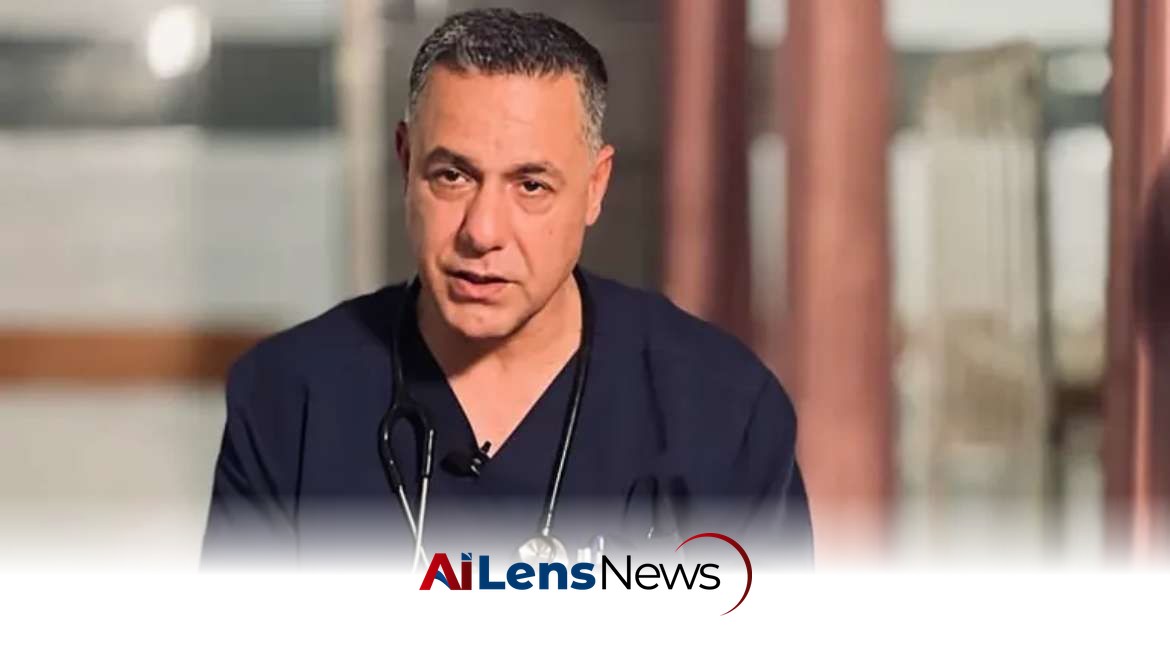


Palestinian rights advocates raise alarms over the deteriorating health and treatment of detained physician Hussam Abu Safiya in Israeli custody.
Doha, Qatar Jul 5, 2026 ALN: Palestinian rights advocates warn that detained physician Hussam Abu Safiya is facing deteriorating health and abuse in custody.
The head of the Commission of Prisoners’ Affairs and Former Prisoners, Minister Raed Abu al-Humus, has accused Israeli authorities of pursuing a “systematic policy” aimed at “eliminating” Palestinian doctor Hussam Abu Safiya through harsh detention conditions and alleged mistreatment. The situation surrounding Abu Safiya has sparked widespread concern among human rights organizations, medical professionals, and advocates for Palestinian rights, who see his case as emblematic of broader issues regarding the treatment of Palestinian detainees in Israeli prisons.
In statements reported on Sunday, Abu al-Humus said Abu Safiya has been subjected to severe beatings, torture, starvation, denial of medical treatment, and prolonged solitary confinement. The allegations of abuse reflect a troubling pattern that has been documented in various reports concerning the treatment of Palestinian prisoners. Human rights organizations have frequently highlighted the use of torture and inhumane treatment in Israeli detention facilities, raising alarms over the psychological and physical impact on detainees.
He also alleged that the doctor has been kept shackled for long periods and deprived of basic human rights, describing the treatment as a “systematic crime” and a breach of international law. The use of shackling and solitary confinement has been criticized by international human rights bodies, which argue that such practices can lead to severe mental health issues and violate the principles of humane treatment outlined in international conventions, including the United Nations Convention Against Torture.
According to Abu al-Humus, Abu Safiya’s health is rapidly deteriorating, with visible physical injuries, significant weight loss, breathing difficulties, and impaired speech. These alarming health issues have raised concerns not only about the immediate well-being of Abu Safiya, but also about the broader implications for medical personnel in conflict zones. The treatment of healthcare workers in conflict situations can have a chilling effect on their ability to provide care, as they may fear for their safety and well-being, potentially leading to a shortage of medical assistance for those in need.
He warned that the situation has reached a critical stage and called for urgent international intervention, including pressure from the World Health Organization and medical rights organizations, to secure his release. The call for international intervention highlights a significant aspect of the ongoing Israeli-Palestinian conflict, where healthcare and humanitarian issues often intersect with political and military considerations. The involvement of international organizations is crucial, as they can bring attention to human rights violations and advocate for the protection of medical personnel and civilians in conflict zones.
Abu Safiya was detained in December 2024 while working at Kamal Adwan Hospital in northern Gaza, where he was treating injured civilians during Israel’s military operations in the besieged enclave. His arrest has drawn attention to the precarious situation of healthcare workers in Gaza, where they often operate under extreme conditions, facing both the direct impacts of military operations and the challenges posed by the ongoing blockade. The targeting of medical personnel during conflicts has been condemned by various international bodies, which argue that healthcare should be protected and respected under international humanitarian law.
Israeli authorities have previously described his arrest as part of a “targeted operation.” This characterization reflects the Israeli government's broader strategy regarding the detention of individuals it deems a threat to national security. The use of targeted operations has been a controversial aspect of Israeli military policy, often criticized for its implications on human rights and due process. Critics argue that such operations can lead to arbitrary detentions and exacerbate tensions between Israeli and Palestinian communities.
He is currently being held in solitary confinement at Nitzan Prison in Ramla, amid growing concerns from Palestinian officials and human rights advocates over his health and continued detention conditions. Solitary confinement is often regarded as a form of punishment that can lead to severe psychological distress. The practice has been widely debated, with many human rights advocates calling for its abolition or strict regulation, particularly for vulnerable populations such as medical professionals and those with pre-existing health conditions.
In June, Israel’s Supreme Court rejected an appeal seeking the release of Abu Safiya, allowing his detention to continue under Israel’s “Unlawful Combatants Law.” This law has been a point of contention within legal and human rights circles, as it permits the detention of individuals without trial based on their status as combatants, which critics argue undermines fundamental legal protections. The court's decision has been met with disappointment from advocates who argue that it sets a dangerous precedent for the treatment of detainees and raises questions about the fairness of the judicial process in cases involving Palestinians.
The ongoing situation of Hussam Abu Safiya is reflective of the larger context of the Israeli-Palestinian conflict, where issues of human rights, medical ethics, and international law intersect. The treatment of detainees, especially those in the medical field, raises critical questions about the responsibilities of states to protect individuals who provide essential services in times of conflict. As the international community watches closely, the implications of Abu Safiya's case may extend beyond his individual situation, potentially influencing broader discussions on human rights and the treatment of prisoners in conflict zones.
As calls for action increase, it remains to be seen whether the international community will respond effectively to the urgent pleas for intervention and whether Abu Safiya will receive the medical attention and humane treatment he requires. The implications of his case could resonate far beyond the immediate circumstances, potentially impacting the future of medical care and human rights advocacy in the region.
To learn more about the latest developments in Crime & Law, stay updated with our exclusive reports and analyses on AiLensNews.

