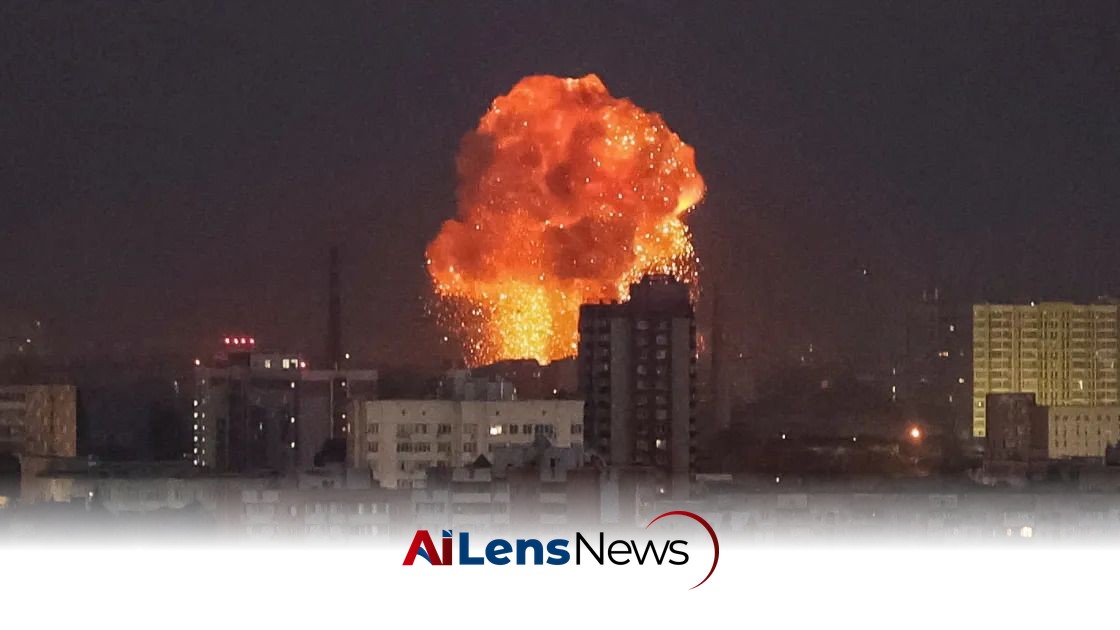


A missile and drone assault by Russia on Ukraine resulted in two fatalities and numerous injuries, intensifying the ongoing conflict.
Islamabad, Pakistan Jul 11, 2026 ALN: In a significant escalation of hostilities, Russia launched a large-scale missile and drone attack across Ukraine early Saturday, resulting in the deaths of two individuals and injuring at least 19 others. The capital, Kyiv, bore the brunt of the assault, which involved ballistic missiles, cruise missiles, and drones, amid Ukraine's ongoing challenges with air defense munitions. This attack marks one of the most intense bombardments in recent weeks, indicating a potential shift in Russia's military strategy as the conflict continues to evolve.
According to Ukraine's Air Force, the overnight assault saw Russia firing 10 missiles, including six ballistic and four cruise missiles, alongside 121 drones. Ukrainian forces managed to intercept at least two cruise missiles and destroy 111 drones; however, officials noted that ballistic missiles remain particularly challenging to counter due to their high speed and trajectory. President Volodymyr Zelensky reported that civilian infrastructure was targeted before air raid alerts were issued, underscoring the urgency for enhanced air defense capabilities. He urged allies to expedite promised air defense support, emphasizing the need for a robust response to these ongoing threats.
The impact of the attacks was felt acutely in Kyiv, where 11 individuals sustained injuries as explosions damaged civilian areas throughout the city. The psychological toll on residents is significant, as repeated attacks create an atmosphere of fear and uncertainty. Additionally, separate Russian strikes in the southern port city of Odesa resulted in two fatalities and injuries to another person, while a drone attack on a civilian enterprise in Kharkiv left seven more injured. Emergency crews are actively engaged in rescue and recovery operations in the affected regions, highlighting the ongoing humanitarian challenges faced by civilians caught in the crossfire.
Ukraine has consistently appealed to Western partners for additional Patriot air defense missiles to counter Russia's increasing reliance on ballistic weaponry. The urgency of these requests has been amplified by the recent attacks, which demonstrate the effectiveness of Russia's missile capabilities and the vulnerabilities in Ukraine's air defense systems. President Zelensky has also called for the swift implementation of agreements made at the recent NATO summit, which include plans to bolster Ukraine's air defense capabilities. Recently, U.S. President Donald Trump announced that Ukraine would receive a license to manufacture Patriot interceptor missiles domestically, a move that could enhance Ukraine's self-defense capabilities in the long term.
In the context of the ongoing conflict, these developments are part of a broader pattern of military engagement between the two nations. Ukraine reported successful strikes against dozens of Russian fuel tankers and support vessels in the Sea of Azov, aiming to disrupt Russian military logistics. These strikes signify Ukraine's determination to counteract Russia's supply lines, which are crucial for sustaining its military operations. In response, Russia's Defense Ministry claimed that its forces targeted Ukrainian drone production facilities and ports in the Odesa region, asserting that its air defenses had destroyed 178 Ukrainian drones overnight over Russian territory and occupied Crimea. This tit-for-tat escalation highlights the increasingly complex nature of the conflict, where both sides are actively seeking to undermine each other's capabilities.
The situation remains tense as both sides continue to engage in military operations, with the international community closely monitoring developments. The implications of these attacks extend beyond immediate casualties and damage; they also affect diplomatic relations and the geopolitical landscape of the region. The ongoing conflict has led to heightened tensions not only between Ukraine and Russia but also among NATO allies, who are faced with the challenge of balancing support for Ukraine with the risk of escalating confrontations with Russia.
In addition to military considerations, the humanitarian impact of the conflict remains a pressing concern. The repeated strikes on civilian infrastructure have led to significant displacement and suffering among the Ukrainian population. As winter approaches, the need for humanitarian assistance is expected to grow, with many civilians facing the prospect of inadequate shelter, food shortages, and limited access to medical care. International organizations and NGOs are ramping up efforts to provide aid, but the scale of the need is daunting, and the security situation complicates delivery efforts.
Furthermore, the economic ramifications of the conflict are profound, affecting not only Ukraine but also the broader European economy. Rising energy prices, supply chain disruptions, and inflationary pressures are all consequences of the ongoing hostilities. European nations are grappling with the challenge of securing energy supplies while supporting Ukraine, leading to a reevaluation of energy policies and partnerships.
As the conflict continues, the role of international diplomacy becomes increasingly critical. Efforts to broker a ceasefire or negotiate peace will require the involvement of multiple stakeholders, including the United States, the European Union, and regional powers. The complexity of the situation, combined with entrenched positions on both sides, poses significant challenges to achieving a resolution. The international community's response to the latest escalation will likely shape the trajectory of the conflict in the coming months.
In conclusion, the recent large-scale attack on Kyiv and other Ukrainian cities underscores the ongoing volatility of the situation in Ukraine. As both sides prepare for continued military engagement, the humanitarian, economic, and geopolitical implications of the conflict remain profound. The international community's response and support for Ukraine will be crucial in determining the future course of this conflict and its impact on regional and global stability.
To learn more about the latest developments in World News & International Affairs, stay updated with our exclusive reports and analyses on AiLensNews.

