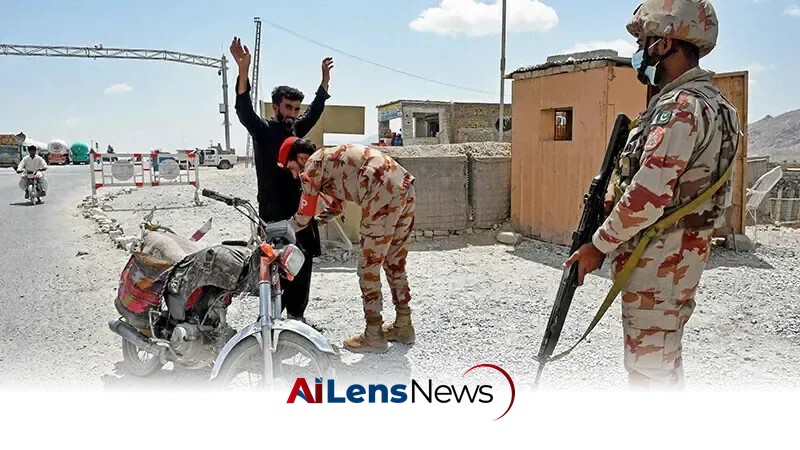


Three more terrorists have been killed in Balochistan's Operation Shaban, bringing the total to 67 as security forces continue their crackdown on militant groups.
Islamabad, Pakistan Jul 12, 2026 ALN: Operation Shaban, a significant military and police initiative in Balochistan, Pakistan, has recently intensified, resulting in the deaths of additional terrorists. According to state broadcaster PTV News, security forces have now killed a total of 67 terrorists during this operation, which has been ongoing since July 5. This operation is being executed by a coalition of the Pakistan Army, the Frontier Corps (FC), and the Balochistan Police, reflecting a concerted effort to combat terrorism in the region.
The impetus for Operation Shaban was a brutal terrorist attack that occurred on July 7 in the Mangi Dam area, where multiple police officers were killed. This attack was particularly heinous, resulting in the deaths of nine police personnel on the spot, while 18 others were abducted at gunpoint. Tragically, the abducted officers were later found murdered in the Zarghoon Gar mountainous area, underscoring the ruthless nature of the terrorists involved.
In the wake of this attack, the security forces launched a comprehensive offensive aimed at dismantling terrorist networks operating in Balochistan. The operation has been characterized by both air and ground assaults, targeting a group referred to by the state as Fitna-al-Khawarij, which is a term used for the banned Tehreek-i-Taliban Pakistan (TTP). The TTP has been responsible for numerous violent acts across the country, and the government's categorization of them as Fitna-al-Khawarij reflects a broader narrative that frames their actions as not just criminal but as a threat to the very fabric of society.
As of the latest reports, the total number of terrorists killed during Operation Shaban, along with other intelligence-based operations since early July, has reached 105. This figure highlights the scale of the military's response to the recent surge in violence. Security sources indicate that the joint operation in the Shaban area of Quetta district is specifically targeting those responsible for the attack on the police post at Mangi Dam.
Interior Minister Mohsin Naqvi has publicly praised the efforts of the Pakistan Army, Frontier Corps, and police forces, stating that their actions are indicative of a strong commitment to national security. His remarks emphasize the government's stance that there is no tolerance for terrorist elements in Pakistan, and he reassured the public that the nation stands united with the security forces in their efforts to combat terrorism.
Prime Minister Shehbaz Sharif has also weighed in on the situation, asserting that the civil and military leadership of the country has reached a consensus on the necessity of eradicating terrorism. During a meeting of the Provincial Apex Committee on the National Action Plan, which took place in Quetta, he expressed the need for a unified front against the growing threat of terrorism in Balochistan. This meeting included prominent military figures, such as Chief of Defence Forces and Chief of the Army Staff Field Marshal Asim Munir, signifying the high-level commitment to addressing the security crisis.
The Prime Minister's comments came shortly after the Director General of Inter-Services Public Relations (ISPR), Lt Gen Ahmed Sharif Chaudhry, disclosed that the recent wave of violence in Balochistan has claimed the lives of at least 42 individuals, including four civilians, 27 policemen, and 11 security personnel. This grim statistic serves to highlight the urgency and importance of the ongoing operations in the region.
Balochistan, Pakistan's largest province by area, has long been a hotspot for militant activity, largely due to its complex socio-political landscape. The province is home to various militant groups, including the TTP, which has exploited local grievances and the region's porous borders to carry out attacks. The TTP's resurgence in recent years has raised alarms among security officials, prompting a reevaluation of counter-terrorism strategies across the country.
The implications of Operation Shaban extend beyond immediate security concerns. The operation reflects a broader strategy by the Pakistani government to restore stability in a region that has suffered from decades of violence and unrest. By engaging in a coordinated response involving both military and police forces, the government aims to send a strong message to both the militants and the local populace that it is committed to ensuring safety and security.
However, the success of such operations is often contingent upon public support and the ability to address the underlying issues that fuel militancy. Critics argue that without addressing the socio-economic challenges faced by the people of Balochistan, including poverty, lack of education, and political disenfranchisement, military operations may only provide a temporary solution to a deeply rooted problem.
Furthermore, there are concerns about the potential for collateral damage during military operations, which can exacerbate local grievances and lead to further radicalization. The government has emphasized the importance of intelligence-based operations to minimize civilian casualties, but the reality of combat operations in densely populated areas often complicates these efforts.
As Operation Shaban continues, the Pakistani government faces the dual challenge of ensuring immediate security while also working towards long-term stability in Balochistan. The outcomes of this operation will likely influence public perception of the government's ability to manage security threats and could have lasting implications for the region's political landscape.
In conclusion, Operation Shaban represents a critical juncture in Pakistan's ongoing battle against terrorism, particularly in Balochistan. As security forces press on with their efforts, the focus remains not only on neutralizing terrorist threats but also on fostering a sense of security and trust among the local population. The coming weeks will be crucial in determining the effectiveness of this operation and the broader implications for Pakistan's fight against terrorism.
To learn more about the latest developments in Crime & Law, stay updated with our exclusive reports and analyses on AiLensNews.

