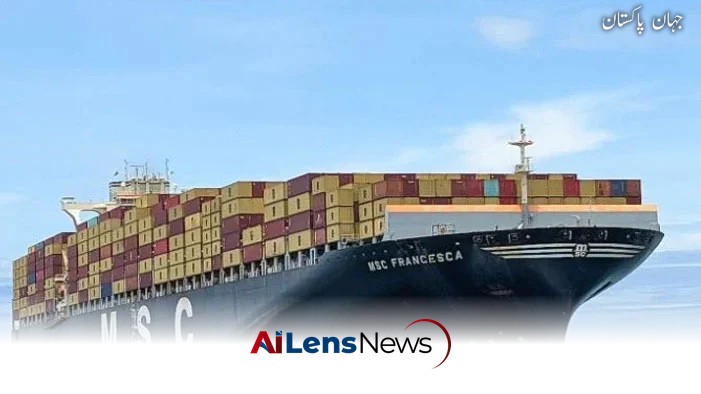


Iran has captured two ships, including an Israeli vessel, in the Strait of Hormuz, claiming violations of navigation rules.
Islamabad, Pakistan Apr 22, 2026 ALN: In a significant operation in the Strait of Hormuz, Iran has seized two vessels, one of which is reported to be Israeli. According to Press TV, the Islamic Revolutionary Guard Corps (IRGC) has claimed that it intercepted the ships due to alleged violations and transferred them into Iranian waters.
The IRGC identified the vessels as MSC Francesca and Epaminondas, with MSC Francesca being linked to Israel. The seizure of these ships is a notable event in a region already fraught with geopolitical tensions, particularly between Iran and Israel, which has long been a point of contention in Middle Eastern politics.
The Strait of Hormuz is a strategically vital waterway, through which a significant portion of the world's oil supply passes. Approximately 20% of the global oil trade transits through this narrow strait, making it a focal point for international maritime operations and geopolitical maneuvering. The importance of this waterway is underscored by the frequent military presence of various nations, including the United States, which conducts regular naval patrols to ensure the freedom of navigation and to deter potential threats.
According to the Iranian Navy, both ships were operating without permission and repeatedly violated regulations. They allegedly altered their navigation systems, leading to their seizure for jeopardizing safety in the Strait of Hormuz. The vessels are being moved to the Iranian coast. This claim of altering navigation systems suggests a serious breach of maritime law, which Iran has cited as justification for the seizure. However, the specifics of the alleged violations have not been detailed, and the international community may demand further clarification on these claims.
The IRGC further stated that it will maintain constant surveillance over any activities that violate Iran's declared laws for passage through the Strait of Hormuz or compromise safe navigation. This declaration highlights Iran's assertive stance in the region, as it seeks to reinforce its maritime authority and respond to what it perceives as threats to its sovereignty and security.
This incident underscores the ongoing tensions in the region, particularly concerning maritime security and the enforcement of navigation laws by Iran. The seizure of vessels has occurred in the past as part of Iran's broader strategy to exert influence and demonstrate its military capabilities. These actions are often viewed through the lens of Iran's contentious relationship with the United States and its allies, particularly in light of the U.S. withdrawal from the Joint Comprehensive Plan of Action (JCPOA) in 2018 and the subsequent escalation of hostilities.
The implications of this seizure extend beyond immediate maritime security concerns. It reflects Iran's willingness to engage in aggressive tactics to assert its interests and send a message to regional adversaries, particularly Israel. The Israeli government has consistently viewed Iran as a primary threat, particularly in the context of Iran's nuclear ambitions and its support for militant groups in the region.
In response to such incidents, Israel has often conducted operations aimed at countering Iranian influence, including targeting Iranian assets in Syria and other locations. The cycle of retaliation and counter-retaliation contributes to an unstable security environment in the region, raising the risk of miscalculations that could lead to broader military confrontations.
International reactions to Iran's actions in the Strait of Hormuz are likely to be mixed. Some nations may condemn the seizure as a violation of international law, while others may view it as a legitimate assertion of Iran's rights over its territorial waters. The United States, in particular, has historically taken a strong stance against Iranian provocations, often leading to increased military presence in the region as a deterrent.
Furthermore, the seizure of vessels can have broader economic implications, particularly for global oil markets. Any disruption in the Strait of Hormuz can lead to fluctuations in oil prices, impacting economies worldwide. This potential for economic fallout adds another layer of complexity to the situation, as nations seek to balance their security concerns with economic interests.
In the context of ongoing negotiations over Iran's nuclear program and its regional activities, such incidents may complicate diplomatic efforts. The international community, particularly the European Union, has been involved in attempts to revive the JCPOA and address concerns over Iran's nuclear activities. However, incidents like this can create additional hurdles, as they may lead to increased tensions and a hardening of positions on both sides.
In conclusion, the seizure of the MSC Francesca and Epaminondas by Iran in the Strait of Hormuz represents a significant escalation in maritime tensions in a region already marked by conflict and rivalry. The incident not only highlights Iran's assertive posture but also raises questions about the implications for international maritime security, regional stability, and the ongoing geopolitical dynamics involving major powers. As the situation develops, it will be crucial for the international community to monitor the developments closely and seek avenues for de-escalation to prevent further conflict in this strategically vital area.
The historical context of Iran's maritime actions reveals a pattern of behavior that aligns with its broader strategic objectives. Since the 1979 Iranian Revolution, Iran has viewed itself as a key player in the Middle East, often positioning itself against U.S. interests and those of its allies. The Strait of Hormuz has been a focal point for these confrontations, with Iran occasionally threatening to close the strait in response to perceived provocations, particularly from the U.S. and Saudi Arabia.
Moreover, the IRGC has been instrumental in Iran's maritime strategy, undertaking operations that reflect its dual role as a military force and a political actor. The IRGC's involvement in the seizure of vessels is not merely a matter of enforcing maritime law; it is also a demonstration of Iran's resolve to protect its interests and assert its influence in a region where it faces numerous challenges.
The broader implications of such actions are significant. The international community has a vested interest in maintaining the security of maritime routes, especially those critical for energy supplies. Any disruption could lead to increased military presence from Western nations, particularly the U.S., which has historically sought to ensure the free flow of oil through the Strait of Hormuz. This could lead to a military escalation, with both sides potentially miscalculating the other's intentions.
Additionally, the seizure of vessels can have long-term ramifications for Iran's relationships with other countries. While some nations may sympathize with Iran's position regarding its territorial waters, others are likely to view the seizure as a violation of international norms, potentially isolating Iran further on the global stage. The balance between asserting national sovereignty and adhering to international law is a delicate one, and incidents like this can tip the scales in favor of increased scrutiny and condemnation.
As the geopolitical landscape continues to evolve, the situation in the Strait of Hormuz will remain a critical area of focus. The potential for further incidents, coupled with the ongoing tensions surrounding Iran's nuclear program, means that the region will likely remain a hotspot for international diplomacy and conflict. The international community must remain vigilant and proactive in addressing these challenges, seeking to foster dialogue and reduce tensions to prevent a potential crisis that could have far-reaching consequences.
To learn more about the latest developments in World News & International Affairs, stay updated with our exclusive reports and analyses on AiLensNews.

