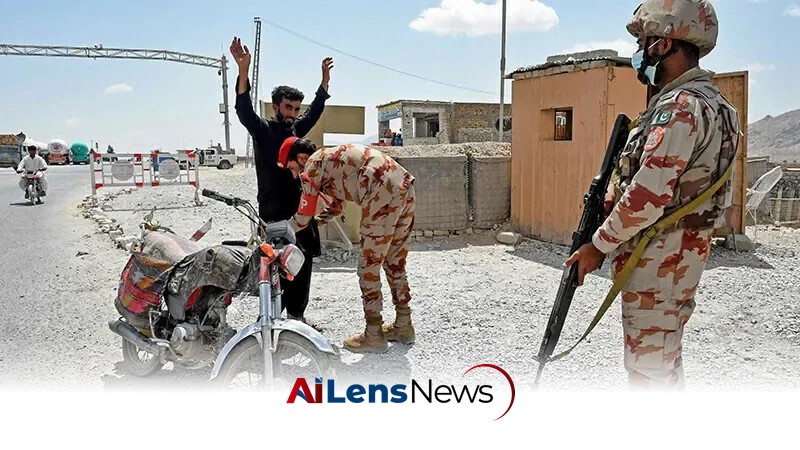


State media reports that 23 terrorists were killed in Balochistan operations, raising the total to 102 since July 5, as security forces intensify efforts against terrorism.
Islamabad, Pakistan Jul 11, 2026 ALN: The recent surge in violence in Balochistan has prompted a significant military response, with the Pakistani security forces intensifying operations against terrorist groups in the region. Citing security sources, state media reported on Saturday that 23 more terrorists had been killed in ongoing operations, bringing the total number of terrorists eliminated since July 5 to 102. This alarming escalation in violence has raised concerns about the security situation in Balochistan, a province that has long been plagued by insurgency and terrorism.
Among those killed in the latest operations were 12 terrorists belonging to a group referred to as Fitna al Khawarij, which is a term used by the state to describe militants associated with the banned Tehreek-i-Taliban Pakistan (TTP). This group has been responsible for numerous attacks against security forces and has been a significant threat to stability in the region. Additionally, two terrorists linked to Fitna al Hindustan were killed during an intelligence-based operation near the N-25 crossing in Balochistan, underscoring the multifaceted nature of the terrorist threat in the province.
The term Fitna al Hindustan is used by the Pakistani state to denote various terrorist organizations operating within Balochistan. This nomenclature reflects the government's broader strategy to combat terrorism by categorizing and targeting specific groups that threaten national security. The operations conducted by security forces have yielded significant recoveries, including weapons, hand grenades, a motorcycle, mobile phones, flags of a banned outfit, and other equipment from the two apprehended terrorists.
The ongoing military operations are part of a broader campaign known as Operation Shaban, which is a high-intensity counter-terrorism and counter-insurgency initiative launched by Pakistan’s security forces. This campaign was initiated in response to a series of high-casualty and high-profile terrorist attacks in Balochistan, which have included assaults on police and military personnel. The urgency of these operations is underscored by the tragic attack on a police post at the Mangi dam pumping station, where 27 police personnel were killed, prompting a concerted effort to eliminate the terrorists responsible.
State-run media outlets, including Pakistan Television, reported that Operation Shaban is ongoing across Balochistan, with the Pakistan Army, Frontier Corps, and police conducting coordinated air and ground operations against identified terrorist hideouts. The scale and intensity of these operations reflect the government's commitment to restoring stability and security in the region. Security sources indicated that the operations would continue until the last terrorist is eliminated, signaling a determination to eradicate the threat posed by these groups.
As the operations unfolded, security forces reported that nine terrorists had been killed in a recent action, contributing to the overall total of 88 terrorists eliminated under Operation Shaban since July 5. This statistic highlights the significant scale of the military response and the ongoing challenges faced by security forces in the region. The military's spokesperson noted that during the course of these operations, at least 42 individuals, including four civilians, 27 policemen, and 11 security personnel, have lost their lives due to terrorist attacks and subsequent military actions.
Interior Minister Mohsin Naqvi publicly praised the efforts of the army, Balochistan Frontier Corps, and police forces for their role in eliminating terrorists during Operation Shaban. He commended their “unwavering resolve and bravery” in the face of adversity, asserting that their sacrifices are crucial for establishing peace in Balochistan. Naqvi emphasized that terrorists are a burden on the country and that the forces would not relent until every last terrorist is dealt with. His comments reflect a broader sentiment within the government regarding the need for a decisive response to terrorism.
In a show of support for the families affected by the violence, the Balochistan Chief Minister’s aide on Information and Political Affairs, Shahid Rind, announced that financial compensation amounting to Rs11.1 million would be provided to the families of those martyred in the Mangi dam attack. This initiative underscores the government's commitment to supporting the families of security personnel who have lost their lives in the line of duty. Rind noted that all administrative and financial procedures for the disbursement of the compensation were completed on a fast-track basis, ensuring that the families receive the support they need promptly.
Prime Minister Shehbaz Sharif also addressed the situation, stating that the country’s civil and military leadership had reached a “mutual and singular decision” to eradicate terrorism following a series of major attacks in Balochistan. His remarks during a meeting of the Provincial Apex Committee on the National Action Plan reflect a united front in the face of the ongoing security crisis. The presence of high-ranking military officials, including the Chief of Defence Forces and the Chief of Army Staff, at this meeting indicates the seriousness with which the government is approaching the issue of terrorism.
The implications of these operations are significant for Balochistan, a province that has experienced decades of unrest, sectarian violence, and separatist movements. The ongoing military campaign aims not only to dismantle terrorist networks but also to restore public confidence in the government's ability to provide security. However, the challenge remains immense, as the province's complex socio-political landscape often complicates counter-terrorism efforts. The potential for civilian casualties during military operations raises ethical concerns and underscores the need for a balanced approach that prioritizes both security and human rights.
As the situation develops, it will be crucial for the government to maintain transparency and accountability in its operations while ensuring that the rights of civilians are protected. The long-term stability of Balochistan will depend on a multifaceted strategy that includes not only military action but also socio-economic development, dialogue with local communities, and addressing the underlying grievances that fuel extremism.
In conclusion, the recent operations in Balochistan represent a critical juncture in Pakistan's ongoing struggle against terrorism. With the military's intensified efforts under Operation Shaban, the government aims to dismantle terrorist networks and restore peace in a region that has long been a flashpoint for violence. The outcomes of these operations will have lasting implications for the security landscape of Balochistan and the broader region, as the government seeks to navigate the complex challenges posed by terrorism and insurgency.
To learn more about the latest developments in Crime & Law, stay updated with our exclusive reports and analyses on AiLensNews.

