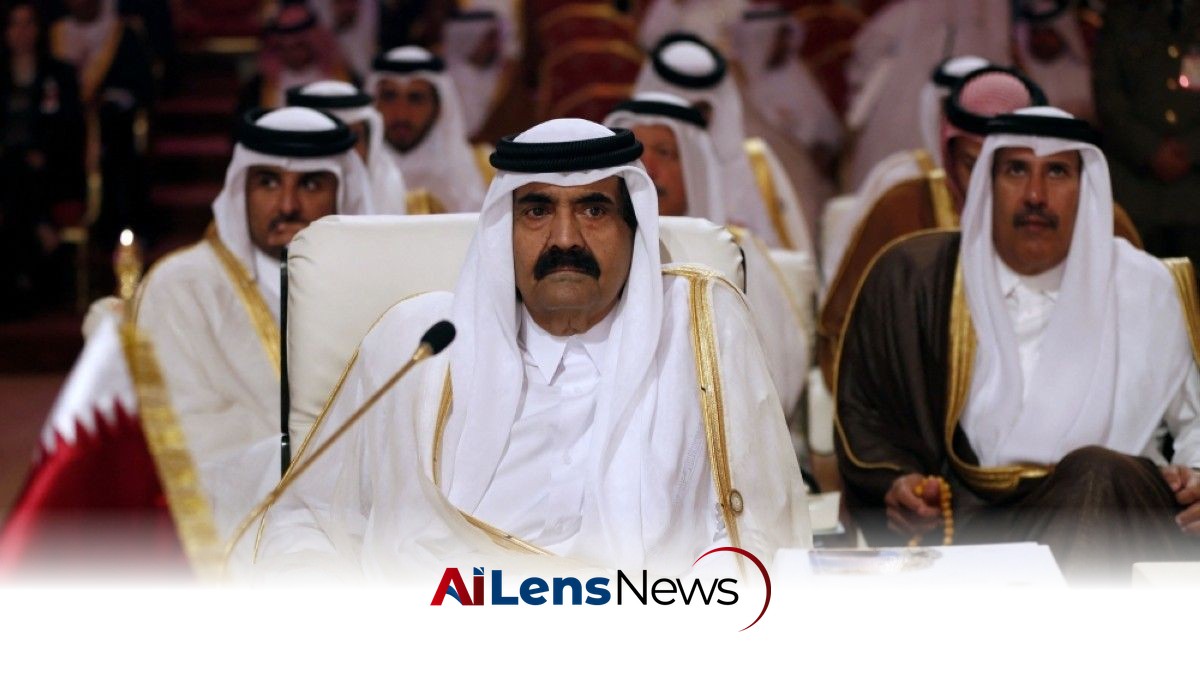


Qatar commemorates the legacy of Father Amir Sheikh Hamad bin Khalifa Al-Thani, who passed away at 74, leaving a profound impact on the nation's development.
Kuwait City, Kuwait Jul 13, 2026 ALN: Qatar on Sunday mourned the passing of Father Amir Sheikh Hamad bin Khalifa Al-Thani, who died at the age of 74 after a distinguished life marked by major achievements that elevated Qatar’s standing regionally and internationally. Born in Doha in 1952, Sheikh Hamad completed his primary, intermediate, and secondary education in Qatar before attending the Royal Military Academy Sandhurst in the United Kingdom, graduating in July 1971. His early education laid the foundation for a life dedicated to public service and leadership, reflecting the values instilled in him during his formative years.
Following graduation, he joined the Qatari Armed Forces and was appointed commander of the First Mobile Battalion, later known as the Hamad Mobile Battalion. This early military career was pivotal in shaping his leadership qualities and strategic thinking. He was subsequently promoted to the rank of major general and became the first Qatari to serve as commander-in-chief of the armed forces, a role that allowed him to influence the modernization of Qatar’s military capabilities significantly.
Sheikh Hamad played a key role in modernizing Qatar’s military by expanding its personnel, establishing new units, equipping them with advanced weaponry, and emphasizing the training of officers and soldiers. His vision for a modern military included not only traditional forces but also the establishment of the Amiri Navy and Air Force, as well as special forces, engineering, military police, border guard, and leadership defense units. This comprehensive approach to military development was crucial as Qatar sought to enhance its national security and defense posture in a region characterized by geopolitical tensions.
On May 31, 1977, Sheikh Hamad was named Crown Prince and appointed Minister of Defense, while also assuming the chairmanship of the Supreme Planning Council, which was tasked with advancing the country’s modernization. These roles gave him extensive executive responsibilities before ascending to power, allowing him to lay the groundwork for the ambitious reforms that would define his reign. His early experiences in governance and military leadership equipped him with the skills necessary to navigate the complexities of leadership in a rapidly changing world.
After assuming leadership of Qatar on June 27, 1995, Sheikh Hamad ushered in a new era of comprehensive development and institutional modernization. His reign witnessed sweeping political, economic, and developmental reforms that transformed Qatar’s domestic and international profile. The changes he implemented were not merely cosmetic; they were foundational, reshaping the very fabric of Qatari society and its economy.
Internationally, Qatar pursued an active diplomatic policy, fostering dialogue and cooperation with countries across the region and beyond while strengthening its role in mediation and international affairs. Sheikh Hamad’s leadership was characterized by a commitment to diplomacy, positioning Qatar as a mediator in various regional conflicts and enhancing its influence on the global stage. This proactive diplomatic stance allowed Qatar to cultivate relationships with diverse nations, promoting peace and stability in an often tumultuous region.
Domestically, his leadership was marked by strategic planning and broad development initiatives that drove progress across multiple sectors. Under Sheikh Hamad's guidance, Qatar’s economy and energy sector expanded significantly, helping the country become the world’s largest exporter of liquefied natural gas (LNG). His government launched major energy projects, promoted economic liberalization, and attracted substantial foreign investment, which were critical to diversifying the economy and reducing dependence on oil revenues.
Qatar also emerged as a global venue for political, economic, cultural, scientific, and health conferences, while attracting branches of leading international universities. This focus on education and cultural exchange was part of Sheikh Hamad’s vision to transform Qatar into a knowledge-based economy, where innovation and education would drive sustainable development. The establishment of institutions like Qatar University and the Qatar Foundation further underscored this commitment, fostering a culture of learning and research.
Believing in the importance of youth and sports in national development, Sheikh Hamad strongly supported the sector. His leadership saw Qatar host numerous regional and international sporting events, culminating in FIFA’s announcement in December 2010 that Qatar would become the first Arab and Muslim country to host the FIFA World Cup. This historic achievement was not only a testament to Qatar's growing influence in the sports world but also a reflection of its capabilities in organizing large-scale international events.
His tenure also saw significant social reforms, including granting women the right to vote and run in municipal elections, work and drive, alongside measures to strengthen press freedom and expand gas production to accelerate national development. These reforms were indicative of Sheikh Hamad’s vision for an inclusive society, where citizens could participate actively in the governance and development of their nation. The empowerment of women was particularly notable, as it marked a shift towards greater gender equality in a traditionally conservative society.
Throughout his reign, he visited numerous Arab and foreign countries to strengthen bilateral ties and sign cooperation agreements and memorandums of understanding. His diplomatic efforts were recognized globally, and he received many prestigious honors from Arab and international states in recognition of his efforts to enhance diplomatic relations and cooperation. These accolades reflected not only his personal achievements but also Qatar’s growing stature as a key player in international affairs.
Among his decorations were Jordan’s Order of Al-Hussein bin Ali and Oman’s First Class Order of Oman in 1995; Tunisia’s Order of the Seventh of November in 1997; France’s Legion of Honor and Senegal’s Order of the Lion in 1998; Pakistan’s Nishan-e-Pakistan, Germany’s Order of Merit and Romania’s National Order in 1999; and Lebanon’s National Order of the Cedar (Grand Cordon), Italy’s Knight Grand Cross and Yemen’s Order of the Republic in 2000. These honors symbolized the respect and recognition he garnered from peers and world leaders alike, reinforcing Qatar’s diplomatic outreach under his leadership.
On June 25, 2013, Sheikh Hamad announced in a televised address that he was handing over power to his heir, Sheikh Tamim bin Hamad Al-Thani, marking the beginning of a new chapter in Qatar’s journey of development and progress. This transition was seen as a significant moment in Qatar’s history, as it represented a peaceful transfer of power that was not only rare in the region but also indicative of the stability and maturity of Qatari governance. Sheikh Hamad’s legacy will undoubtedly influence the trajectory of Qatar for years to come, as the nation continues to build on the foundations he laid during his transformative reign.
As Qatar mourns the loss of Sheikh Hamad, it reflects on the profound impact he had on the nation’s identity, development, and international standing. His vision and leadership have left an indelible mark on the country, shaping it into a modern state that balances tradition with progress. The legacy of Sheikh Hamad bin Khalifa Al-Thani will continue to inspire future generations as Qatar navigates the challenges and opportunities that lie ahead.
To learn more about the latest developments in World News & International Affairs, stay updated with our exclusive reports and analyses on AiLensNews.

