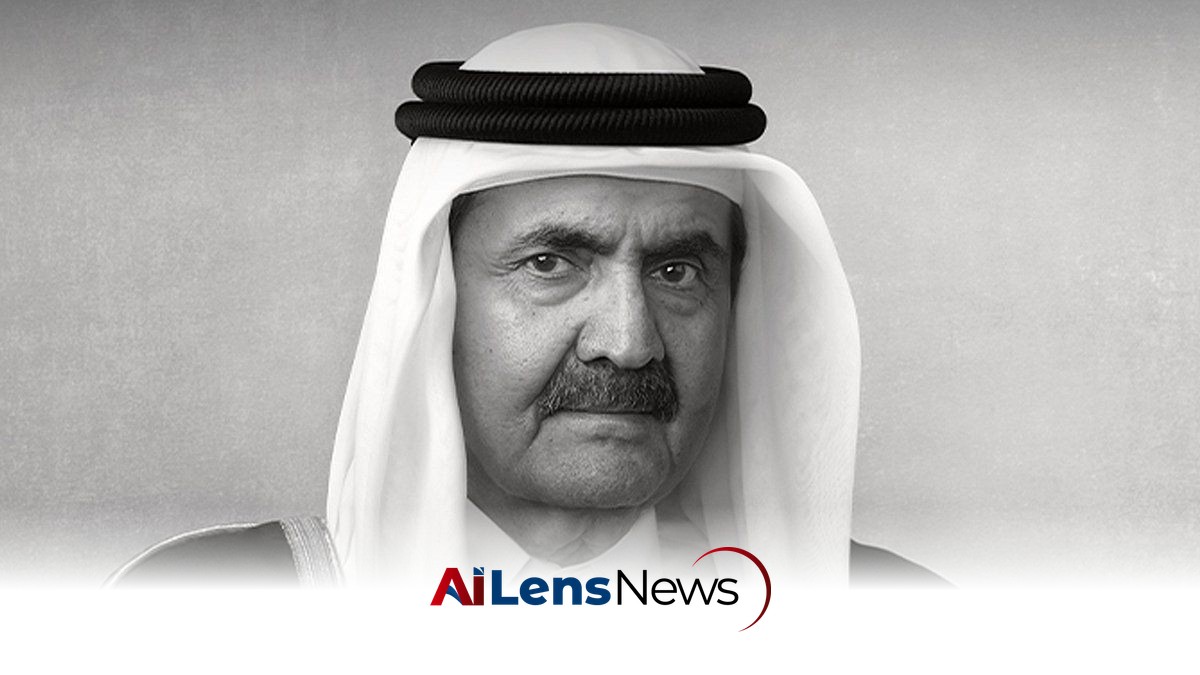


Sheikh Hamad bin Khalifa Al Thani, former Emir of Qatar, has passed away at 74, marking a significant loss for the nation and its leadership.
Kuwait City, Kuwait Jul 12, 2026 ALN: Qatar’s former Emir Sheikh Hamad bin Khalifa Al Thani has died at the age of 74, the country’s Amiri Diwan announced. His passing marks the end of an era for a nation that has undergone significant transformation under his leadership. Sheikh Hamad's reign was characterized by ambitious reforms that propelled Qatar into the global spotlight, reshaping not only the nation’s economy but also its social fabric and international relations.
In a statement, the Amiri Diwan expressed condolences, stating: “May Allah have mercy on his soul and grant him the best reward for his service and contributions to his homeland and nation.” This sentiment reflects the deep respect and admiration that many in Qatar and beyond held for Sheikh Hamad, who was a central figure in the rapid modernization of the country. His leadership style was often described as visionary, marked by a blend of pragmatism and ambition that sought to position Qatar as a leader in the Gulf region and the broader Arab world.
Sheikh Hamad ruled Qatar from 1995 until his abdication in 2013, and during this time, he was a pivotal figure in the country’s modern history. His leadership was characterized by a strategic vision that sought to elevate Qatar's status on the global stage. Under his rule, Qatar transformed from a relatively small and obscure Gulf state into a significant player in international politics and economics. This transformation was fueled by a combination of natural gas wealth and a proactive foreign policy that sought to engage with both Western and regional powers.
One of the hallmarks of Sheikh Hamad's reign was his commitment to economic diversification. Recognizing the limitations of relying solely on oil and gas revenues, he spearheaded initiatives to invest heavily in infrastructure, education, and healthcare. These investments laid the groundwork for Qatar's future growth and development, enabling the country to build a robust economy that is now considered one of the wealthiest in the world, with one of the highest per capita incomes. The economic policies implemented during his reign helped to stabilize the Qatari economy and reduce its dependence on hydrocarbon revenues, a challenge that many Gulf states continue to face.
Education was a particular focus for Sheikh Hamad, who established the Qatar Foundation. This organization aimed to promote education, science, and community development. Under his guidance, Qatar became a hub for higher education in the Middle East, attracting prestigious international universities to set up campuses in Doha, such as Weill Cornell Medicine and Georgetown University. This focus on education has had lasting implications for the country's human capital development, as it has fostered a generation of skilled professionals. The emphasis on education and research has also positioned Qatar as a center for innovation, with initiatives aimed at fostering entrepreneurship and technological advancement.
In addition to economic and educational advancements, Sheikh Hamad was instrumental in the establishment of Al Jazeera in 1996. The network has since grown into a major news organization with a global reach, known for its in-depth coverage of Middle Eastern affairs and its commitment to providing a platform for diverse voices. Al Jazeera has played a significant role in shaping public discourse in the region and has often been at the forefront of major news events, providing coverage that is sometimes critical of governments in the Arab world. The establishment of Al Jazeera represented a significant shift in media dynamics in the Middle East, challenging traditional narratives and offering a new perspective on regional issues.
Sheikh Hamad’s abdication in favor of his son, Sheikh Tamim bin Hamad Al Thani, in 2013 was seen as a significant transition in Qatari leadership. This move was relatively rare in the Gulf region, where monarchies typically see rulers remain in power until death. Sheikh Hamad’s decision to step down was viewed as a progressive act, allowing for a generational shift in leadership while ensuring stability in the governance of the country. Despite his abdication, Sheikh Hamad remained an influential figure in Qatari affairs, often consulted on key issues and continuing to play a role in shaping the country’s policies. His continued involvement in state matters reflected the respect he commanded within the political landscape of Qatar.
The news of his passing has prompted an outpouring of grief from citizens and leaders alike, reflecting his enduring legacy and the impact he had on the nation. Many citizens have taken to social media to express their condolences and share memories of Sheikh Hamad’s contributions to the country. His vision for a modern, prosperous Qatar resonated deeply with the populace, and he is remembered as a leader who prioritized national development and international engagement. The collective mourning among the citizens underscores the personal connection many felt to Sheikh Hamad and the profound impact he had on their lives.
As Qatar mourns the loss of its former Emir, tributes are expected to pour in from around the world, honoring his contributions to both the country and the broader region. Leaders from various nations are likely to acknowledge his role in fostering diplomatic relations and promoting stability in a region often characterized by conflict and tension. Sheikh Hamad's foreign policy initiatives, which included mediation efforts in regional disputes and support for humanitarian causes, have left a legacy that will be remembered in international diplomatic circles.
Sheikh Hamad’s passing also raises questions about the future direction of Qatar under the continued leadership of Sheikh Tamim. While Sheikh Tamim has already established his own vision for the country, the legacy of his father’s policies will undoubtedly influence his approach to governance. The younger emir has already demonstrated a commitment to continuing the modernization efforts initiated by Sheikh Hamad, focusing on sustainable development and economic diversification. As Qatar navigates the complexities of a rapidly changing global landscape, the continuity of Sheikh Hamad's vision may serve as a guiding principle for future policies.
In conclusion, the death of Sheikh Hamad bin Khalifa Al Thani marks a significant moment in Qatar's history. His leadership not only transformed the nation but also left a lasting impact on the Gulf region and beyond. As the country reflects on his legacy, it is clear that his contributions to Qatar's development will be remembered for generations to come. The future of Qatar, while uncertain, will undoubtedly be shaped by the foundations laid during Sheikh Hamad's reign, as the nation continues to seek a balance between tradition and modernity in an ever-evolving world.
To learn more about the latest developments in World News & International Affairs, stay updated with our exclusive reports and analyses on AiLensNews.

