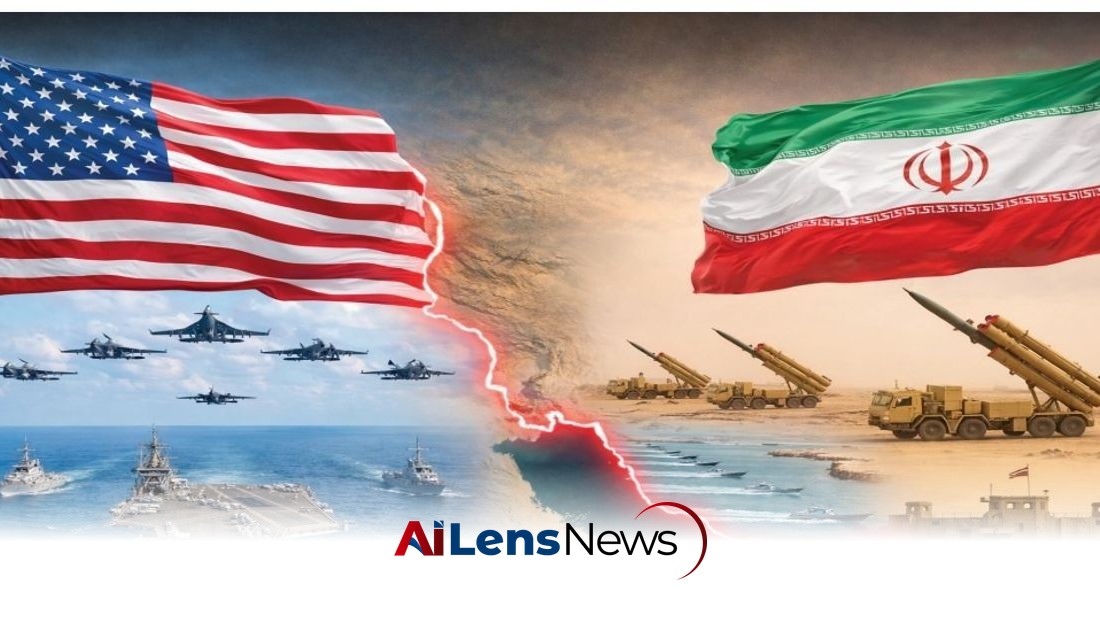


The US retaliated against Iran after an attack on a container ship in the Strait of Hormuz, escalating tensions in the region.
New Delhi, India Jul 12, 2026 ALN: The United States attacked Iran early Sunday morning following an Iranian assault on a vessel in the Strait of Hormuz, which resulted in the ship being set ablaze and its crew forced to abandon it. This incident marks a significant escalation in tensions in the region, which has been fraught with conflict and diplomatic strife for several years. In retaliation for the US strike, Iran launched strikes targeting Bahrain, Qatar, and the United Arab Emirates, further complicating an already volatile situation.
The Strait of Hormuz is a vital waterway through which approximately one-fifth of the world's oil supply passes. Given its strategic importance, any military actions in this region have far-reaching implications not only for the countries involved but also for global energy markets and international relations. The new wave of conflict in the Persian Gulf comes after US President Donald Trump indicated that any interim deal and ceasefire in the ongoing Iran war was "over," signaling a hardening of US policy towards Iran.
US Defence Secretary Pete Hegseth commented online, stating: "Iran made a poor choice. Now they pay," reflecting the US government's stance that it will respond decisively to perceived Iranian aggression. This response underscores a broader strategy by the United States to deter Iranian influence in the region, which has been a key focus of US foreign policy under the Trump administration.
The United Arab Emirates issued a public warning on Sunday regarding an incoming missile and drone attack, with explosions reported in nearby Qatar. Shortly after the blasts, missile alerts were activated in Qatar, where the military confirmed it intercepted incoming Iranian fire. This incident highlights the interconnectedness of regional security, as attacks on one nation can quickly escalate into broader conflicts involving neighboring countries.
Missile alerts were also triggered in Bahrain, an island nation in the Persian Gulf that hosts the US Navy's 5th Fleet. The presence of US military forces in Bahrain is significant, as it serves as a strategic base for American operations in the region. The activation of missile alerts in both Qatar and Bahrain indicates a heightened state of alert among Gulf nations, which are increasingly concerned about Iranian military capabilities and intentions.
Details regarding the specific locations under attack in the UAE remain unclear, as the nation had not previously been targeted in this latest round of Iranian aggression. The UAE has traditionally maintained a cautious approach to Iran, balancing its economic ties with the need for security in a region marked by uncertainty. The involvement of the UAE in this conflict could signal a shift in its foreign policy, as it may feel compelled to take a more active role in regional security matters.
In the attack on the Strait of Hormuz, a Cyprus-flagged container ship was struck by Iranian forces, sustaining "significant engine room damage," with one civilian crew member reported missing, according to US Central Command. The targeting of commercial vessels raises serious concerns about the safety of maritime navigation in one of the world's busiest shipping lanes. Such incidents can lead to increased insurance costs for shipping companies and may prompt nations to reconsider their naval presence in the region.
The United Kingdom Maritime Trade Operations center, managed by the British military, indicated that the ship had been navigating a route close to the shoreline of Oman, a strategy employed by vessels to avoid Iranian territorial waters. The ship's crew abandoned the vessel amid the fire, as reported by the center. This incident serves as a reminder of the risks faced by commercial shipping in the region, where geopolitical tensions can quickly escalate into military confrontations.
Iran's paramilitary Revolutionary Guard claimed that several vessels "disregarded our warnings and instructions to correct their course and proceed along the approved route." They stated that one vessel was "struck by a warning shot and brought to a stop." This claim reflects Iran's longstanding view of the Strait of Hormuz as a critical area of national interest, and its willingness to assert control over maritime traffic in the region. Iran's actions are often framed as defensive measures against what it perceives as foreign encroachment in its territorial waters.
Iran further declared that the Strait of Hormuz would remain closed "until further notice" and warned of potential strikes on "additional enemy bases in the region" if further attacks occurred. This statement signals Iran's intent to escalate its military response if it feels threatened, potentially leading to a broader conflict that could involve multiple nations. The closure of the Strait of Hormuz would have dire implications for global oil supply and could lead to significant increases in oil prices, affecting economies worldwide.
The implications of this conflict extend beyond the immediate military engagements, as it also raises questions about the effectiveness of diplomatic efforts to resolve tensions between the US and Iran. Previous negotiations aimed at curbing Iran's nuclear program and reducing regional hostilities have faltered, leaving a vacuum that has been filled by military action. As both sides continue to engage in tit-for-tat responses, the prospect of a negotiated settlement appears increasingly remote.
Additionally, the involvement of regional allies and adversaries complicates the situation further. Countries such as Saudi Arabia, which views Iran as a primary threat, may feel compelled to take a more active role in countering Iranian influence. Conversely, nations with closer ties to Iran, such as Iraq and Syria, may provide support to Tehran in the face of US aggression, further entrenching divisions in the region.
In conclusion, the recent US strikes against Iran following the attack on a vessel in the Strait of Hormuz mark a significant escalation in tensions in the Persian Gulf. The ramifications of this conflict are likely to be felt across the globe, as the stability of oil markets and international shipping routes come under threat. As both the US and Iran continue to respond militarily to perceived provocations, the potential for a broader conflict looms large, raising urgent questions about the future of diplomacy in the region and the prospects for peace.
To learn more about the latest developments in World News & International Affairs, stay updated with our exclusive reports and analyses on AiLensNews.

