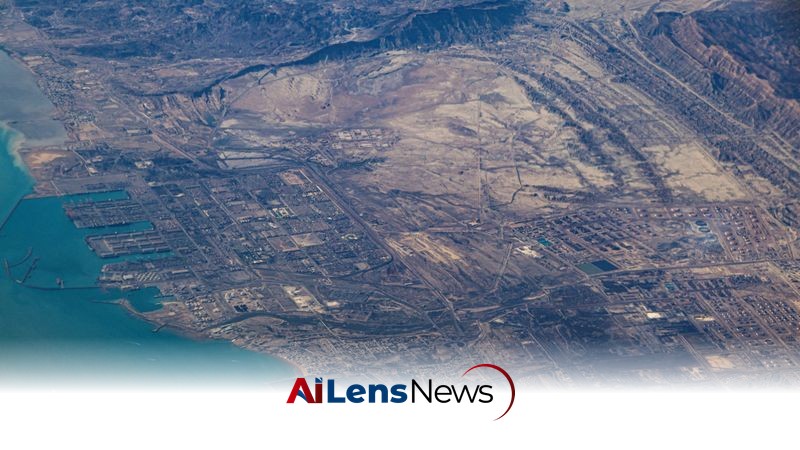


The US military has conducted further strikes on Iran following an attack by the Islamic Revolutionary Guard Corps on a container ship in the Strait of Hormuz.
New Delhi, India Jul 12, 2026 ALN: The ongoing tensions in the Middle East escalated once again as the US military launched a series of strikes on Iranian targets. This action comes in response to a recent attack by the Islamic Revolutionary Guard Corps (IRGC) on a container ship navigating through the strategically vital Strait of Hormuz. This maritime corridor is not only essential for the transit of oil but also serves as a critical route for global trade, making any military engagement in the area particularly concerning for international markets and security.
The incident occurred on Sunday, when the IRGC targeted the vessel, raising alarms about the safety of maritime navigation in one of the world's busiest shipping lanes. The Strait of Hormuz is a crucial passage for oil and gas shipments, with approximately one-fifth of the world's oil supply passing through this narrow waterway. Given its importance, any disruption in this area can have far-reaching implications, affecting oil prices and the economies of nations reliant on these energy supplies.
The relationship between the US and Iran has been fraught with tension for decades, characterized by a series of conflicts and confrontations that have roots dating back to the 1979 Iranian Revolution. The US has long viewed Iran's actions in the region, including its support for proxy groups and its nuclear ambitions, as a direct threat to both regional stability and international security. The IRGC has been involved in various military operations across the region, often leading to direct confrontations with US forces, particularly in Iraq and Syria.
In recent months, both nations had engaged in a fragile ceasefire, which now appears to be shattered following the latest attack. This ceasefire was a result of diplomatic efforts aimed at de-escalating tensions, particularly after a series of confrontational incidents and retaliatory actions. However, the IRGC's attack on the commercial vessel indicates a willingness to escalate military actions, prompting the US response.
The US military's response aims to deter further aggression from Iran and reassure allies in the region about the commitment to maintaining security in maritime operations. The US has consistently emphasized the importance of freedom of navigation in international waters, and the attack on a commercial vessel is seen as a direct challenge to that principle.
The US military has not disclosed specific details about the targets of the recent strikes, but officials have indicated that they were aimed at IRGC facilities believed to be involved in maritime attacks. This military action is part of a broader strategy to counter Iranian influence in the region, which includes not only military responses but also diplomatic and economic measures aimed at isolating Iran.
These actions are indicative of a more aggressive posture by the US in the region, reflecting a broader strategy to contain Iran's influence and prevent further incidents that could escalate into larger conflicts. The military strikes also send a message to other regional actors about the US's commitment to defending its interests and those of its allies.
The international community has expressed concern over the escalating violence. Several nations have called for restraint and dialogue to prevent further military escalation. The United Nations has urged both parties to return to diplomatic negotiations to resolve their differences peacefully. There is a growing fear that continued military actions could lead to a broader conflict, impacting not only regional stability but also global oil prices and international trade.
Countries that rely heavily on oil imports, particularly those in Europe and Asia, are closely monitoring the situation, as any disruption in the Strait of Hormuz could lead to significant increases in oil prices. The potential for a military confrontation between the US and Iran raises alarms about the stability of the entire Middle East, a region already fraught with conflicts and political instability.
Moreover, the strikes have drawn mixed reactions from various global powers. Some nations have expressed support for the US's right to defend its interests, while others have criticized the military response as an escalation that could lead to unintended consequences. The delicate balance of power in the region is threatened by these developments, and the potential for a miscalculation or an accidental confrontation remains high.
The implications of the US strikes extend beyond the immediate conflict between the US and Iran. The situation has the potential to affect global security dynamics, particularly in the context of energy supplies and international trade routes. The Strait of Hormuz is a critical chokepoint for oil shipments, and any military action that disrupts this flow can lead to significant economic repercussions not only for oil-exporting and importing nations but also for global markets.
Furthermore, the escalation of military actions raises the specter of a wider regional conflict. Neighboring countries, including Saudi Arabia and the United Arab Emirates, may feel compelled to take sides or bolster their own military capabilities in response to perceived threats from Iran. This could lead to an arms race in the region, further destabilizing an already volatile area.
Additionally, the potential for increased Iranian aggression against US interests or allies in the region poses a significant risk. Iran has a history of utilizing proxy groups across the Middle East, which could be mobilized to retaliate against US actions, leading to a cycle of violence that is difficult to contain.
The recent US strikes on Iran signify a critical moment in the ongoing conflict, highlighting the fragile nature of peace in the region. As both nations navigate this volatile situation, the potential for further escalation remains high, necessitating careful diplomatic efforts to restore stability. The situation emphasizes the need for a renewed focus on dialogue and negotiation, as military solutions alone are unlikely to resolve the deep-rooted issues between the US and Iran.
In the coming weeks, it will be essential for both sides to consider the broader implications of their actions and the potential for a diplomatic resolution. The international community will need to play a proactive role in facilitating discussions to de-escalate tensions and promote a peaceful resolution to the ongoing conflict. As history has shown, military confrontations can have lasting repercussions, and the stakes are particularly high in a region as strategically significant as the Middle East.
To learn more about the latest developments in World News & International Affairs, stay updated with our exclusive reports and analyses on AiLensNews.

