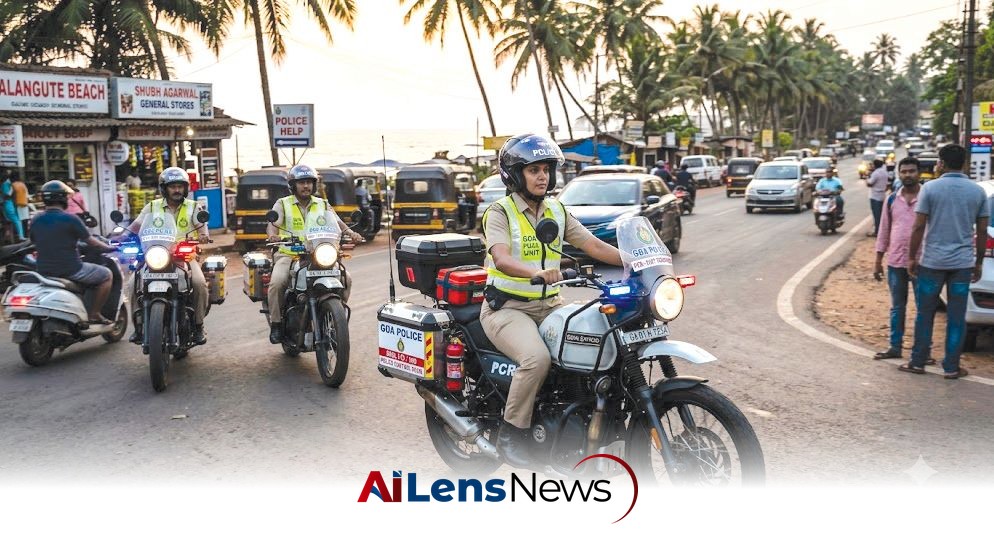


Goa Police are introducing two-wheelers to their Police Control Room fleet to enhance response times to distress calls, improving public safety.
New Delhi, India Jul 11, 2026 ALN: For the first time, Goa Police are introducing two-wheelers to the Police Control Room (PCR) fleet, which currently has over 55 four-wheelers, to respond to distress calls within minutes. This initiative marks a significant step in enhancing the efficiency and effectiveness of the police response system in the state, particularly in areas where access may be obstructed by traffic or narrow roadways. The decision to add two-wheelers to the fleet reflects a growing recognition of the need for agile and responsive policing, especially in densely populated or high-traffic areas.
A senior police officer stated that the introduction of two-wheelers will enable police to reach incident spots without any hurdles, thereby improving response time. The ability of two-wheelers to navigate congested areas and tight spaces is expected to facilitate quicker deployment to emergencies, which is crucial in situations where every second counts. The officer added that PCR two-wheelers will be able to easily maneuver to reach the incident scene as quickly as possible, allowing law enforcement to take immediate action when necessary. This is particularly important in Goa, where the combination of heavy tourist traffic and narrow streets can complicate emergency responses.
This move will not only improve response times but also increase police visibility on the roads. Enhanced visibility is a key factor in fostering public confidence in law enforcement agencies. Citizens are more likely to feel secure and supported when they see police presence in their communities, particularly in areas known for higher crime rates or tourist traffic, such as Goa's popular beaches and nightlife hotspots. The presence of police on two-wheelers can also serve as a deterrent to potential criminal activity, contributing to overall community safety.
Director General of Police (DGP) Alok Kumar announced that 40 new two-wheelers will soon be added to the PCR fleet. "Besides, 15 more four-wheelers will also be included in the PCR vehicles," Kumar said, expressing confidence that this will reduce the PCR response time to distress calls. The addition of both two-wheelers and four-wheelers represents a comprehensive approach to modernizing the police fleet and ensuring that the police force can respond effectively to a variety of situations. The integration of two-wheeled vehicles is a strategic enhancement, allowing the Goa Police to adapt to the unique challenges presented by the state's geography and demographics.
Goa Police have already succeeded in considerably improving the PCR vehicle response time, cutting it down from over 18 minutes in December 2023 to 8.27 minutes in June 2026. This achievement reflects the ongoing efforts of the Goa Police to optimize their operations and enhance public safety. Kumar stated that the target is to bring the response time down to around six minutes, a goal that, if achieved, could significantly improve the outcomes of emergency situations. The commitment to reducing response times is indicative of a broader trend in law enforcement, where timely intervention is increasingly recognized as critical to effective policing.
According to police, the two-wheelers will be especially helpful along the coastal belt in areas such as Calangute, Baga, and Candolim. These locations are not only popular tourist destinations but also have a high concentration of foot traffic and potential incidents, ranging from petty crimes to emergencies requiring immediate police intervention. Sources indicated that the two-wheelers will also carry an emergency kit, which will include a mini or compact fire extinguisher, further equipping officers to handle a range of situations effectively. This proactive approach to emergency readiness underscores the police's commitment to community safety and preparedness.
Currently, the fleet consists of 48 PCR vehicles, which include highway patrol vehicles, as well as an additional 10 pink force vehicles. The pink force vehicles are specifically designated for women's safety, reflecting an increasing recognition of the need to address gender-specific concerns in public safety. In October 2019, Chief Minister Pramod Sawant inaugurated the Emergency Response Support System (ERSS) control room and flagged off PCR vans fitted with mobile data terminals (MDT). This initiative was part of a broader strategy to enhance the technological capabilities of law enforcement in Goa, aiming to create a more responsive and effective police force.
The project was executed by the Centre for Development of Advanced Computing (C-DAC), a premier institution under the Ministry of Electronics and Information Technology, Government of India. By leveraging advanced technology, the Goa Police have been able to improve their operational efficiency significantly. A significant feature of this system is that a call receiver can instantly see the caller’s details on-screen. This capability allows for a more informed and rapid response, as the built-in software enables the receiver to find the exact location of the caller on a Geographical Information System (GIS) map. Such technological advancements are crucial in today’s fast-paced environment, where timely information can make a significant difference in emergency situations.
Once the location is identified, the call connects immediately to the MDT of the nearest emergency vehicle without delay. This seamless integration of technology into the police response framework is indicative of a modern approach to law enforcement, where data and technology play a crucial role in enhancing public safety and operational efficiency. The ability to dispatch the nearest available unit in real-time is a game-changer in emergency response, reducing the time it takes for officers to arrive at the scene.
The introduction of two-wheelers into the PCR fleet is expected to have wide-ranging implications not only for the police force but also for the general public. As Goa continues to attract tourists and residents alike, the demand for rapid and effective law enforcement response will only increase. By adopting this innovative approach, the Goa Police are positioning themselves to better meet the challenges of modern policing. This initiative also aligns with the growing trend of police departments around the world adopting more flexible and responsive strategies to improve community relations and public safety.
Moreover, the initiative aligns with broader trends in law enforcement across the globe, where police agencies are increasingly looking to adopt more agile and responsive strategies. The integration of two-wheelers into the fleet can serve as a model for other regions facing similar challenges, showcasing the potential benefits of adapting police resources to meet the unique demands of different environments. The effectiveness of this model could encourage other police departments to explore similar initiatives, potentially leading to widespread improvements in emergency response capabilities.
As the Goa Police continue to evolve their strategies and resources, the focus on improving response times and enhancing public safety will remain paramount. The addition of two-wheelers to the PCR fleet is just one of many steps being taken to ensure that law enforcement in Goa is equipped to handle the complexities of modern society, ultimately striving to create a safer environment for all residents and visitors. The ongoing commitment to enhancing police capabilities, combined with community engagement and technological advancements, will be crucial in addressing the evolving challenges faced by law enforcement in the years to come.
To learn more about the latest developments in Health & Public Safety, stay updated with our exclusive reports and analyses on AiLensNews.

