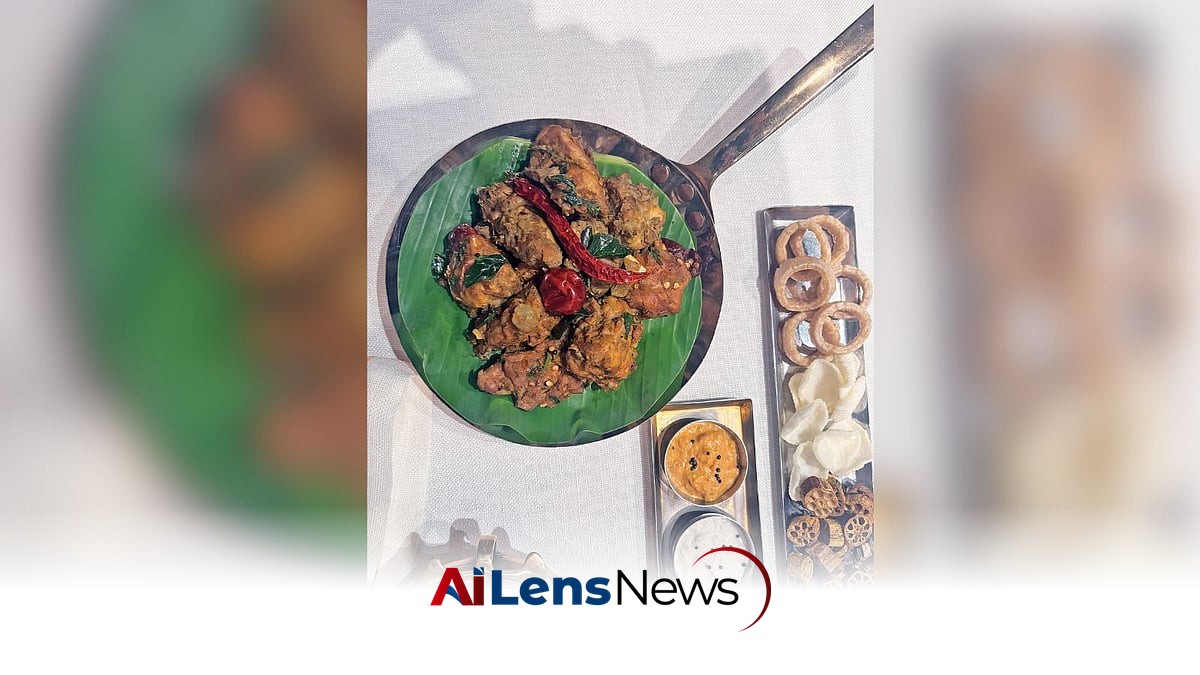


Explore the rich culinary heritage of Tamil Nadu with these traditional recipes, featuring authentic ingredients and preparation methods.
New Delhi, India Jul 12, 2026 ALN:
1.5 kg country chicken (nattu kozhi), cleaned and cut
300 gm shallots (sambar onions), peeled
20 dry red chillies
50 gm garlic, crushed
30 gm ginger
5 gm turmeric powder
25 gm curry leaves
100 gm fresh coconut, thinly sliced
100 ml sesame oil
25 gm salt
FOR THE MARINADE:
3 gm turmeric powder
10 gm crushed black pepper
30 gm ginger-garlic paste
10 g salt
HOW TO MAKE:
Marinate the country chicken with the ginger-garlic paste, turmeric powder, crushed black pepper, and salt. Set aside for 30 minutes.
Heat sesame oil in a heavy-bottomed kadai. Add the dry red chillies and curry leaves, and sauté until aromatic.
Add the crushed garlic and shallots, and sauté until the shallots turn light golden.
Add the marinated chicken and turmeric powder. Cook on high heat for 8-10 minutes.
Pour in 500 ml water, cover, and cook on a low flame for 35-45 minutes, stirring occasionally, until the chicken is tender.
Once the water has reduced, adjust the salt if required and add the crushed black pepper.
Add the coconut slices and continue roasting over medium heat.
Stir frequently until the moisture evaporates, and the chicken is dry, well coated in the masala, and lightly caramelised.
Garnish with fresh curry leaves and serve hot.
SERVING SUGGESTION:
Serve hot with steamed rice and rasam.
INGREDIENTS:
250 gram pirandai (veld grape stem), cleaned and chopped
50 ml sesame oil
30 g tamarind
30 g urad dal
30 g chana dal
10 dry red chillies
100 g grated coconut
2 g asafoetida
15 g salt
For the tempering:
15 ml sesame oil
5 g mustard seeds
10 g curry leaves
HOW TO MAKE:
Apply a little sesame oil to your hands before handling the pirandai to prevent skin irritation.
Remove the edges and fibres, wash thoroughly, and chop into small pieces.
Heat sesame oil in a pan and sauté the pirandai for 8–10 minutes until the raw smell disappears.
In the same pan, roast the urad dal, chana dal, dry red chillies, and asafoetida until golden.
Add the tamarind and grated coconut, and sauté for another minute.
Allow the mixture to cool completely.
Grind the roasted ingredients along with the sautéed pirandai and salt, adding very little water, to a coarse thuvayal consistency.
For the tempering, heat sesame oil, splutter the mustard seeds, add the curry leaves, and pour over the thuvayal. Mix well.
SERVING SUGGESTION:
Serve with hot steamed rice drizzled with sesame oil or ghee, or as an accompaniment to idli and dosa.
INGREDIENTS:
50 g foxtail millet (thinai)
50 g kodo millet (varagu)
50 g little millet (samai)
50 g barnyard millet (kuthiraivali)
50 g finger millet (ragi)
50 g green gram (pachai payaru)
50 g chickpeas (kondakadalai)
50 g cowpea (karamani)
50 g horse gram (kollu)
Other ingredients:
500 g jaggery
1.5 litres thin coconut milk
500 ml thick coconut milk
5 g cardamom powder
3 g dry ginger (sukku) powder
30 ml ghee
50 g cashew nuts
30 g raisins
2 litres water
HOW TO MAKE:
Wash all the grains and legumes separately and soak them for 6–8 hours.
Drain and cook the navadhanyam mix in water until the grains and legumes are soft.
Dissolve the jaggery in a little warm water and strain to remove impurities.
Add the jaggery syrup to the cooked grains and simmer for 10 minutes.
Pour in the thin coconut milk and cook over a low flame for 10–15 minutes.
Stir in the cardamom powder and dry ginger powder.
Reduce the heat and add the thick coconut milk. Mix well without allowing the payasam to boil.
Heat the ghee in a pan and fry the cashew nuts and raisins until golden.
Add them to the payasam and stir gently.
Let the payasam rest for 10 minutes before serving.
These traditional recipes showcase the rich culinary heritage of Tamil Nadu, a state in southern India known for its vibrant culture and diverse food practices. Tamil Nadu's cuisine is characterized by a variety of spices, herbs, and cooking techniques, deeply rooted in the region's agricultural practices and local ingredients.
The PALLIPALAYAM NATTU KOZHI VARUVAL, or Pallipalayam Chicken Fry, is a dish that highlights the use of country chicken, known for its unique flavor and texture compared to commercial poultry. The country chicken is often preferred in rural areas for its taste and nutritional value. The marinade, which includes ginger-garlic paste and crushed black pepper, infuses the meat with aromatic flavors, while the cooking process ensures that the chicken remains tender and juicy. This dish is often served during special occasions and gatherings, making it a staple in many Tamil households.
PIRANDAI THUVAYAL, or Veld Grape Stem Chutney, demonstrates the use of lesser-known local ingredients. Pirandai, known for its medicinal properties, is often used in traditional medicine as well as in cooking. The chutney is a versatile accompaniment that enhances the flavor of rice and lentil dishes, embodying the resourcefulness of Tamil cuisine, where every ingredient is utilized to its fullest potential.
NAVADHANYAM MIX is a representation of the traditional Tamil feast, often served during festivals and special occasions. The mix of various millets and legumes reflects the agricultural diversity of the region. This dish is not only nutritious but also showcases the importance of millets in Tamil Nadu's food culture, which has been gaining recognition for its health benefits in recent years. The use of jaggery and coconut milk adds a unique sweetness and richness, making it a beloved dessert among many.
Overall, these recipes not only celebrate the culinary traditions of Tamil Nadu but also serve as a reminder of the importance of preserving local food practices and ingredients. As global food trends shift towards sustainability and health-conscious eating, the traditional recipes from Tamil Nadu offer valuable insights into a food culture that emphasizes the use of fresh, local produce and time-honored cooking methods. By embracing these dishes, we can keep alive the rich heritage of Tamil cuisine while also promoting a more sustainable and healthful way of eating.
To learn more about the latest developments in Society & Social Issues, stay updated with our exclusive reports and analyses on AiLensNews.

