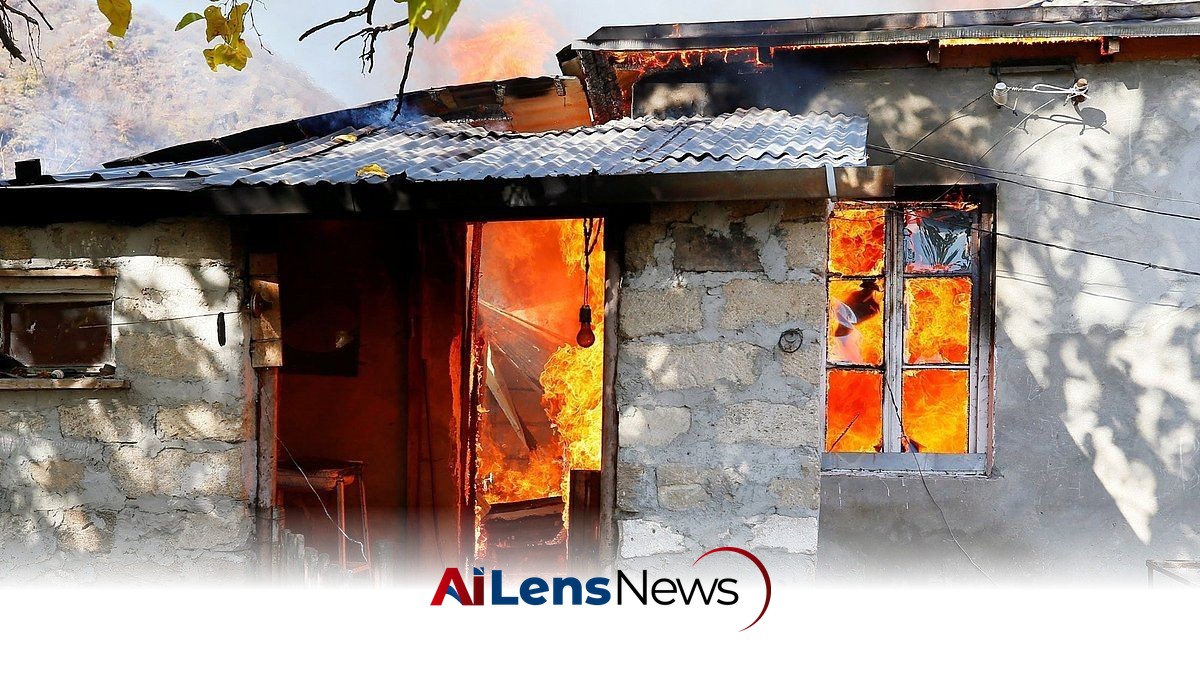


Tensions rise in Manipur as three abandoned Meitei houses are set on fire, prompting a significant police response to prevent further unrest.
Gangtok, India Jul 11, 2026 ALN: Guwahati: Today around 1:30pm, new problems arose in Manipur after three abandoned Meitei houses were allegedly set on fire near the Kanto Sabal area along the Imphal West–Kangpokpi border, prompting a large-scale security operation to prevent the situation from escalating.
The incident took place at around 1:30 pm, when people working in nearby paddy fields noticed smoke billowing from the abandoned houses in Kanto Sabal and alerted the police. This incident is part of a larger context of ongoing ethnic tensions in Manipur, particularly between the Meitei and Kuki communities, which have been exacerbated by a series of violent clashes and civil unrest in recent months.
Manipur has a complex demographic composition, with the Meitei community predominantly residing in the Imphal Valley and the Kuki community mainly inhabiting the surrounding hill districts. The tensions have roots in historical grievances, land rights, and political representation, which have often led to violent confrontations. The recent escalation of violence in the region has drawn national attention, with various stakeholders calling for a comprehensive dialogue to address the underlying issues.
The Meitei community, which constitutes a significant portion of Manipur's population, has historically occupied the valley regions and has been influential in the state's political landscape. Conversely, the Kuki community, along with other tribal groups, has been concentrated in the hill districts and has often felt marginalized in the political discourse. The competition for resources, land, and political representation has created a volatile environment, leading to a cycle of mistrust and violence.
In the latest incident, soon after the fire was reported, a large crowd, estimated to comprise around 1,000 people, allegedly advanced from the Leimakhong side towards the border area, raising fears of further unrest. The mobilization of such a significant number of people indicates the heightened emotions surrounding the situation, as community members often rally in response to perceived threats to their identity, property, or safety. This reaction is reflective of the broader sentiment in the region, where individuals feel compelled to defend their community against perceived aggressions.
In response to the advancing crowd, police launched an operation to prevent the group from moving forward and to restore order. The police team fired tear gas shells and smoke bombs along the Leimakhong–Kanto Sabal border to disperse the gathering and contain the situation. This tactic, while aimed at crowd control, has been met with criticism in the past for potentially escalating tensions rather than alleviating them. Critics argue that such measures can provoke further anger and resentment among the communities involved, making reconciliation efforts more challenging.
Simultaneously, security teams worked to extinguish the fire and prevent it from spreading to nearby areas. The swift action by the police and security forces highlights the urgent need to maintain public order in a region that has been marked by volatility. However, the use of force in such situations often raises questions about human rights and the appropriate level of response from law enforcement. The balance between maintaining order and respecting the rights of individuals is a delicate one, and authorities must navigate these complexities carefully.
Several people were reportedly injured during the security operation, although officials have not disclosed the exact number of casualties. No fatalities have been reported so far, which is a small relief in an environment where violence has become alarmingly frequent. The potential for further violence remains high, and police have intensified security in the area, deploying additional personnel and resources to monitor the situation closely. The presence of security forces is intended to deter further unrest, but it can also lead to increased tensions if community members perceive their presence as an occupation rather than a protective measure.
The implications of this incident extend beyond immediate public safety concerns. The ongoing unrest in Manipur has significant socio-political ramifications, not just for the state but for the broader region. The tensions have the potential to affect local governance, economic stability, and community relations. Furthermore, the situation has attracted the attention of national leaders and organizations, who may feel compelled to intervene or mediate in an effort to restore peace. The involvement of external parties, while sometimes necessary, can complicate local dynamics and may not always align with the needs or desires of the communities involved.
The state government has faced criticism for its handling of the situation, with calls for a more proactive approach to address the grievances of both communities. Many believe that without meaningful dialogue and reconciliation efforts, the cycle of violence will continue, leading to further suffering for the people of Manipur. This criticism reflects a broader frustration among residents who feel that their voices are not being heard in the political arena, and that their concerns about land rights and representation are being sidelined.
In light of these events, the public is awaiting further details on the situation, including the response from local leaders and government officials. The need for an effective and sustainable resolution to the underlying issues is more pressing than ever, as the people of Manipur grapple with the consequences of ongoing ethnic strife. Community leaders have called for calm and restraint, emphasizing the importance of dialogue over violence. However, the path to reconciliation is fraught with challenges, as deep-seated grievances and historical animosities must be addressed in a manner that is acceptable to both sides.
In conclusion, the incident involving the burning of the abandoned Meitei houses is a stark reminder of the fragility of peace in Manipur. The state's history of ethnic conflict, compounded by recent events, underscores the importance of addressing the root causes of discord. As the situation develops, it will be crucial for authorities to engage with community leaders and stakeholders to foster understanding and cooperation among the diverse populations that call Manipur home. The road to peace will require not only immediate measures to restore order but also long-term strategies to build trust and collaboration between the Meitei and Kuki communities, ensuring that all voices are heard and respected in the quest for a harmonious future.
To learn more about the latest developments in Local & Regional, stay updated with our exclusive reports and analyses on AiLensNews.

