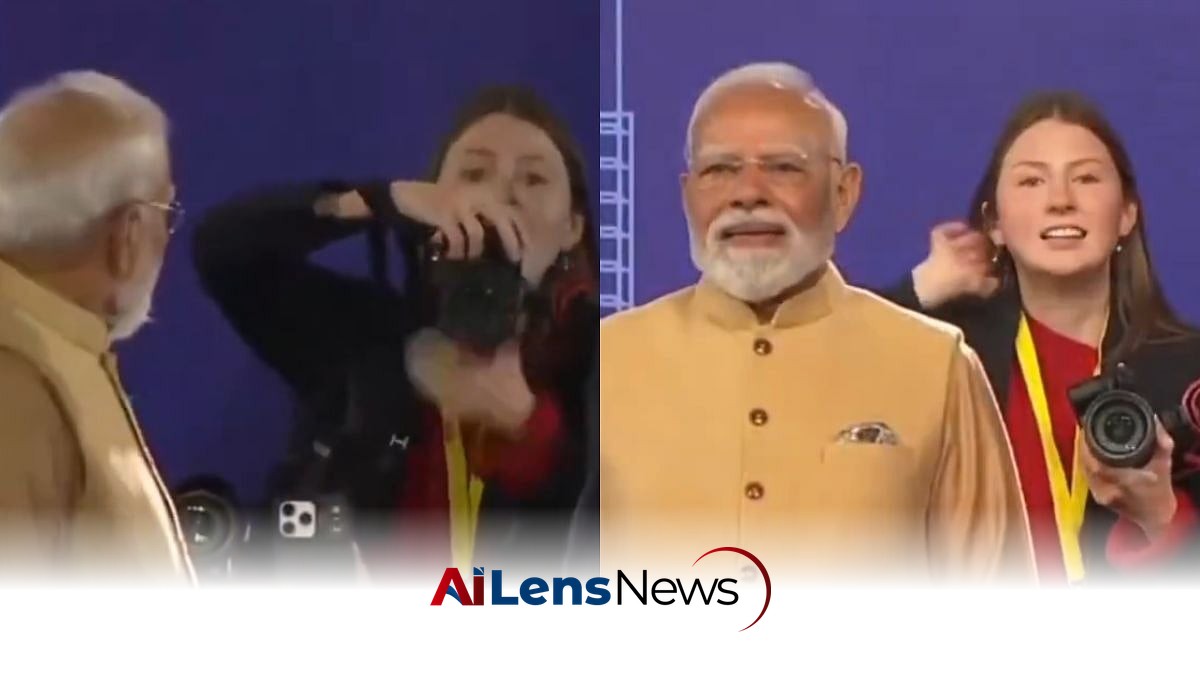


A brief interaction between PM Modi and a woman cameraperson during his address in Melbourne has captured widespread attention on social media.
New Delhi, India Jul 12, 2026 ALN: The recent interaction between Prime Minister Narendra Modi and a woman cameraperson during his address to the Indian community at Melbourne's Marvel Stadium has captured significant attention on social media, becoming a viral moment that transcends the main content of his speech. This incident not only highlights the personal engagement between leaders and the media but also reflects broader themes of cultural connection and the role of the Indian diaspora in global contexts.
The video clip that has gone viral shows PM Modi, while addressing a crowd of approximately 30,000 attendees, responding to a gesture from a woman cameraperson situated behind the stage. In a brief but notable moment, the Prime Minister turns towards her, allowing her to take a photograph before he continues with his speech. This spontaneous interaction, lasting only a few seconds, has resonated with viewers, prompting widespread sharing and commentary across various social media platforms. The incident has been characterized as a highlight of the event, showcasing PM Modi's approachable demeanor and the significance of visual media in political engagements.
The event itself, held at the Marvel Stadium, was a significant gathering of the Indian diaspora in Australia, emphasizing the strong ties between the two nations. Australian Prime Minister Anthony Albanese was also present, and both leaders took the opportunity to underscore the growing partnership between India and Australia. The collaboration spans various sectors, including trade, education, and technology, reflecting a mutual interest in enhancing bilateral relations. The presence of a large crowd at the event further illustrated the vibrant Indian community in Australia and their active involvement in fostering connections with their homeland.
In his address, PM Modi referred to his visit as a "hat-trick" trip to Australia within the last 12 years, symbolizing the deepening relationship between India and Australia. This phrase not only signifies the frequency of his visits but also indicates the importance he places on strengthening ties with Australia, a country that has increasingly become a focal point for Indian expatriates. Modi highlighted the emotional connections that overseas Indians maintain with their families back home, emphasizing the role of technology in bridging distances. He noted that despite living thousands of kilometers away, families remain closely connected through daily video calls and virtual participation in significant family celebrations, showcasing the evolving nature of familial bonds in a globalized world.
Prime Minister Albanese, in his remarks, acknowledged PM Modi's popularity among the Indian diaspora, suggesting that the packed stadium was a testament to the strength of India-Australia relations. His comments reflect a broader acknowledgment of how cultural and historical ties influence diplomatic relations. The Indian community in Australia has been integral in promoting cultural exchange and understanding between the two nations, contributing significantly to various sectors, including business, education, and community service.
The viral moment involving the cameraperson has sparked conversations about the role of media in political events. It serves as a reminder of the human aspects of political leadership, where moments of connection can resonate powerfully with audiences. In an age where social media plays a pivotal role in shaping public perception, such interactions can enhance a leader's relatability and approachability. The incident also highlights the importance of visual storytelling in politics, where a single image or moment can encapsulate broader themes of connection, engagement, and community.
Moreover, this moment can be seen as part of a larger narrative regarding the representation of women in media and politics. The interaction between PM Modi and the woman cameraperson underscores the visibility and recognition of female professionals in fields that have historically been male-dominated. As women increasingly take on roles in journalism, photography, and other media-related professions, such moments can contribute to a shift in societal perceptions regarding gender roles and representation.
As the video continues to circulate online, it serves as a focal point for discussions around the significance of cultural events, the role of diaspora communities, and the evolving dynamics of international relations. The engagement between political leaders and their constituents, particularly in multicultural contexts like Australia, plays a crucial role in fostering understanding and cooperation between countries. The viral nature of this interaction exemplifies how moments of genuine connection can resonate widely, transcending geographical boundaries and cultural differences.
In conclusion, the brief interaction between PM Modi and the woman cameraperson at the Melbourne event has evolved into a significant moment that encapsulates various themes, including the importance of diaspora communities, the role of media in politics, and the ongoing evolution of cultural ties between nations. As both India and Australia continue to navigate their partnership, such moments of connection may serve as reminders of the human elements that underpin diplomatic relations and the shared values that unite diverse communities across the globe.
This incident also reflects the changing dynamics of political engagement in the digital age, where leaders are increasingly expected to connect with their audiences not just through speeches and policies but through personal interactions that humanize them. In a world where political discourse can often become polarized and contentious, moments like these provide a refreshing reminder of the potential for warmth and connection in public life.
Furthermore, the Indian diaspora in Australia is one of the fastest-growing ethnic communities, contributing to the rich multicultural tapestry of the nation. The community's presence has been bolstered by various factors, including educational opportunities, professional prospects, and familial ties. The interactions between Indian leaders and the diaspora serve to strengthen these bonds, fostering a sense of belonging and identity among expatriates while also promoting India's interests abroad.
As leaders like PM Modi engage with the diaspora, they not only reinforce their government's commitment to overseas citizens but also acknowledge the contributions of these communities to their host countries. Such recognition can enhance diplomatic ties and encourage greater cooperation on issues of mutual interest, ranging from trade to cultural exchange.
In addition to the immediate implications of this viral moment, it also raises questions about the future of political communication. As social media continues to evolve, the expectations of political leaders will likely shift. Engaging with constituents in a more personal and relatable manner may become increasingly important as voters seek authenticity and connection in an era characterized by rapid information exchange and digital interaction.
Ultimately, the interaction between PM Modi and the woman cameraperson serves as a microcosm of larger societal shifts. It highlights the importance of representation, the power of media in shaping public narratives, and the potential for political leaders to connect with their constituents in meaningful ways. As this moment continues to be shared and discussed, it will undoubtedly contribute to ongoing conversations about leadership, representation, and the role of the diaspora in shaping the future of international relations.
To learn more about the latest developments in Local & Regional, stay updated with our exclusive reports and analyses on AiLensNews.

