

The government has halted the tax on animals imposed by the KHADC, following complaints regarding its legality. The decision affects various livestock.
Shillong, India Jul 10, 2026 ALN: The animal husbandry department has officially stopped the tax on animals that was imposed by the Khasi Hills Autonomous District Council (KHADC). This decision has significant implications for the transportation of livestock in the region, particularly for local farmers and traders who rely on the movement of animals for their livelihoods.
The KHADC had issued a letter on June 1, imposing a tax on vehicles transporting various animals, including elephants, horses, and donkeys. This tax was intended to be enforced at a designated collection point at 19th Mile, Byrnihat, which is a significant transit point for livestock in the Ri-Bhoi District. The decision to levy a tax on the transportation of animals raised concerns among various stakeholders, including farmers, animal traders, and local transporters, who argued that such a tax could hinder their operations and increase costs significantly.
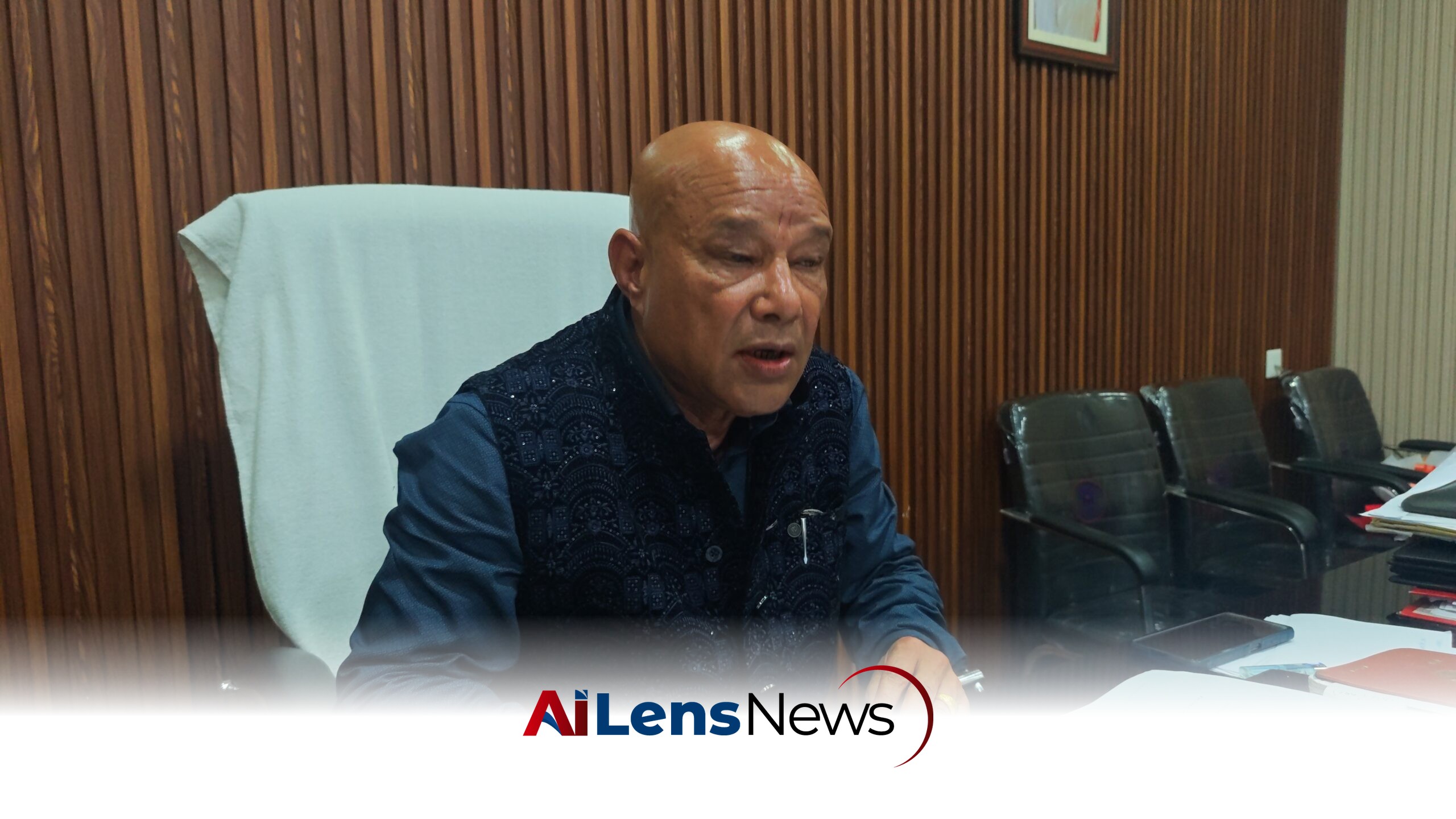
Speaking to reporters on June 10, Sanbor Shullai, the minister in charge of the animal husbandry department, stated that the government had received complaints regarding a work order issued by the KHADC to Francis L. Nongbri of Mawlai Nongkwar for the collection of tax on animals. These complaints highlighted concerns over the legality of the tax and its potential impact on the local economy.
“I endorsed it to our officials to examine whether it is legal or illegal,” Shullai said, indicating that the government was taking the matter seriously and was committed to ensuring that any taxation imposed was within legal boundaries. The inquiry into the legality of the tax was seen as a necessary step to protect the interests of local farmers and traders who depend on livestock for their economic stability.
Following this, the department wrote to the District Council Affairs on June 30, forwarding KHADC’s June 1 order that permitted the collection of toll on vehicles carrying livestock for the fiscal year 2026-2027. The letter from the animal husbandry department emphasized the need for clarity on the legality of such taxes and the implications for local commerce.
In the letter, Under Secretary P. Lyngdoh stated: “You are requested to kindly inform the KHADC and other Autonomous District Councils of the state that collection of toll on entry is not allowed.” This statement underscored the government's position that the imposition of such a tax was not permissible under existing laws governing the movement of livestock.
“Therefore, it is illegal. We have sent a letter from the department to disallow the district council from collecting tax on the entry of livestock,” Shullai added. This decisive action by the government reflects a broader commitment to maintain fair practices in the agricultural sector and to ensure that local farmers are not unduly burdened by additional financial constraints.
He further mentioned that all three Autonomous District Councils (ADCs) have been instructed not to levy entry tolls on livestock, signaling a unified stance by the state government against such taxation practices. This directive aims to prevent any future attempts by local councils to impose similar charges and to protect the interests of those involved in animal husbandry.
The letter imposing tax on animals below
Dated: Shillong, the 1st June, 2026.
To:
Shri. Francis L. Nongbri,
Mawlai Nongkwar.
Subject:
Work order for Collection of Toll on entry of Vehicles Carrying Livestock at 19th Mile, Byrnihat, Ri-Bhoi District.
With reference to the subject cited above, I am directed to inform you that the Executive Committee of the Khasi Hills Autonomous District Council is pleased to allow you to collect toll on entry of vehicles carrying livestock at 19th Mile, Byrnihat, Ri-Bhoi District for the year 2026-2027, effective immediately until March 31, 2027, under the following terms and conditions:
Animals exempted:
2. Proper notice boards displaying the rates charged should be erected at the collection place.
3. The names of the employees engaged for the purpose should be furnished, and they should be provided with proper identity cards.
4. The collection of fees should not exceed the prescribed rate.
5. There should be no double collection for animals transported on the same day.
6. The collection stations should not interfere with the free flow of vehicles on public roads.
7. Any violation of the above conditions may lead to cancellation of this order without any opportunity for appeal.
By Order etc..
Under Secretary to the Executive Committee
Khasi Hills Autonomous District Council
Shillong.
This episode of tax imposition and subsequent revocation sheds light on the complexities of governance in the Khasi Hills region, where local councils have significant autonomy over certain administrative functions. The KHADC is one of three Autonomous District Councils in the state of , and it has the authority to legislate on a range of issues, including land use and natural resource management. However, this autonomy is balanced by the state government's oversight, which ensures that local policies align with broader legal frameworks and do not infringe upon citizens' rights.
The implications of this decision are multifaceted. For one, it alleviates the financial burden on local farmers and traders, who have been facing increasing challenges due to market fluctuations and environmental changes. Additionally, it reinforces the importance of legal scrutiny in local governance, ensuring that councils operate within the bounds of the law.
Furthermore, this incident may serve as a precedent for future interactions between the state government and autonomous councils, particularly in matters of taxation and economic regulation. It highlights the necessity for clear communication and collaboration between different levels of government to foster a conducive environment for economic activity.
In conclusion, the recent revocation of the animal tax by the government marks a significant step in protecting the interests of local stakeholders in . It reflects the government's responsiveness to public concerns and underscores the importance of legal compliance in local governance. As the region continues to navigate the challenges of economic development, such measures will be crucial in ensuring that the rights and livelihoods of its residents are upheld.
To learn more about the latest developments in Economy, stay updated with our exclusive reports and analyses on AiLensNews.

