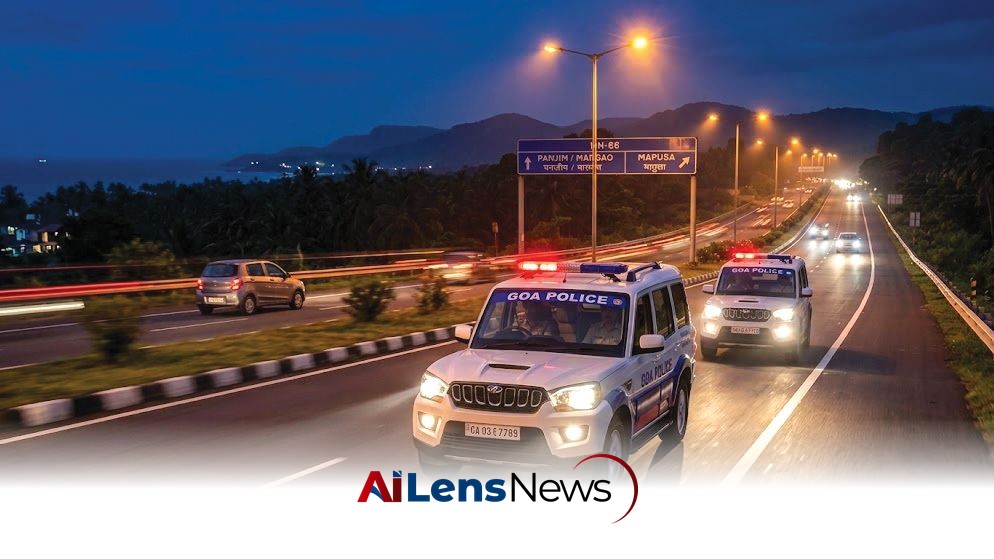


Goa Police is enhancing highway security by adding patrol vehicles and improving response times, aiming for quicker assistance to distress calls.
New Delhi, India Jul 12, 2026 ALN: Goa, known for its picturesque beaches, vibrant culture, and bustling tourism industry, is taking significant steps to enhance the safety and security of its roadways. The Goa Police is set to strengthen highway patrolling by deploying additional vehicles and implementing a detailed operational plan aimed at improving police visibility and ensuring a quick response to distress calls. This initiative is part of a broader strategy to bolster public safety on the roads, particularly in light of the increasing traffic volumes and the influx of tourists to the state.
A senior police officer has confirmed that seven additional four-wheelers will be added to the current fleet of three highway patrol vehicles. This expansion is intended to enhance the police presence on the highways, which serve as vital routes for both local residents and tourists. The decision to increase the number of patrol vehicles underscores the Goa Police's commitment to ensuring safer travel conditions and a more efficient response to emergencies. The presence of law enforcement on the highways can serve as a deterrent to potential criminal activities and provide reassurance to travelers.
As part of the newly prepared operational plan, police officials have identified ten strategic locations along the state’s national highways where the new vehicles will be stationed. Each of these vehicles will patrol a designated 22-kilometre stretch, ensuring that coverage is evenly distributed and that response times are minimized. Major national highways in the state include NH-66, which runs from Pernem to Canacona, NH-748 from Panaji to Mollem, and NH-566 linking Vasco and Ponda. These highways are not only crucial for connectivity within Goa but also for linking the state to neighboring regions, making their security paramount for both economic and social reasons.
In addition to enhancing highway patrols, the Goa Police is also introducing two-wheelers to the Police Control Room (PCR) fleet, which currently relies on over 55 four-wheelers. The introduction of two-wheelers is particularly significant in urban areas where traffic congestion can hinder response times. These agile vehicles will allow police officers to navigate through traffic more efficiently, enabling them to reach incident sites within minutes. This strategic move is anticipated to enhance the overall agility of the police force and facilitate more effective management of incidents on the roads.
Historically, the Goa Police have made strides in improving their response times. For example, they have successfully reduced PCR vehicle response times from over 18 minutes in December 2023 to an impressive 8.27 minutes by June 2026. This improvement is a direct outcome of strategic planning and resource allocation within the police department. The reduction in response time is a critical metric of police efficiency and effectiveness, as it directly impacts the safety and security of the public. The quicker the police can respond to emergencies, the better the outcomes for those in distress.
Director General of Police (DGP) Alok Kumar has set an ambitious target to further decrease this response time to around six minutes as additional vehicles join the fleet. The current active fleet consists of 48 PCR vehicles, including the three highway patrol vehicles. Additionally, there are 10 Pink Force vehicles dedicated to enhancing women's safety. The Pink Force initiative is part of a larger effort to address gender-based violence and ensure that women feel safe in public spaces, which is a critical aspect of community policing in Goa.
The technological foundation for these improvements can be traced back to October 2019, when Chief Minister Pramod Sawant inaugurated the Emergency Response Support System (ERSS) control room. This initiative included the deployment of PCR vans equipped with mobile data terminals (MDT). The ERSS is designed to streamline emergency response by integrating various communication channels and resources, thereby enhancing the overall efficiency of the police force. The project was executed by the Centre for Development of Advanced Computing (C-DAC), a premier institution under the Union Ministry of Electronics and Information Technology, highlighting the importance of technological advancements in public safety measures.
The ERSS system allows call receivers to instantly view a caller’s details and locate them precisely on a Geographical Information System (GIS) map. This capability enables the immediate routing of calls to the nearest emergency vehicle’s MDT without delay, significantly enhancing the speed and accuracy of police responses in emergency situations. Such advancements represent a significant step forward in modernizing the operational capabilities of the police force, ensuring that help can be dispatched quickly and efficiently when needed.
Moreover, the introduction of additional patrol vehicles and the enhanced technological infrastructure reflect a growing recognition of the need for proactive policing in Goa. As the state grapples with various issues related to crime and public safety, particularly with the influx of tourists, the demand for effective policing is more pressing than ever. The Goa Police's efforts to bolster highway security are likely to foster a sense of safety and security on the roads, which is essential for both residents and visitors alike.
The implications of these changes extend beyond mere statistics; they signify a cultural shift within the police force towards a more responsive and community-oriented approach. As the Goa Police continue to adapt to the evolving landscape of public safety, the focus on improving response times and increasing visibility on the highways will be critical in building trust and confidence among the public. A police force that is visible and responsive is more likely to be viewed positively by the community it serves.
In conclusion, the deployment of additional patrol vehicles, the integration of two-wheelers into the PCR fleet, and the utilization of advanced technology through the ERSS system all signify a comprehensive approach to enhancing highway security in Goa. These initiatives, if effectively implemented, have the potential to significantly improve the safety of road users, reduce response times, and foster a sense of security among the public. As these changes roll out, it will be essential for the Goa Police to monitor their effectiveness closely and make further adjustments as necessary to ensure the highest standards of safety and security for all road users. The commitment to public safety is a continuous journey, and the Goa Police are taking significant steps in the right direction.
To learn more about the latest developments in Local & Regional, stay updated with our exclusive reports and analyses on AiLensNews.

