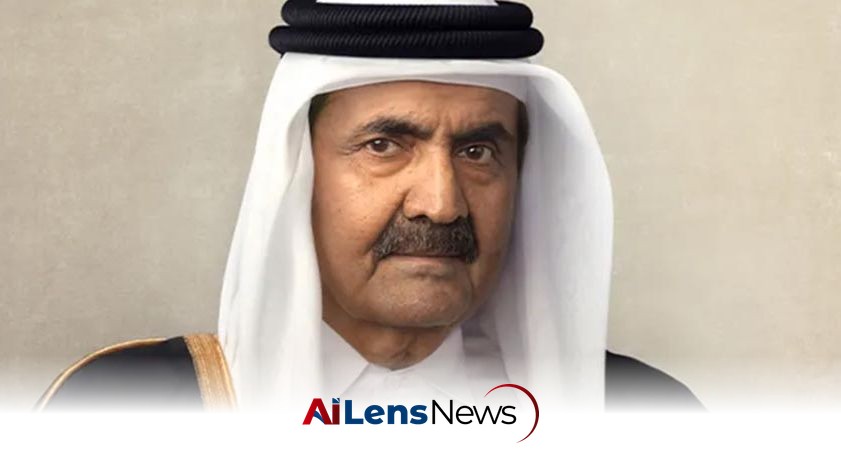


Sheikh Hamad bin Khalifa Al Thani, the former Emir of Qatar, passed away on July 12 at the age of 74, leaving behind a significant legacy.
New Delhi, India Jul 12, 2026 ALN: The former leader of Qatar, Father Amir Sheikh Hamad bin Khalifa Al Thani, passed away on Sunday, July 12. His death marks the end of an era in Qatari history, as Sheikh Hamad was a pivotal figure in the transformation of Qatar from a small Gulf state into a significant player on the world stage.
In a statement, the Amiri Diwan announced the historic Emir passed away on the morning of July 12, corresponding to 27 Muharram 1448 AH, at the age of 74. Sheikh Hamad's reign was characterized by rapid modernization and development, which significantly altered Qatar's economic and social landscape.
Sheikh Hamad bin Khalifa Al Thani served as the Emir of Qatar from 1995 until his historic abdication in 2013. His decision to hand over the throne to his fourth son, Sheikh Tamim bin Hamad Al Thani, was unprecedented in the region, as it marked the first voluntary transfer of power in the Gulf monarchy's history. This transition was seen as a forward-thinking move, aimed at ensuring stability and continuity in Qatari leadership.
In the statement released by the Amiri Diwan, the government expressed deep sorrow over the loss of Sheikh Hamad, stating, "May Allah envelop the great leader of the nation in His vast mercy and forgiveness, and grant him a spacious place in Paradise with the prophets, the righteous, the martyrs, and the virtuous. May God reward him on our behalf with the best of rewards for the great and enduring deeds he performed for his nation and the Arab and Islamic world, and inspire us all with patience and solace." This tribute reflects the profound respect and admiration held for Sheikh Hamad within Qatar and the broader Arab world.
During Sheikh Hamad’s 18-year rule, several major events took place in Qatar, which contributed to the country’s rise as a regional power. One of the most notable achievements was the hosting of the 2006 Asian Games, which showcased Qatar's capacity to organize large-scale international events. This was followed by the 2012 UN Climate Change Conference, also known as COP18, which underscored Qatar's commitment to addressing global environmental challenges.
Another significant diplomatic milestone during his reign was the Doha Agreement, which aimed to resolve the political deadlock in Lebanon. This agreement highlighted Qatar's role as a mediator in regional conflicts and its ability to host negotiations that brought various factions together. Additionally, the Fatah–Hamas Doha Agreement facilitated dialogue between Palestinian factions, further establishing Qatar's position as a key player in Middle Eastern politics.
Perhaps one of the most ambitious projects initiated during Sheikh Hamad’s rule was the decision to host the 2022 FIFA World Cup in Qatar. This landmark decision not only aimed to promote sports in the region but also sought to place Qatar on the global map as a destination for tourism and international events. The preparations for the World Cup have led to significant infrastructure developments, including new stadiums, transportation systems, and hospitality facilities, all of which are expected to have a lasting impact on the country’s economy.
Sheikh Hamad's leadership style was marked by a blend of traditional Qatari values and a modern vision for the future. He was known for his focus on education, healthcare, and economic diversification, which laid the groundwork for Qatar's current status as one of the wealthiest nations in the world, largely due to its vast natural gas reserves. Under his guidance, Qatar established numerous educational institutions, such as the Qatar University and the Qatar Foundation, which aimed to foster a knowledge-based economy.
Moreover, Sheikh Hamad was instrumental in promoting Qatar's cultural initiatives, including the development of the Museum of Islamic Art and the Qatar National Museum. These institutions not only serve to preserve Qatar's rich heritage but also aim to enhance cultural exchange and understanding on a global scale.
Sheikh Hamad's foreign policy was characterized by a willingness to engage with both Western and non-Western nations, often positioning Qatar as a neutral ground for dialogue. His government established strong ties with various countries, balancing relationships with regional powers while also maintaining a strategic partnership with the United States. This diplomatic approach has allowed Qatar to play a crucial role in various international discussions, particularly in matters related to security and stability in the Middle East.
The implications of Sheikh Hamad's death extend beyond Qatar, as his leadership significantly influenced the geopolitics of the Gulf region. His passing could lead to a period of reflection on the policies he implemented and the legacy he leaves behind, particularly in terms of Qatar's ongoing role in regional diplomacy and economic development.
As the nation mourns the loss of a leader who profoundly shaped its identity and direction, the current Emir, Sheikh Tamim, is expected to continue his father's vision while navigating the complex challenges that lie ahead. The transition of leadership within the Al Thani family has historically been smooth, and Sheikh Tamim's rise to power has already demonstrated a commitment to maintaining stability and prosperity in Qatar.
In conclusion, the death of Sheikh Hamad bin Khalifa Al Thani represents not just the loss of a prominent leader but also a pivotal moment in the history of Qatar. His contributions to the nation and the Arab world have left an indelible mark, and his legacy will continue to influence future generations as Qatar strives to build on the foundations he laid during his reign.
Sheikh Hamad was born on January 1, 1948, and was the fourth son of Sheikh Khalifa bin Hamad Al Thani. He received his education in Qatar and later in the United Kingdom, where he developed a keen interest in military and political affairs. His ascension to power in 1995 came after a bloodless coup against his father, which set the stage for his transformative leadership.
Under Sheikh Hamad’s rule, Qatar not only experienced economic growth fueled by its natural gas reserves but also saw significant investments in infrastructure and human capital. The establishment of the Qatar Investment Authority in 2005 marked a strategic move to diversify the economy and invest in global assets, ensuring long-term sustainability.
Throughout his tenure, Sheikh Hamad emphasized the importance of education and cultural development. The Qatar National Vision 2030, launched during his leadership, aimed to transform Qatar into an advanced society capable of sustaining its development and providing a high standard of living for its people.
Sheikh Hamad's diplomatic initiatives were often characterized by a pragmatic approach, seeking to mediate conflicts and foster dialogue in a region often marked by tension and instability. His efforts to host the Arab League summits and engage with various factions in the Arab Spring underscored his commitment to regional stability.
As Qatar moves forward in the wake of Sheikh Hamad's passing, the nation faces both challenges and opportunities. The ongoing geopolitical dynamics in the Gulf region, particularly the relationship with neighboring countries and the evolving global landscape, will require continued strategic foresight and adaptability.
In summary, Sheikh Hamad bin Khalifa Al Thani's legacy is one of visionary leadership and transformative change. His contributions have shaped Qatar into a modern state with a prominent international presence, and his influence will be felt for generations to come as the nation seeks to honor his memory and further its development in the years ahead.
To learn more about the latest developments in World News & International Affairs, stay updated with our exclusive reports and analyses on AiLensNews.

