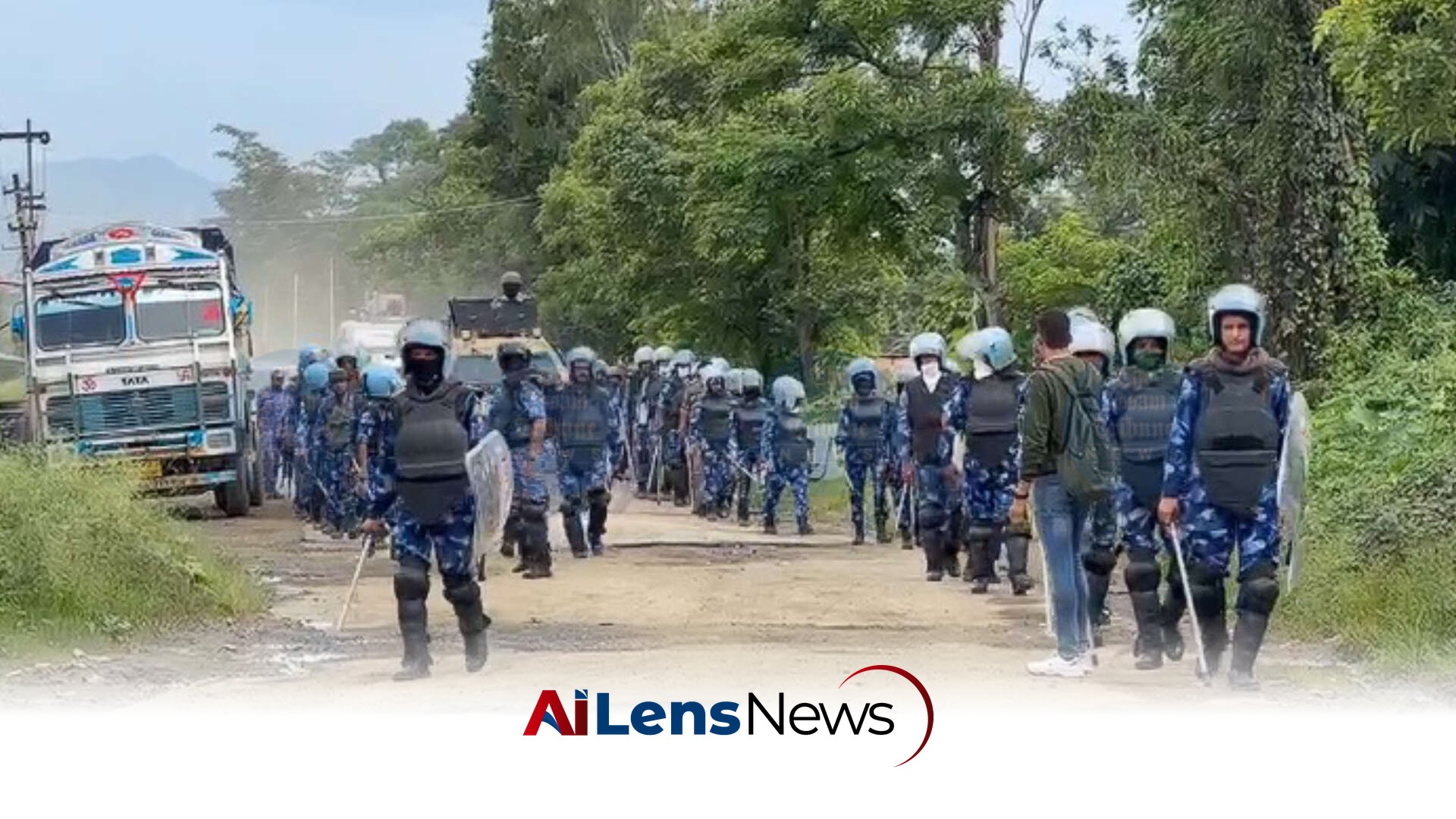


A farmer was shot dead in Kangpokpi, Manipur, highlighting ongoing unrest as police arrest two suspects linked to mob violence in Imphal West.
Itanagar, India Jul 12, 2026 ALN: A 53-year-old man was shot dead by unidentified armed men while working in a paddy field in Manipur's Kangpokpi district on Saturday evening, even as police arrested two people in connection with a separate incident of attempted arson in Imphal West district.
Police identified the deceased as Haolal Singsit, a resident of Govajang village in Kuki-majority Kangpokpi district. He died on the spot after being shot, while his wife, Nemneikim Singsit, who was with him in the field, escaped unhurt. This tragic incident highlights the ongoing violence that has plagued the region, raising concerns over the safety of residents and the effectiveness of security measures in place.
According to villagers, around 20 rounds of gunfire were heard at about 4 pm, prompting immediate action from security forces who rushed to the scene and recovered the body. The killing has once again underscored the fragile security situation in Kangpokpi district, one of the worst-affected areas since ethnic violence broke out in Manipur in May 2023. The region has been embroiled in conflict, primarily between the Kuki and Meitei communities, leading to widespread unrest and loss of life.
The district was also at the centre of the recent killing of six Naga civilians, who were allegedly abducted from Leilon Vaiphei village on May 13. Their bodies were recovered from Karam Vaiphei on June 10, triggering widespread outrage and exacerbating tensions among the various ethnic groups in the state. These incidents have not only resulted in fatalities but have also deepened the mistrust and animosity between communities, making reconciliation efforts increasingly challenging.
In a separate development, Manipur Police arrested two persons for their alleged involvement in Saturday's mob violence and an attempt to set fire to abandoned houses at Kanto Sabal in Imphal West district. The accused were identified as Kammang Lhouvum (65), chief of Hengjang village and chairman of the Leimakhong Area Protection Committee (LAPC), and Pagin Hangshing (30), a resident of Khunkho Kuki village. Their arrests were made during a joint operation by the Manipur Police, the Central Reserve Police Force (CRPF), the Rapid Action Force (RAF), and the Army in connection with a case registered over the mob violence and attempted arson.
Police said efforts were underway to identify and apprehend others involved in the violent incidents. The situation remains precarious, with community tensions simmering just beneath the surface. According to the Army, around 600 to 700 people attempted to march towards Kanto Sabal on Saturday afternoon, where an "illegal block" had allegedly been erected by another community. This march was indicative of the increasing mobilization of community groups in response to perceived threats or injustices, further complicating the security landscape in the region.
Army columns, assisted by the Manipur Police, intervened and separated the opposing groups, preventing the situation from escalating into a communal clash. The Army reported that the crowd resorted to stone-pelting during the operation. Despite the provocation, security personnel exercised restraint and managed to bring the situation under control. This restraint is crucial in preventing further escalation of violence, as heavy-handed tactics often lead to increased hostility and retaliation from affected communities.
During the confrontation, some miscreants allegedly attempted to set fire to abandoned houses. The attempt was foiled by the Army and police, preventing further damage and ensuring there was no loss of life. Such incidents of arson are not only destructive but also serve to inflame community tensions, as they are often viewed as acts of aggression against a particular group.
Condemning the violence, Chief Minister Yumnam Khemchand Singh stated that the incident appeared to be an attempt to derail the state's ongoing peace efforts. He expressed concern over the resurgence of violence after a period of relative calm, indicating that the situation is fragile and that sustained efforts are required to maintain peace. "After a prolonged period of peace, this appears to be an attempt by vested interests to derail the ongoing peace process," the Chief Minister said.
He emphasized the need for unity and cooperation among communities to prevent further violence. The Chief Minister also assured that personnel from the state police and Central Armed Police Forces had been deployed in the area and that security agencies had been directed to ensure such incidents do not recur. This commitment to maintaining peace is essential, but it requires a multifaceted approach that addresses the underlying grievances and tensions among the communities.
The ongoing violence in Manipur is rooted in historical grievances, identity politics, and competition for resources. The Kuki and Meitei communities have long-standing disputes over land, political representation, and cultural identity, which have been exacerbated by recent events. The state government, along with various stakeholders, must engage in dialogue and reconciliation efforts to address these issues comprehensively.
In the wake of the recent violence, community leaders and civil society organizations have called for peace and restraint. They emphasize the importance of dialogue and understanding among the different communities to foster an environment conducive to peace. The role of local leaders is crucial in mediating conflicts and promoting unity, as they often have the trust and respect of their communities.
As the situation continues to evolve, the national and state governments must remain vigilant and proactive in their approach to maintaining peace and security in Manipur. This includes not only deploying security forces but also investing in community development and addressing the root causes of conflict. The long-term stability of the region depends on the ability of all stakeholders to work together towards a common goal of peace and reconciliation.
In conclusion, the recent killing of Haolal Singsit and the subsequent incidents of mob violence highlight the urgent need for comprehensive strategies to address the ongoing ethnic tensions in Manipur. Without concerted efforts to promote dialogue, understanding, and cooperation among communities, the cycle of violence is likely to continue, further endangering the lives and livelihoods of those in the region.
To learn more about the latest developments in Crime & Law, stay updated with our exclusive reports and analyses on AiLensNews.

