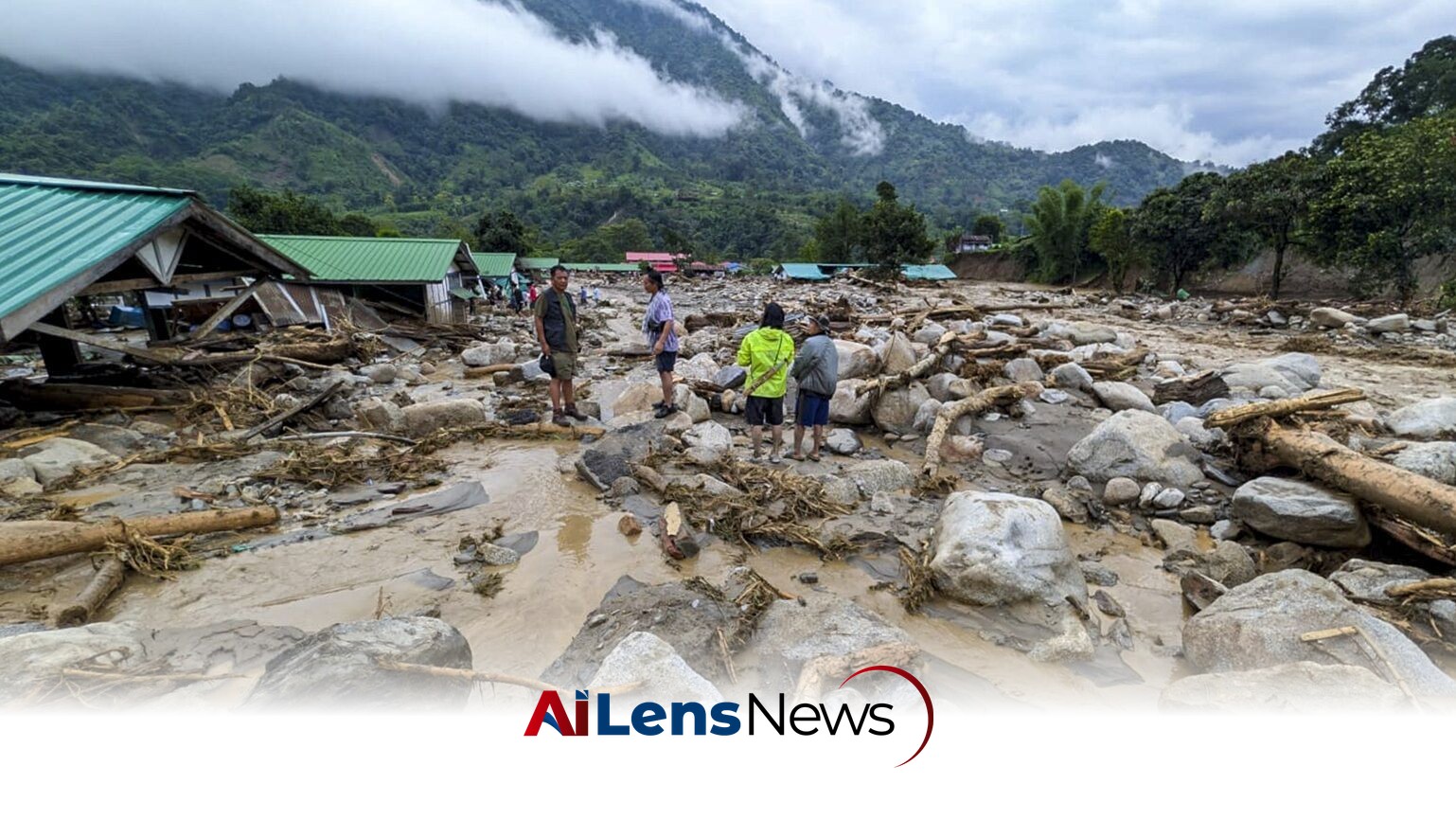


The ongoing floods have claimed seven lives, with over 94,000 people affected across multiple districts. Rescue operations continue as relief camps are set up.
Itanagar, India Jul 11, 2026 ALN: The death toll in the current wave of floods has tragically risen to seven, following the recovery of the body of a woman who had gone missing along with another individual. Taw Ajini, a 43-year-old resident, was found in the Lichi area of Papum Pare district. She had been swept away during a flash flood that struck the Possa region in Keyi Panyor district on June 24. Despite extensive search efforts, her body remained untraced until recently, as reported by officials from the State Emergency Operation Centre (SEOC).
In addition to Ajini, the ongoing monsoon deluge has left one woman still unaccounted for, further highlighting the human toll of this natural disaster. The situation has been compounded by other incidents, including the deaths of two workers from Bihar due to a rain-triggered landslide at a construction site in Lohit district on Wednesday. Earlier, a landslide in Sarti village of Anjaw district claimed one life on June 28, while three others perished in the flash flood at Possa.
As the floods continue to wreak havoc, significant damage has been reported across three districts of the state. Fresh incidents of flooding and landslides have been documented in West Kameng, Upper Subansiri, and Tirap over the last 24 hours, according to the SEOC. This has exacerbated the already precarious situation, affecting thousands of residents.
The affected villages are numerous, including Khellong and Pangma in West Kameng; Riamukhi, Tachiring, Baring, Nungnu, Esso, Ginglo, Maling, Kamsar, Kamda, Dupit, Ayeng, Rigia, and Duchok in Upper Subansiri; and Khonsa town in Tirap. The widespread impact of the floods is evident, with at least 94,201 individuals affected across 333 villages in 237 circles spanning 26 districts.
The devastation caused by the floods extends beyond immediate human casualties, as agricultural and public infrastructure have suffered extensive damage. A total of 334.2 hectares of crop area have been impacted, with 185.5 hectares dedicated to horticulture and 148.7 hectares to traditional agriculture. Additionally, approximately 1,010 hectares of forest land have also been affected, raising concerns about long-term ecological damage and the livelihoods of those reliant on these resources.
Infrastructure losses are staggering, with reports indicating damage to 131 roads, 19 bridges, 21 culverts, and 191 water supply systems. Furthermore, 58 government buildings, 21 power lines, and 224 electric poles have been compromised. The destruction extends to hydel projects, retaining walls, flood protection walls, two hospitals, and three schools, in addition to drainage networks and other public assets. This level of damage poses significant challenges for recovery and rebuilding efforts in the affected areas.
In response to the ongoing crisis, relief camps have been established, with four operational in Keyi Panyor, currently sheltering 252 individuals displaced by the floods. Rescue and relief operations are actively continuing in the affected districts, as local authorities and emergency services work to provide assistance to those in need. These operations are critical, as they not only offer immediate support but also play a vital role in the longer-term recovery process.
The India Meteorological Department (IMD) has issued warnings indicating that the heavy rainfall is expected to persist across the state until Tuesday. An ‘orange’ alert (be prepared) was issued for East Kameng on Friday, cautioning residents about the potential for heavy rainfall accompanied by thunderstorms and lightning. A ‘yellow’ alert (be aware) has also been issued for several other districts, including West Kameng, Tawang, Lower Subansiri, Papum Pare, East Siang, and Tirap, indicating the need for heightened vigilance among residents.
Looking ahead, a yellow alert is set to be in effect on Saturday for Tawang, East Kameng, Pakke-Kessang, Papum Pare, Lower Subansiri, West Siang, Siang, Lower Dibang Valley, Lohit, Anjaw, and Longding, while no warnings have been issued for other districts. This ongoing weather pattern raises concerns about further flooding and landslides, which could exacerbate the already dire situation for many communities.
The implications of these floods are profound, not only for the immediate safety and well-being of the affected populations but also for the region's economic stability and infrastructure resilience. As recovery efforts continue, the need for comprehensive disaster management strategies and improved infrastructure planning becomes increasingly evident. The events underscore the vulnerability of certain regions to natural disasters, particularly in the context of climate change, which is contributing to more erratic weather patterns and extreme weather events.
In conclusion, the current flooding serves as a stark reminder of the challenges faced by communities in disaster-prone areas. As the state grapples with the aftermath of these floods, the focus must remain on providing support to those affected, restoring infrastructure, and implementing measures to mitigate the impact of future disasters. The resilience of the local population, combined with effective government response and community support, will be crucial in navigating this crisis and rebuilding in its wake.
Floods have long been a recurring issue in many parts of India, particularly during the monsoon season, which typically runs from June to September. The heavy rains associated with this season can lead to rapid water accumulation, overwhelming local drainage systems and causing rivers to overflow. The geographical features of northeastern India, with its hilly terrain and dense forests, can exacerbate the impact of heavy rainfall, leading to landslides and flash floods.
In recent years, the frequency and intensity of such natural disasters have increased, raising concerns about the effectiveness of existing disaster management frameworks. The government has been urged to adopt a more proactive approach, focusing on early warning systems, community preparedness, and sustainable land use practices to mitigate risks. This includes investing in infrastructure that can withstand extreme weather events, such as flood-resistant buildings and improved drainage systems.
Furthermore, the socio-economic implications of the floods are significant. Many of the affected individuals are farmers who rely on their crops for sustenance and income. The destruction of agricultural land not only threatens their immediate livelihoods but also has long-term repercussions for food security in the region. Recovery efforts must therefore prioritize agricultural rehabilitation and support for affected families to ensure their economic resilience.
In addition to the immediate human and economic toll, the floods also pose environmental challenges. The loss of forest land and damage to ecosystems can disrupt local biodiversity and contribute to soil erosion, further exacerbating the vulnerability of these areas to future disasters. Addressing these environmental concerns will require a coordinated effort involving local communities, government agencies, and environmental organizations.
As the situation unfolds, the need for a comprehensive response that addresses both the immediate needs of the affected populations and the long-term strategies for disaster risk reduction becomes increasingly critical. The community's resilience, combined with effective government response and support from non-governmental organizations, will be essential in navigating this crisis and rebuilding in its aftermath.
In summary, the ongoing floods in the region serve as a powerful reminder of the urgent need for effective disaster preparedness and response strategies. As communities come together to support one another, the focus must remain on building a future that is more resilient to the impacts of climate change and natural disasters.
To learn more about the latest developments in Science & Environment, stay updated with our exclusive reports and analyses on AiLensNews.

