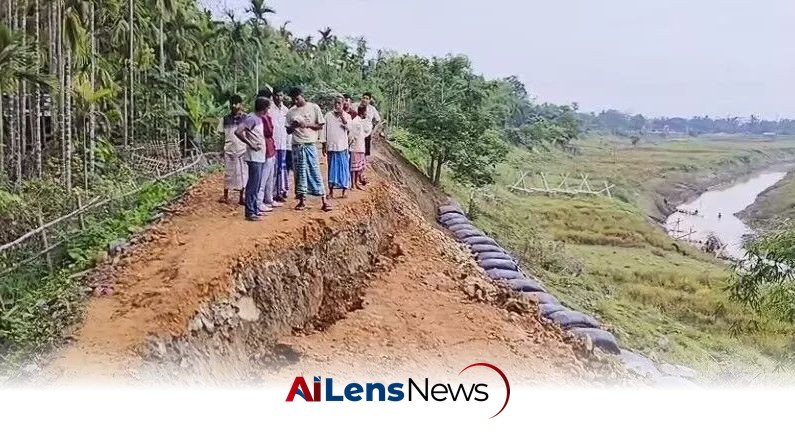


A five-member team assessed flood damage in Cachar, focusing on erosion-hit settlements and infrastructure, highlighting the need for durable restoration measures.
Itanagar, India Jul 11, 2026 ALN: A five-member team comprising officials of the Inter-Ministerial Central Team (IMCT) and the Assam State Disaster Management Authority (ASDMA) visited Cachar district on a two-day field inspection to assess the damages caused by the 2025 floods, focusing on erosion-hit settlements, damaged roads, and vulnerable bridge approaches.
Sources in the Cachar District Disaster Management Authority informed that the team was led by Sanjeev Kumar Suman, director of the Central Water Commission, Ministry of Jal Shakti. The team’s presence underscores the ongoing challenges faced by regions like Cachar, which are frequently affected by natural disasters such as floods and erosion. These issues not only disrupt daily life but also threaten the livelihoods of residents who depend on agriculture and local trade.
The other members from the Central team included Prabhat Kumar, deputy secretary of the Ministry of Rural Development, and Dheeraj, regional officer of the Ministry of Road Transport and Highways. They were accompanied by Kishore Dutta, project officer of the Assam State Disaster Management Authority, and Nitu Moni Borah, project officer for disaster management at ASDMA. Officials from the Cachar DDMA also joined the team, reflecting a collaborative approach between state and central agencies in addressing disaster management. Such collaboration is vital, as effective disaster response often requires coordination across multiple levels of government.
On July 8, the team visited several flood and erosion-affected areas under Katigorah, including Ganirgram, Shantipur, and Kalinagar, to assess the damage inflicted on roads, habitations, and public infrastructure. These areas are particularly vulnerable due to their geographical location, which often places them at risk during the monsoon season. The inspection included the Amaranagar area, where officials examined the condition of the damaged bridge approach. The team’s thorough evaluation aims to identify the most critical needs for restoration and long-term resilience. This proactive approach is essential in minimizing the long-term impacts of flooding and ensuring that communities can recover more quickly after such events.
The team also visited the Kinokhal international border area, where road damage and erosion-related vulnerabilities were evaluated. This area is not only significant for its local population but also plays a role in regional connectivity and trade, making the restoration of infrastructure essential for economic stability. The importance of maintaining infrastructure in border areas cannot be overstated, as it is crucial for both economic activities and national security.
During their inspection, the officials interacted with departmental representatives from the water resources and public works departments to understand the causes of erosion, road damage, and recurring vulnerabilities in the affected areas. This interaction is vital as it allows the team to gather firsthand information about the challenges faced by local authorities and communities in managing the aftermath of flooding. Understanding these challenges is crucial for developing effective strategies that can mitigate future risks.
The State officials briefed the team on the nature of flood-induced damage, the impact on public movement, and the necessity for durable restoration measures in vulnerable regions. They highlighted that the existing infrastructure is often inadequate to handle the intensity of the floods, leading to repeated cycles of damage and repair. This situation necessitates a shift from temporary fixes to more sustainable solutions that can withstand future events. The need for infrastructure that can endure extreme weather conditions is becoming increasingly urgent as climate change continues to alter weather patterns and increase the frequency of severe weather events.
This visit is significant as several parts of Cachar district continue to experience repeated floods, erosion, and road connectivity challenges, particularly in low-lying and riverine areas. The recurring nature of these disasters has raised concerns among residents about the effectiveness of current disaster management strategies. Local officials emphasized to the team the need for technically sound interventions to ensure that restoration work does not remain limited to temporary repairs, but rather focuses on building resilience against future disasters. This perspective aligns with a growing recognition of the importance of disaster preparedness and the need for communities to adopt more resilient practices.
The team’s inspection is expected to facilitate a field-based assessment of the damage and restoration requirements. The technical observations and recommendations from the visiting team will be crucial for future mitigation and rehabilitation measures in the affected areas. This could include proposals for improved drainage systems, better road designs, and the implementation of erosion control measures, which are essential for safeguarding communities against the impacts of climate change and extreme weather events. Such measures not only protect infrastructure but also preserve the natural environment, which is often compromised during flood events.
For residents of the erosion-hit pockets, this visit has raised hopes that flood damage, particularly to roads and bridge approaches, will receive focused attention and timely support from both Central and State agencies. The community's resilience is often tested during the monsoon season, and timely interventions can significantly reduce the socio-economic impacts of floods. The assurance of support from higher authorities is a crucial factor in rebuilding trust and confidence among the affected populations. Communities that feel supported by their government are often more willing to engage in disaster preparedness initiatives and collaborate on recovery efforts.
The implications of this visit extend beyond immediate repair efforts. It signals a recognition of the need for comprehensive disaster risk management strategies that incorporate community input and prioritize long-term sustainability. As climate change continues to exacerbate the frequency and severity of flooding, proactive measures will be essential in reducing vulnerability and enhancing the adaptive capacity of communities in Cachar district. This approach not only addresses the symptoms of flooding but also tackles the underlying issues that contribute to vulnerability.
In conclusion, the visit by the IMCT and ASDMA officials is an important step towards addressing the ongoing challenges posed by flooding and erosion in Cachar district. The collaborative efforts of central and state agencies, along with local input, are vital in developing effective strategies for disaster management and infrastructure resilience. As the region moves forward, the focus must remain on sustainable solutions that not only address immediate needs but also pave the way for a more resilient future in the face of natural disasters. The lessons learned from this visit may serve as a model for similar assessments in other disaster-prone regions, highlighting the importance of a coordinated response to the challenges posed by climate change.
To learn more about the latest developments in Local & Regional, stay updated with our exclusive reports and analyses on AiLensNews.

