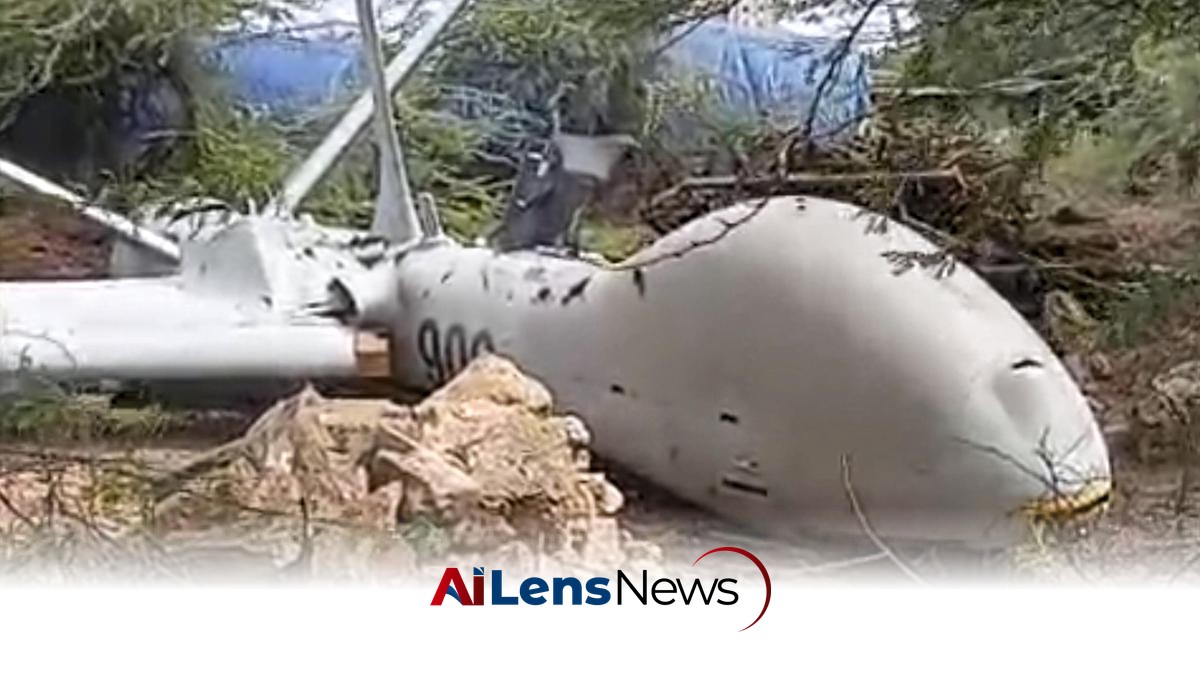


An Indian Navy Drishti-10 UAV crashed near Porbandar during a training flight, prompting a Board of Inquiry to investigate the incident.
New Delhi, India Jul 9, 2026 ALN: A Board of Inquiry (BoI) has been ordered following the crash of an Indian Navy Drishti-10 Starliner unmanned aerial vehicle (UAV) near Dharampur village in Gujarat’s Porbandar district during a routine training sortie on Wednesday, July 8, 2026. This incident highlights ongoing concerns regarding the operational reliability of UAVs, particularly those that are integral to India’s defense strategy. The Drishti-10 UAV is a significant component of the Indian Navy's efforts to modernize its surveillance and reconnaissance capabilities, especially in light of evolving security challenges in the Indian Ocean Region (IOR).
The inquiry aims to determine whether the crash was due to a technical malfunction, loss of communication link, or any other system failure. Such investigations are standard procedure in military aviation incidents, as they help to ensure accountability and improve safety protocols. In this case, the Indian Navy is keen to ascertain the precise cause of the failure to prevent future occurrences. The inquiry process typically involves a thorough examination of the UAV's systems, operational conditions leading up to the crash, and any external factors that may have contributed to the incident.
In a statement posted on X, the Navy confirmed that the UAV crashed during a training flight near the Porbandar airfield, with no reports of injuries or casualties on the ground. The cause of the incident is currently under investigation, which includes a careful analysis of the UAV's systems and the conditions under which it was operating prior to the crash. This meticulous approach is necessary to maintain operational integrity and public confidence in military capabilities, especially given the strategic importance of UAVs in modern warfare.
Security agencies have recovered the wreckage from the crash site and initiated a technical examination. The recovery and analysis of the wreckage is crucial, as it may provide insights into the UAV's last moments before the incident. Defence sources indicated that the UAV may have suffered a technical malfunction, but the exact cause will be established only after the inquiry concludes, which could take several weeks or even months depending on the complexity of the investigation. The findings of this inquiry could play a pivotal role in shaping future policies regarding the procurement and deployment of UAVs within the Indian military.
The Drishti-10 is the Indianized version of Israel’s battle-proven Hermes-900 Medium Altitude Long Endurance UAV. It is manufactured under license by Adani Defence and Aerospace at its Hyderabad facility in collaboration with Israel’s Elbit Systems. This partnership underscores the growing defense ties between India and Israel, particularly in the realm of unmanned systems and advanced military technologies. The collaboration aims to enhance India's indigenous defense production capabilities while leveraging advanced technologies from Israel, a key partner in India's defense landscape.
The Drishti-10 UAV is designed for intelligence, surveillance, and reconnaissance missions, making it a vital asset for the Indian Navy as it seeks to enhance its capabilities in monitoring maritime activities, especially in the strategically significant Indian Ocean Region (IOR). The platform boasts an endurance of up to 36 hours, a payload capacity of 450 kg, and an operating ceiling of 30,000 feet, allowing it to conduct extended missions with a variety of surveillance equipment. These features make the Drishti-10 an attractive option for conducting long-range maritime surveillance, which is critical given the increasing maritime activities in the region.
This mishap marks the second incident involving the Hermes-900-based platform acquired through the emergency procurement route in approximately 18 months. Such incidents can have far-reaching implications, not only for the operational readiness of the forces but also for the credibility of defense procurement processes. In January of last year, a Drishti-10 being flown by the manufacturer during pre-acceptance trials ditched into the Arabian Sea after reportedly losing its communication link prior to formal induction into naval service. The aircraft was subsequently replaced by the manufacturer, reflecting the challenges faced in the testing and validation of advanced military technologies.
The Army and the Navy contracted two Drishti-10 drones each under the fourth tranche of emergency procurements in 2023, at a cost of around ₹140 crore per aircraft. This procurement was part of a broader strategy to modernize India’s defense capabilities in response to evolving security threats in the region. However, repeated incidents involving the UAV could lead to increased scrutiny of future procurements and the overall reliability of the Drishti-10 platform. Such scrutiny is especially pertinent as the Indian military seeks to enhance its operational effectiveness in a complex security environment.
The latest crash is anticipated to renew scrutiny regarding the platform’s reliability, especially as the Navy is pursuing a proposal to induct 10 more Drishti-10 drones to enhance persistent surveillance over the Indian Ocean Region, where Chinese naval and survey vessels are expanding their presence, according to defence sources. The geopolitical landscape in the IOR is becoming increasingly complex, with various nations vying for influence and control over vital maritime routes. As such, the ability to conduct effective surveillance and reconnaissance operations is critical for India’s security, particularly in the face of growing regional tensions.
The Hermes-900 platform has garnered attention recently following reports during the Israel-Iran conflict, indicating that Iranian forces were able to bring down or force the crash-landing of Hermes-900 UAVs. This raises questions about the effectiveness of the UAV against adversarial threats and the need for continuous upgrades to its systems and capabilities. The Indian Navy may need to reassess its operational tactics and technical specifications in light of these incidents to ensure that its UAVs can withstand potential countermeasures. The capability of UAVs to operate effectively in contested environments is a significant factor in their deployment and utility, making it essential for the Indian Navy to address any vulnerabilities identified during the inquiry.
In conclusion, the crash of the Drishti-10 UAV serves as a reminder of the inherent risks associated with advanced military technologies. As the inquiry unfolds, it will be crucial for the Indian Navy to address any identified shortcomings in the UAV’s design or operational protocols. The outcomes of this investigation could have significant implications for future procurement decisions, operational strategies, and the overall effectiveness of India’s defense capabilities in an increasingly contested maritime environment. The ability to learn from such incidents and implement necessary changes will be vital for maintaining operational readiness and ensuring that India's defense forces are equipped to meet the challenges of the future.
To learn more about the latest developments in Local & Regional, stay updated with our exclusive reports and analyses on AiLensNews.

