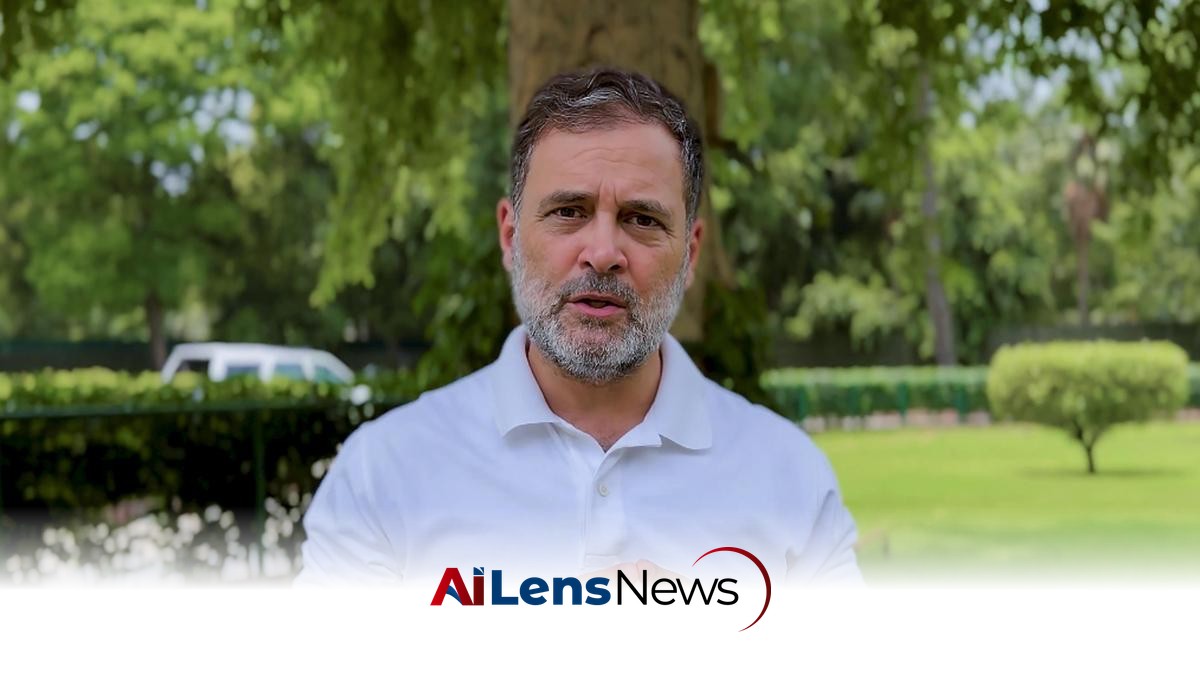


Rahul Gandhi criticizes Modi's policies for harming MSMEs, claiming they prioritize big industrialists over local workshops. He highlights the struggles faced by small-scale industries.
New Delhi, India Jul 6, 2026 ALN: Congress leader Rahul Gandhi has recently raised concerns regarding the impact of government regulations on Micro, Small, and Medium Enterprises (MSMEs), particularly focusing on the bus and truck body-building workshops in India. In a video shared on social media, Gandhi highlighted the struggles faced by these local industries, which he claims are being "deliberately strangled" by policies that favor larger industrial players. This situation has become a point of contention in the ongoing discourse surrounding the government's economic policies and their implications for small-scale industries.
The context of Gandhi's remarks lies within a broader framework of economic challenges that MSMEs have faced in India in recent years. These enterprises are often considered the backbone of the Indian economy, contributing significantly to employment and manufacturing output. However, various factors, including regulatory burdens, access to finance, and competition from larger corporations, have made it increasingly difficult for these businesses to thrive.
During his visit to a bus and truck body-building workshop in Jaipur, Gandhi engaged with artisans who are integral to this sector. He described the environment of the workshop, noting the sounds of welding and hammering, which symbolize the hard work and skill that these artisans put into their craft. His narrative emphasized the importance of these small industries in creating jobs and driving economic momentum, positioning them as vital contributors to India's future.
Gandhi's criticism of the Transport Ministry's regulations stems from claims that these rules impose excessive compliance costs and administrative hurdles on small manufacturers. He pointed out that the artisans are often unfairly blamed for technical faults that lead to bus fires, despite their limited control over the overall vehicle manufacturing process. This blame, according to Gandhi, reflects a broader systemic issue where small-scale producers are not only burdened by regulations but also scapegoated for failures that may arise from the larger supply chain.
The assertions made by Gandhi resonate with a growing sentiment among MSME stakeholders who argue that the government's initiatives, such as "Make in India" and "Vocal for Local," are not translating into tangible benefits for small businesses. Critics have suggested that these slogans have become mere rhetoric, while in practice, government policies disproportionately favor large corporations, leaving smaller players to struggle under the weight of compliance and financial constraints.
Gandhi's statement that "if these factories shut down, it won't just halt business" underscores the potential ripple effects of such a scenario. The closure of these workshops would not only lead to job losses but also result in a significant loss of skills that have been honed over generations. The implications for local economies could be severe, with increased inflation and a greater burden on the common people, particularly in regions where these industries are a primary source of employment.
In the video, Gandhi is seen listening to the concerns of the truck and bus body builders, promising to advocate for their issues. This direct engagement with industry workers highlights a political strategy aimed at connecting with grassroots concerns, particularly as the Congress party seeks to bolster its support among small business owners and workers who feel marginalized by current economic policies.
This visit and the subsequent video release come after a meeting held on March 18, where Gandhi, along with party general secretary Priyanka Gandhi Vadra, met with Union Road Transport Minister Nitin Gadkari. During this meeting, the delegation of small truck and bus body builders expressed their grievances regarding the government's new standards and the financial burdens associated with obtaining necessary licenses. They argued that these regulations could potentially drive many small manufacturers out of business, threatening the livelihoods of millions of families dependent on these industries.
Following the meeting with Gadkari, Priyanka Gandhi conveyed to reporters that the truck and bus body builders faced significant challenges due to the high costs and lengthy processes required to obtain licenses. She noted that Gadkari had assured the delegation that their issues would be addressed expeditiously. However, the feedback from the artisans in the video suggests that many of their concerns remain unresolved, and they feel that the government continues to favor larger companies over small manufacturers.
The ongoing dialogue surrounding MSMEs and their challenges is part of a larger conversation about economic policy and industrial growth in India. As the government continues to promote initiatives aimed at boosting manufacturing and entrepreneurship, the effectiveness of these programs in supporting small businesses will be closely scrutinized. The tension between large corporations and MSMEs is emblematic of broader economic disparities, and how policymakers address these issues will have significant implications for the future of India's economy.
As the political landscape evolves, the Congress party's focus on MSMEs may resonate with a segment of the electorate that feels overlooked by current economic policies. The ability of small businesses to navigate regulatory challenges and thrive in a competitive market will be crucial for sustaining employment and fostering innovation in the country. The discussions initiated by leaders like Rahul Gandhi may serve as a catalyst for re-evaluating the support systems available to MSMEs and ensuring that their voices are heard in the corridors of power.
In conclusion, the plight of MSMEs, particularly in the bus and truck body-building sector, reflects broader issues within India's economic framework. The criticisms levied by Rahul Gandhi highlight the need for a balanced approach that recognizes the contributions of small industries while fostering an environment where they can compete effectively with larger entities. As the government and political parties navigate these complex dynamics, the future of MSMEs will remain a critical area of focus in the ongoing discourse about India's economic development.
To learn more about the latest developments in Politics, stay updated with our exclusive reports and analyses on AiLensNews.

