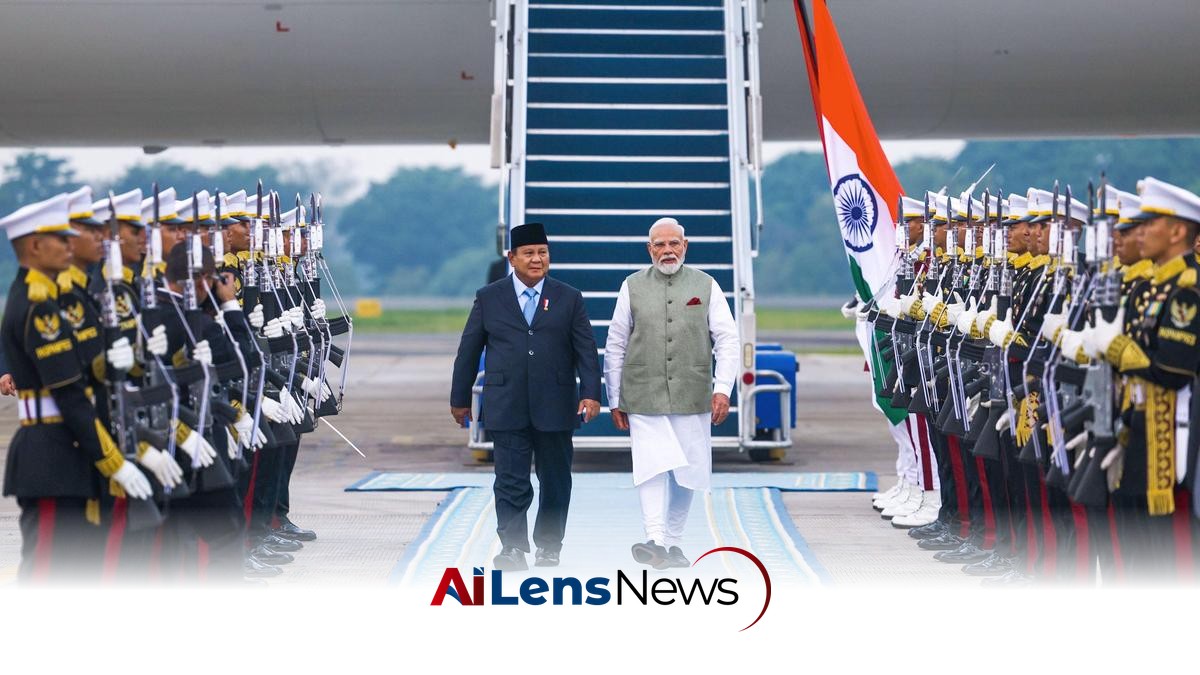


PM Modi's visit to Indonesia aims to enhance India's Act East Policy and strengthen bilateral ties with President Subianto.
New Delhi, India Jul 7, 2026 ALN: Prime Minister Narendra Modi embarked on a significant three-nation tour on July 6, 2026, with the first leg of the journey taking him to Indonesia. This trip is aimed at enhancing India's strategic ties with the countries in the Indo-Pacific region, in line with India's Act East Policy and the MAHASAGAR Vision. The Act East Policy, initiated in 2014, is a diplomatic initiative that seeks to enhance India's engagement with Southeast Asian nations and beyond, emphasizing economic, cultural, and strategic ties. The policy marks a shift in India's foreign policy focus, recognizing the growing importance of the Indo-Pacific region in global geopolitics and economics.
Upon his arrival in Jakarta, PM Modi was warmly welcomed by Indonesian President Prabowo Subianto, who personally received him at the airport. This gesture signifies the importance of the bilateral relationship between India and Indonesia, which has been on an upward trajectory since the establishment of a Comprehensive Strategic Partnership in 2018. This partnership aims to enhance cooperation across various sectors, including trade, defense, and cultural exchanges. The presence of four Indonesian ministers at the airport to greet PM Modi further underscores the significance of this visit, highlighting Indonesia's commitment to strengthening ties with India.
In a social media post, PM Modi expressed his gratitude for the warm welcome, stating, "Landed in Jakarta. I’m touched by President Prabowo Subianto’s gesture of welcoming me at the airport." This personal touch in diplomatic relations often reflects deeper ties and mutual respect between nations, which can lead to more fruitful discussions on various issues. The importance of such gestures cannot be understated, as they set a positive tone for the discussions that follow.
During his visit, PM Modi plans to hold discussions with President Subianto, focusing on enhancing cooperation across diverse sectors. The two leaders are expected to cover a wide range of topics, including trade, investment, defense, and cultural exchanges. Modi emphasized the importance of this partnership and stated, "In 2018, we elevated our relations to a Comprehensive Strategic Partnership, which has benefitted our people." This reflects a commitment to not only strengthen bilateral relations but also to ensure that the partnership yields tangible benefits for the citizens of both countries. The economic ties between India and Indonesia are particularly noteworthy, as both nations seek to expand their markets and enhance trade relations. In 2023, bilateral trade reached approximately $20 billion, showcasing the potential for further growth and collaboration.
One of the highlights of PM Modi's visit will be a trip to the Prambanan Temple complex in Yogyakarta. This UNESCO World Heritage site is renowned for its stunning architecture and historical significance, being one of the largest temples in Indonesia. The visit to the temple is symbolic of the cultural ties that bind India and Indonesia, which share a rich historical connection through trade and the spread of religions, particularly ism and Buddhism. PM Modi remarked, "This will ensure closer cultural linkages between our nations," indicating that cultural diplomacy is a vital aspect of his visit. Such engagements not only promote tourism but also foster a deeper understanding of each other's heritage and values.
In addition to his official meetings, PM Modi expressed his eagerness to interact with the Indian community in Indonesia. The Indian diaspora in Indonesia plays a crucial role in strengthening bilateral ties, as they serve as a bridge between the two nations. Engaging with the Indian community allows for a better understanding of their contributions to Indonesian society and the potential for further collaboration in the future. The Indian community in Indonesia is one of the oldest and most established, contributing significantly to various sectors, including business, education, and culture. By acknowledging their role, PM Modi aims to reinforce the people-to-people connections that are essential for a robust bilateral relationship.
Before departing from Delhi, PM Modi articulated his vision for the trip, stating that his visits to Indonesia, Australia, and New Zealand would bolster India's Act East Policy and the MAHASAGAR Vision. The MAHASAGAR initiative, which stands for Mutual and Holistic Advancement for Security Across the Regions, aims to create a framework for security and growth that is inclusive of all regions, particularly in the context of the Indo-Pacific. This vision aligns with India's broader strategy to ensure a free, open, and inclusive Indo-Pacific, which has become increasingly important in the face of rising geopolitical tensions in the region. With China asserting its influence in the Indo-Pacific, India's proactive engagement with its neighbors is seen as a counterbalance to ensure regional stability.
PM Modi's visit to Indonesia follows President Prabowo's State visit to India as the chief guest at the Republic Day celebrations in January 2025. This reciprocal visit highlights the ongoing engagement between the two nations and the mutual commitment to strengthening ties. As both countries navigate an increasingly complex geopolitical landscape, their partnership is seen as a stabilizing force in the region. The alignment of interests between India and Indonesia, particularly in terms of maritime security, trade, and counter-terrorism, further solidifies their strategic partnership.
After Indonesia, PM Modi will continue his tour with a visit to Melbourne, Australia, at the invitation of Australian Prime Minister Anthony Albanese. The Australia leg of the tour is expected to focus on enhancing economic ties, particularly in sectors like trade, technology, and renewable energy, which are of mutual interest. Australia has been a key partner for India in various multilateral forums, including the Quad, which also includes the United States and Japan. The discussions in Australia are likely to center on collaborative efforts to address climate change, enhance digital trade, and strengthen defense cooperation.
Following Australia, PM Modi will travel to Auckland, New Zealand, where he will meet with Prime Minister Christopher Luxon. This final leg of the tour will also emphasize the importance of the Indo-Pacific region in terms of security, trade, and cultural exchange. New Zealand, while geographically distant, shares similar values with India regarding democracy, the rule of law, and a commitment to a rules-based inter order. The partnership between India and New Zealand has been growing, particularly in areas such as education, agriculture, and technology.
In conclusion, PM Modi's three-nation tour is a strategic move to reinforce India's position in the Indo-Pacific region, enhance bilateral relations, and promote cultural ties. As India continues to assert its presence on the global stage, such diplomatic engagements are crucial for fostering cooperation and addressing shared challenges. The outcomes of this trip could have significant implications for India's foreign policy and its role in regional stability and growth. By strengthening ties with Indonesia, Australia, and New Zealand, India is not only enhancing its economic and strategic interests but also positioning itself as a key player in the evolving dynamics of the Indo-Pacific region. This tour is a testament to India's commitment to fostering partnerships that are based on mutual respect, shared interests, and a vision for a peaceful and prosperous future.
To learn more about the latest developments in World News & International Affairs, stay updated with our exclusive reports and analyses on AiLensNews.

