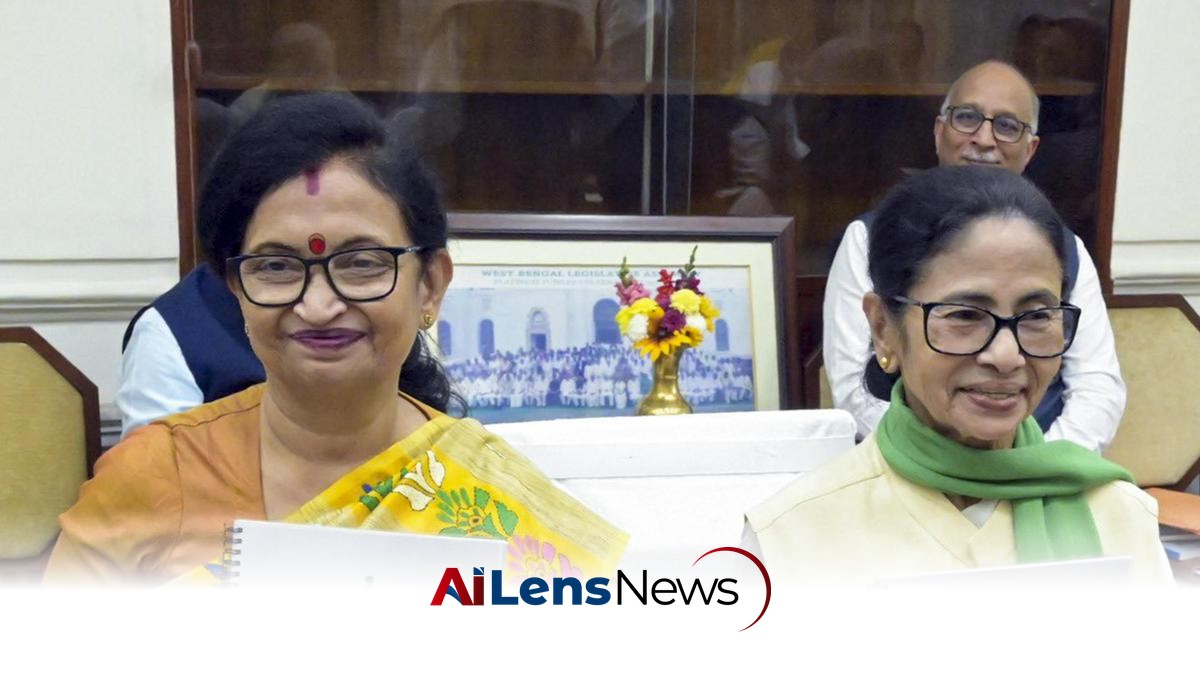


Chandrima Bhattacharya resigns as TMC Bengal chief, raising questions about her future in the party after election losses.
New Delhi, India Jul 4, 2026 ALN: In yet another setback for the Mamata Banerjee faction of the Trinamool Congress (TMC), the party's Bengal State president, Chandrima Bhattacharya, stepped down from her position on Saturday, July 4, 2026. This resignation comes barely a month after she was entrusted with the crucial organisational responsibility in the aftermath of the party's Assembly election debacle. The TMC's performance in the elections has been a topic of significant concern, and Bhattacharya's resignation adds to the growing list of challenges facing the party.
In a letter addressed to the Trinamool Congress chairperson, Ms. Bhattacharya also resigned from all other posts she held in the party, triggering speculations on whether she had severed her ties with the party for all practical purposes. Her departure is particularly noteworthy given that she was expected to play a pivotal role in revitalizing the party's fortunes following a disappointing electoral outcome.
Trinamool Infighting Escalates
A former Minister in the erstwhile Mamata Banerjee government, Bhattacharya was in charge of key departments such as Finance and Health as Minister of State. She has been a prominent leader of the party and led its women's wing, which has been instrumental in mobilizing support among female voters. Her decision to resign raises questions about the internal dynamics of the TMC, especially in light of the recent electoral losses that have shaken the party's foundation in West Bengal.
In addition to stepping down as State president, Ms. Bhattacharya withdrew herself as the party's authorised signatory of its accounts maintained in various banks and as Mamata Banerjee's authorised point person to appear before the Election Commission. This move indicates a significant withdrawal from the party's operational framework, further fueling speculation about her future within the TMC.
Ms. Bhattacharya was named State president at the party's working committee meeting held at Mamata Banerjee's Kalighat residence on June 5, replacing senior leader Subrata Bakshi. Her appointment was seen as a strategic move to bolster the party's leadership at a time when it was grappling with internal dissent and external pressure from rival parties, particularly the Bharatiya Janata Party (BJP).
In the recent Assembly elections, Ms. Bhattacharya faced a significant challenge as she was humbled by BJP's Sourav Sikdar at the Dum Dum Uttar constituency. This loss not only marked a personal setback for Bhattacharya but also highlighted the TMC's declining influence in areas where it once held a stronghold. The BJP's growing strength in West Bengal has raised alarm bells within the TMC, prompting calls for introspection and a reevaluation of strategies moving forward.
The implications of Bhattacharya's resignation extend beyond her individual role within the party. It reflects a broader trend of instability within the TMC, which has been struggling to maintain its foothold in West Bengal politics amid increasing competition from the BJP. The party's leadership is now faced with the daunting task of addressing the internal discord that has surfaced, as well as rebuilding its image and support base in the wake of electoral setbacks.
As the TMC navigates this turbulent phase, it is essential to consider the historical context of its rise and challenges in West Bengal. The party, which emerged as a formidable political force under Mamata Banerjee's leadership, has been characterized by its grassroots mobilization and strong organizational structure. However, the recent electoral results suggest a shift in voter sentiment, with many constituents expressing dissatisfaction with the party's governance and performance.
Moreover, the resignation of a prominent leader like Bhattacharya could potentially embolden dissenting voices within the party, leading to further fragmentation. Observers note that internal unity is crucial for the TMC to mount a credible challenge against the BJP, which has been actively working to expand its influence in the state.
In the wake of Bhattacharya's departure, the TMC will need to reassess its strategy for engaging with voters and addressing their concerns. The party's ability to effectively communicate its achievements and counter the BJP's narrative will be critical in regaining lost ground. Additionally, the TMC must focus on consolidating its leadership and fostering a sense of unity among its members to prevent further defections and maintain its relevance in West Bengal politics.
The political landscape in West Bengal remains fluid, and the TMC's response to these challenges will likely shape its future trajectory. As the party grapples with internal strife and external pressures, the coming months will be pivotal in determining whether it can reclaim its status as the dominant political force in the state or whether it will continue to face setbacks that could jeopardize its long-term viability.
In conclusion, Chandrima Bhattacharya's resignation from the TMC is a significant development that underscores the party's current struggles and the complexities of West Bengal's political environment. As Mamata Banerjee and her faction navigate this crisis, the implications of this leadership change will be closely monitored by political analysts, party members, and the electorate alike.
The TMC has a rich history that dates back to its founding in 1998, primarily as a response to the long-standing dominance of the Communist Party of India (Marxist) in West Bengal. Under Banerjee's leadership, the TMC has made significant strides, culminating in its historic victory in the 2011 Assembly elections, which ended 34 years of Left Front rule in the state. However, the party's journey has not been without its challenges, including allegations of corruption, internal dissent, and the emergence of the BJP as a formidable adversary.
The BJP's rise in West Bengal can be traced back to its strategic outreach to various communities, including s and marginalized groups, which has resonated with voters. The party has capitalized on issues such as perceived governance failures, communal tensions, and the need for a strong leadership alternative. This has resulted in a significant shift in the political landscape, with the BJP making considerable inroads in areas previously dominated by the TMC.
The TMC's internal dynamics have also been under scrutiny, with reports of factionalism and dissatisfaction among party workers. The resignation of a leader like Bhattacharya, who was seen as a unifying figure, may exacerbate these issues and lead to further instability within the party. The leadership will need to address these concerns promptly to avoid further erosion of support.
As the TMC looks to the future, it must also contend with changing voter expectations. The electorate in West Bengal is becoming increasingly discerning, demanding accountability, transparency, and effective governance. The party's ability to address these issues will be crucial in regaining voter trust and support.
In summary, the resignation of Chandrima Bhattacharya is a significant event that highlights the challenges facing the TMC in West Bengal. As the party grapples with internal discord and external pressures, its leadership will need to navigate a complex political landscape to maintain its relevance and restore its standing among the electorate. The coming months will be critical in shaping the future of the TMC and its ability to respond effectively to the evolving political dynamics in West Bengal.
To learn more about the latest developments in Politics, stay updated with our exclusive reports and analyses on AiLensNews.

