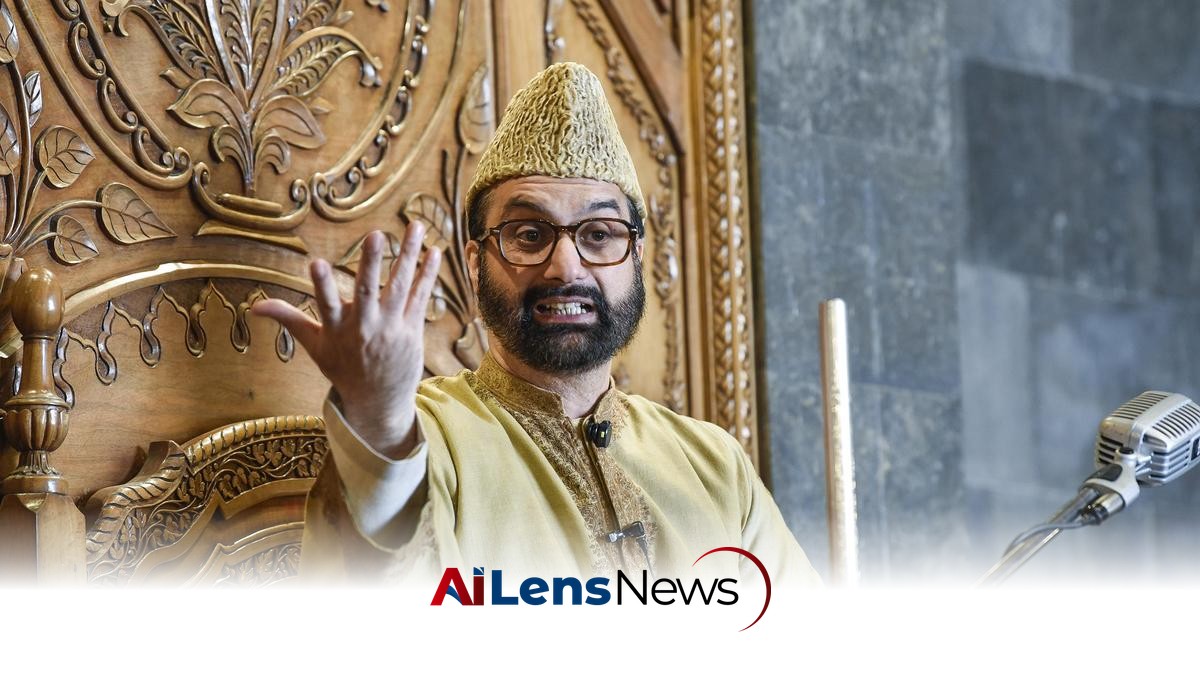


Mirwaiz Umar Farooq emphasizes the need for renewed dialogue between Delhi, Islamabad, and Srinagar to foster lasting peace in Kashmir.
New Delhi, India Jul 6, 2026 ALN: Kashmir chief cleric Mirwaiz Umar Farooq on Monday (July 6, 2026) stated that the legacy of the dialogue process initiated during the tenures of former Prime Ministers Atal Bihari Vajpayee and Dr. Manmohan Singh “needs to be revived and taken forward.” This assertion comes at a time when tensions continue to simmer in the region, highlighting the importance of dialogue as a potential pathway to peace and stability.
The dialogue process initiated by Vajpayee, who served as Prime Minister from 1998 to 2004, was marked by a significant shift in approach towards Kashmir. Vajpayee's government sought to engage in dialogue with various stakeholders, including separatist groups, in an effort to address the longstanding issues plaguing the region. This approach was characterized by a willingness to negotiate and a recognition of the need for a comprehensive resolution to the Kashmir conflict. Dr. Manmohan Singh, who succeeded Vajpayee and served from 2004 to 2014, continued this engagement, emphasizing the need for peace and dialogue with both internal and external parties.
“Meaningful dialogue is imperative between Delhi and Islamabad, and equally between Delhi and Srinagar, for peace, dignity, and a just resolution,” said the Mirwaiz while addressing a function in Srinagar’s Lal Chowk. His emphasis on the necessity of dialogue underscores a broader sentiment among various stakeholders in Kashmir, who believe that the path to lasting peace lies in open communication and negotiation rather than confrontation.
Mirwaiz Umar Farooq expressed his unwavering support for dialogue, even during times when advocates of talks faced accusations of treason. “We did not back down. My uncle ‘shaheed’ Molvi Mushtaq was killed, Islamia School was burnt down, my house was attacked, but I did not give up on my principle that dialogue is the only way forward,” he asserted. This statement highlights the personal sacrifices endured by those advocating for peace in Kashmir, as well as the challenges faced by individuals who promote dialogue in a highly polarized environment.
Stating that a new world order is shaping up, the Mirwaiz emphasized that war is not a solution. This perspective aligns with a growing recognition in inter relations that military conflict often leads to more significant long-term consequences, including humanitarian crises and regional instability. As global dynamics shift, the need for diplomatic solutions becomes increasingly critical.
He referred to a recent open letter signed by 117 individuals from India and Pakistan, urging the Prime Ministers of both countries to resume engagement. This letter reflects a collective desire among civil society to foster peace and dialogue, indicating that there are voices on both sides of the border that advocate for reconciliation rather than conflict. He welcomed the efforts of civil society voices to promote peace, recognizing their essential role in bridging divides and fostering understanding between communities.
On the Jammu and Kashmir administration’s decision to ban certain books, the Mirwaiz remarked, “In a democratic society, bans do not work, whether they are bans on books, ideas, or organizations.” This statement raises important questions about freedom of expression and the role of censorship in a democratic society. He stressed that societies grow through openness, discussion, and engagement, not by suppressing books or silencing perspectives. The implications of such bans can be far-reaching, potentially stifling intellectual discourse and inhibiting the exchange of ideas crucial for societal development.
The Mirwaiz highlighted Kashmir's rich, layered history, stating that Kashmiris are proud of their civilizational legacy, which spans from the Buddhist period to Shaivism and Islamic traditions that have shaped the region's spiritual, social, and cultural identity. This acknowledgment of Kashmir's diverse heritage is significant, as it emphasizes the need for a holistic understanding of the region's history, one that transcends political narratives and recognizes the contributions of various cultures and religions.
“After 1947, Jammu and Kashmir also became a political issue, and this too is part of its modern history. You cannot erase history or selectively project only that part of history which suits a particular narrative,” he added. This comment serves as a reminder of the complexities surrounding the Kashmir issue, which is often portrayed through a singular lens that overlooks the multifaceted nature of the conflict. Understanding the historical context is vital for any meaningful dialogue aimed at resolving the dispute.
Regarding the Amarnath Yatra, he noted that it is a religious pilgrimage and that the people of Kashmir have always respected the religious sentiments of all communities. “Kashmir has a long tradition of mehmaan-nawazi (hospitality), and pilgrims who come here for their faith should be treated with respect and care. At the same time, it is the responsibility of the administration to ensure that the daily life of local people is not unnecessarily disrupted and that the fragile environment of Kashmir is protected,” concluded the Mirwaiz. His remarks reflect a deep understanding of the delicate balance that must be maintained between facilitating religious practices and safeguarding the rights and well-being of local residents.
The call for dialogue by Mirwaiz Umar Farooq resonates with a broader discourse on conflict resolution in Kashmir. The historical context of dialogue efforts by Vajpayee and Singh serves as a critical reference point for current and future initiatives aimed at addressing the complexities of the Kashmir conflict. As the region continues to grapple with issues of identity, governance, and human rights, the revival of dialogue could pave the way for a more inclusive and peaceful future.
In conclusion, the Mirwaiz's emphasis on dialogue, historical context, and respect for diverse perspectives underscores the urgent need for a renewed commitment to peace in Kashmir. The legacy of previous dialogue processes offers valuable lessons, and the call for engagement between stakeholders remains a crucial step towards fostering understanding and reconciliation in a region marked by conflict and division.
To learn more about the latest developments in World News & International Affairs, stay updated with our exclusive reports and analyses on AiLensNews.

