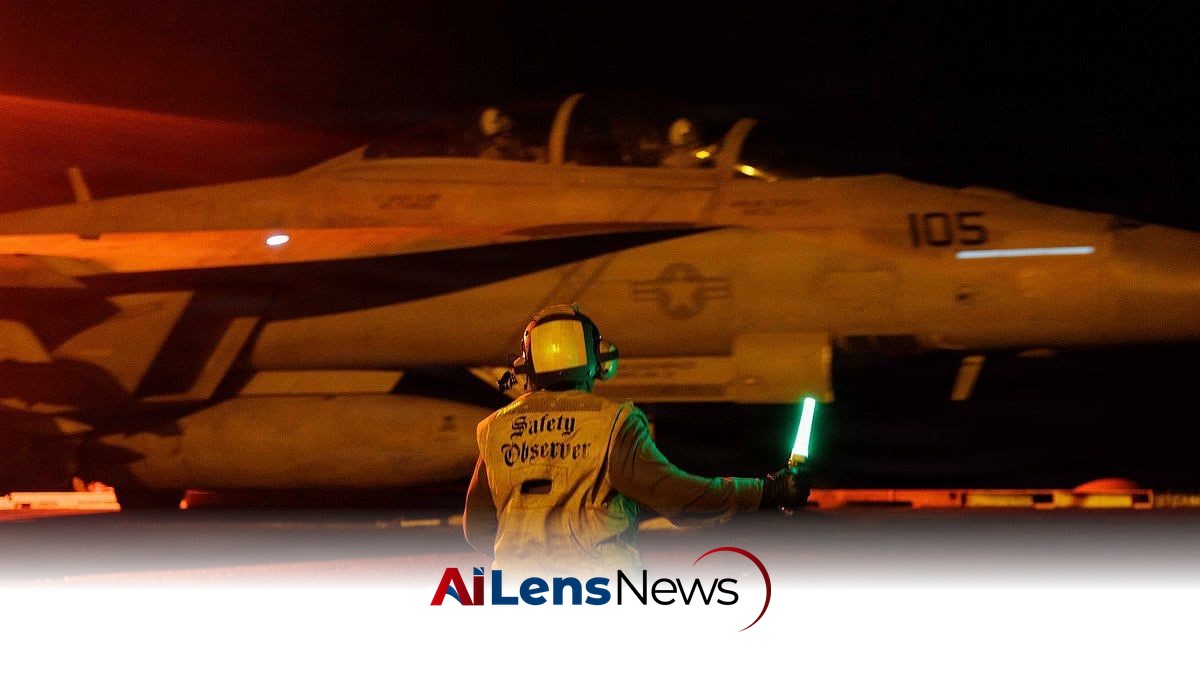


The US military has initiated a new wave of strikes against Iranian military installations, marking the 12th consecutive night of operations aimed at safeguarding commercial shipping in the region.
Kuwait City, Kuwait Jul 23, 2026 ALN: The ongoing military engagement between the United States and Iran has escalated significantly, with US Central Command (CentCom) forces conducting a new series of strikes against Iranian military targets. This latest round of military action commenced overnight on Thursday, July 23, as part of a broader strategy aimed at diminishing Iran's capability to threaten commercial shipping in crucial regional waters, particularly the Strait of Hormuz, a vital artery for global oil transportation.
According to CentCom, the strikes began at 5:30 PM ET on Wednesday, July 22, which translates to 1:30 AM Gulf Standard Time on July 23, 2026. The military's announcement emphasized that these operations would persist in order to “further degrade Iran’s ability to threaten civilian mariners and commercial vessels transiting regional waters.” This statement underscores the US's commitment to maintaining freedom of navigation in the face of what it describes as Iranian provocations.
The backdrop to these military actions is a series of escalating tensions between the US and Iran, which have been marked by repeated American strikes over the course of 12 consecutive nights since hostilities resumed. The US military has conducted numerous operations targeting a range of Iranian military assets, including command centers, air defense systems, missile and drone sites, coastal facilities, and communications networks. These strikes are part of a sustained campaign that reflects the US's strategic aim of countering Iranian influence in the region.
In the early hours following the US strikes, Iranian state media reported missile attacks on cities such as Ramshir and Ahvaz, located in southwestern Iran. Authorities in Bushehr province, situated along Iran's Gulf coast, also reported being targeted by US missiles. These claims from Iranian sources indicate that the strikes have resulted in significant military engagements, with both sides sustaining losses. Iran's government has characterized the US as a "terrorist enemy," further inflaming the rhetoric surrounding the conflict.
The current military actions are a direct response to a series of Iranian attacks on commercial vessels in the Strait of Hormuz, as well as incidents involving ballistic missiles and drones. The Strait of Hormuz is a critical chokepoint through which a substantial portion of the world's oil supply is transported, making it a focal point of international maritime security. US officials have framed their military campaign as a necessary measure to safeguard freedom of navigation and protect international shipping lanes that have been threatened by Iranian aggression.
In recent months, there have been multiple reports of Iranian forces targeting commercial ships, which has prompted the US to take a more aggressive stance in the region. The US military's operations not only aim to deter Iranian threats but also to reassure allies and partners in the Gulf region, who may feel vulnerable to Iranian actions. The strategic importance of the Strait of Hormuz cannot be overstated, as it serves as a vital conduit for oil exports from the Gulf states to global markets.
As the situation continues to evolve, both the US and Iran have reported casualties and damage resulting from the ongoing strikes. The US has acknowledged losses among its service members in related defensive actions, indicating that the conflict has not been without significant human cost. The escalation of hostilities raises concerns about the potential for a broader conflict in the region, as both nations appear entrenched in their positions, with little indication of a diplomatic resolution in sight.
The implications of these military actions extend beyond the immediate conflict between the US and Iran. The ongoing strikes and counterstrikes could destabilize the already volatile geopolitical landscape of the Middle East, potentially drawing in other regional actors and exacerbating existing tensions. The US's commitment to protecting maritime routes may also lead to increased military presence in the region, which could provoke further Iranian responses and escalate the cycle of violence.
Moreover, the conflict has significant ramifications for global energy markets, as any disruption in the Strait of Hormuz could lead to fluctuations in oil prices, impacting economies worldwide. The international community is closely monitoring the situation, with calls for restraint and dialogue becoming increasingly urgent as the potential for miscalculation grows amidst the ongoing military operations.
In conclusion, the recent US strikes on Iranian military targets represent a continuation of a complex and escalating conflict, rooted in broader geopolitical tensions and strategic interests in the region. As both sides engage in military operations, the potential for further escalation remains high, underscoring the need for diplomatic efforts to de-escalate the situation and address the underlying issues at play. The coming days and weeks will be critical in determining the trajectory of US-Iran relations and the stability of the Middle East.
The historical context of US-Iran relations is essential to understanding the current conflict. Since the 1979 Iranian Revolution, which saw the overthrow of the US-backed Shah, relations between the two nations have been fraught with tension. The US has imposed numerous sanctions on Iran, particularly following its nuclear program developments and alleged support for terrorism. Iran, on the other hand, has consistently viewed the US presence in the Middle East as a threat to its sovereignty and regional interests.
In addition to military confrontations, the US and Iran have engaged in various proxy conflicts across the region, supporting opposing sides in countries such as Syria, Yemen, and Iraq. These proxy wars have contributed to the deterioration of relations and have often resulted in violent clashes that amplify regional instability.
The geopolitical implications of the US-Iran conflict extend beyond the two nations. The involvement of other powers, such as Russia and China, who have shown support for Iran, complicates the situation further. These nations may view US actions as an opportunity to expand their influence in the region, potentially leading to a realignment of alliances that could have far-reaching consequences.
As the US continues its military operations, it faces the challenge of balancing its strategic objectives with the need to avoid a full-scale war. The risks of miscalculation are significant, with both sides possessing advanced military capabilities that could lead to unintended escalation. The potential for civilian casualties and broader regional conflict raises ethical concerns about the ongoing military strategy.
Furthermore, the economic implications of the conflict are significant. The Strait of Hormuz is not only vital for oil transportation but also for global trade. Any sustained military conflict in the region could disrupt supply chains, leading to increased prices for consumers worldwide. The ripple effects of such disruptions could impact economies far beyond the Middle East, highlighting the interconnectedness of global markets.
In light of these complexities, many analysts advocate for renewed diplomatic efforts to address the underlying issues driving the conflict. The potential for negotiations, while challenging, remains a critical avenue for de-escalation. Building trust between the US and Iran, along with engaging regional partners, could pave the way for a more stable and peaceful future in the Middle East.
As the situation unfolds, the international community watches closely, hoping for a resolution that prioritizes peace and stability over continued military engagement. The coming weeks will be pivotal in shaping the future of US-Iran relations and the broader geopolitical landscape of the region.
To learn more about the latest developments in Crime & Law, stay updated with our exclusive reports and analyses on AiLensNews.

