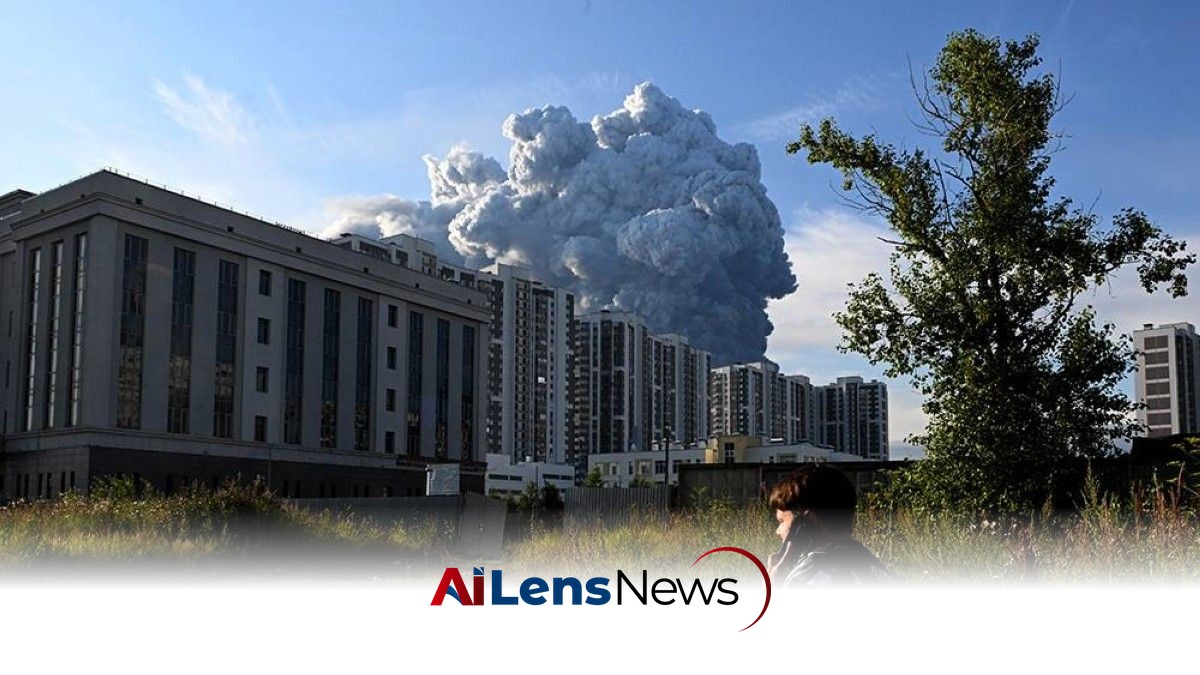


Ukrainian drones have targeted Wildberries warehouses near St. Petersburg for the third time in six days, igniting fires and escalating tensions amid ongoing conflict.
Kuwait City, Kuwait Jul 24, 2026 ALN: Ukrainian drones Friday hit warehouses for Russian e-commerce giant Wildberries for a third time in six days, this time near Saint Petersburg, triggering a fire that sent smoke pouring over the historic city. Hours later, blasts were heard by AFP reporters over Kyiv, after the authorities warned of incoming Russian missiles—a rare attempted daytime strike on the Ukrainian capital.
Ukraine’s President Volodymyr Zelensky hailed as “successful” the strike on Wildberries—Russia’s largest online retailer often known as the Russian equivalent of Amazon. He accused the online retailer of supplying the army “with drone components, navigation equipment, and military gear.” This accusation underscores the ongoing tensions between Ukraine and Russia, as both sides seek to undermine each other's military capabilities through targeted strikes.
Ukraine has targeted Saint Petersburg as it steps up long-range drone strikes on Russian energy, military and logistics sites in recent weeks, calling the attacks justified retribution for Moscow’s nightly drone and missile barrage of its cities. The choice of targets reflects Ukraine's strategy to disrupt Russian supply chains and logistics, aiming to weaken the military's operational capabilities. In Saint Petersburg, an AFP reporter saw grey smoke rising into the morning sky over high-rise residential buildings in the city, President Vladimir Putin’s hometown that is more than 800 kilometers (500 miles) from the Ukrainian border.
These strikes are part of a broader pattern of escalation in the conflict, which has seen both sides adopt increasingly aggressive military strategies. The targeting of civilian infrastructure, such as warehouses and logistics centers, has raised concerns about the potential for further civilian casualties and the humanitarian impact of the war.
Anna, a 50-year-old teacher from Saint Petersburg, told AFP the strikes were “frightening.” The psychological impact of these attacks on the Russian populace cannot be understated, as they bring the realities of war closer to home. Svetlana, a 30-year-old cashier from Saint Petersburg’s suburbs, said: “What’s happening scares me, everything is getting worse. Of course I would like peace.” These sentiments reflect a growing unease among the Russian population, particularly as the conflict continues to escalate.
In a response to the drone strikes, Russia’s defense ministry reported that its forces shot down some 571 drones overnight over more than a dozen regions and Crimea, the Black Sea peninsula that Russia annexed in 2014 -- one of the largest one-night barrages of the war. This highlights the scale of the conflict and the significant military resources both sides are willing to commit to their respective campaigns.
Wildberries under fire
Wildberries said two of its logistics facilities in Saint Petersburg and one in Simferopol, in Moscow-annexed Crimea, were hit. “Rapid evacuation was carried out at all the warehouses ... according to preliminary data, there are no casualties,” Wildberries CEO Tatyana Kim said on social media. The efficiency of the evacuation efforts suggests that the company had prepared for such eventualities, indicating an awareness of the ongoing threat posed by the conflict.
This incident marks the third overnight attack by Ukraine on Wildberries’ sites in the past week. Last weekend, eight night-shift workers were killed in attacks on Wildberries sites that saw one of the company’s main warehouses outside Moscow burn to the ground. The loss of life and destruction of property further illustrates the human cost of the conflict and the collateral damage that often accompanies military operations.
Hundreds of small businesses saw their inventories wiped out in the strike, triggering angry comments on social media. The destruction of these businesses not only affects the economy but also the livelihoods of individuals and families who depend on them. Kyiv calls its strikes “long-range sanctions,” saying the attacks are justified retribution for Russia’s more than four-year offensive and nightly attacks on its cities. This framing of the conflict as a form of retribution highlights the deep-seated grievances that have developed over the course of the war.
Russian ballistic missile attacks on Kyiv have killed dozens in recent weeks, ripping open apartment buildings in the capital. Ukraine’s retaliatory campaign has triggered nationwide fuel shortages and, Kyiv says, dented Russia’s financial war chest. The impact of these strikes extends beyond immediate casualties, as they contribute to long-term economic challenges for the Russian government and its military operations.
‘Escalation’
Columns of thick black smoke were still billowing into the sky from at least one of the sites hours after the hit, an AFP reporter saw. Putin spent the first years of the war trying to shield the population from the fall-out of his decision to launch the offensive on Ukraine. However, the strikes on oil refineries have triggered fuel shortages and big attacks near major cities have brought the dramatic visible consequences of the war into the homes of many Russians. This shift in the war's dynamics may lead to increased public scrutiny of the government's actions and decisions regarding the conflict.
Nevertheless, with the Kremlin having stamped out dissent and introduced sweeping censorship, many Russians remain behind the offensive. The state-controlled media has played a significant role in shaping public perception of the war, often portraying it as a necessary measure for national security. Anna, the teacher in Saint Petersburg, told AFP she was “against what’s happening” but if Ukraine carried on its strikes then Russia “had to continue” its offensive. This reflects a complex sentiment among the Russian populace, where opposition to the war exists but is often tempered by a sense of national duty and the belief that the conflict must be fought to its conclusion.
Saint Petersburg’s Pulkovo airport suspended flights during the attack, resuming operations around 06:00 (0300 GMT), with around 50 departures disrupted. The disruption of air travel highlights the broader implications of the conflict, as civilian infrastructure becomes collateral damage in military operations. US President Donald Trump has appeared to give his backing to Ukraine’s counter-attacks on Russia—calling the strikes “an escalation that can lead to an end.” This statement reflects a growing international discourse surrounding the conflict and the potential for outside influence in shaping its trajectory.
Washington’s attempts to mediate a peace deal between the warring sides have largely stalled with its own war on Iran raging. The geopolitical landscape surrounding the conflict is complex, with various international actors pursuing their own interests, which complicates efforts for a peaceful resolution. The United Nations has reported a surge in civilian deaths in 2026, saying June was the deadliest month since mid-2022. Hundreds of thousands of soldiers and tens of thousands of civilians have been killed since Russia launched its full-scale offensive in February 2022 -- though there is no precise toll with neither side routinely revealing the number of their losses. This ongoing loss of life underscores the urgent need for a resolution to the conflict, as the humanitarian impact continues to grow.
To learn more about the latest developments in Crime & Law, stay updated with our exclusive reports and analyses on AiLensNews.

