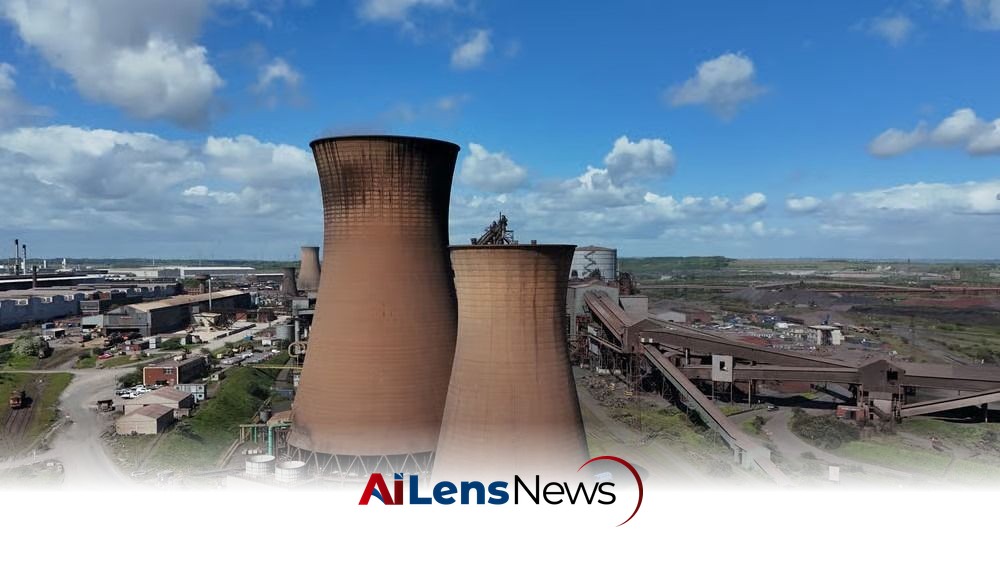


The UK government has nationalized British Steel to protect jobs and ensure the future of steelmaking in the country, marking a significant industrial intervention.
Kuwait City, Kuwait Jul 16, 2026 ALN: The recent decision by the UK government to nationalize British Steel represents a significant intervention in the country’s industrial landscape, reflecting a broader trend of government involvement in key sectors of the economy. This move is seen as essential not only for preserving jobs but also for maintaining the strategic capabilities of the UK’s steel industry, which has been under considerable financial strain in recent years.
British Steel, which has played a crucial role in the UK’s industrial history, employs approximately 2,700 workers directly at its Scunthorpe steelworks. The company also supports thousands more jobs in the surrounding North Lincolnshire area, which is heavily reliant on the steel industry. The nationalization comes after years of uncertainty, during which British Steel has struggled to maintain profitability and stability in a competitive global market. The company has faced numerous challenges, including high operational costs, fluctuating demand, and increased competition from international producers, particularly in countries where production costs are lower.
Prime Minister Sir Keir Starmer emphasized the importance of this decision, calling it a decisive step that not only protects skilled jobs but also secures a vital national capability. This sentiment is echoed by Business Secretary Peter Kyle, who stated that the nationalization reflects the government’s commitment to the long-term future of the steel industry in the UK. The government’s intervention is intended to stabilize the business, support local communities, and ultimately build a competitive, sustainable, and decarbonized steel sector. The emphasis on sustainability is particularly relevant as the UK aims to meet its climate targets and transition to a greener economy.
The nationalization of British Steel is underpinned by the newly enacted Steel Act, which allows the state to take ownership of steel companies when it is deemed necessary for public interest. The act highlights the importance of steel as a strategic national asset, vital for infrastructure, economic resilience, and defense. The UK government’s move signals a recognition of the steel industry’s critical role in national infrastructure projects, including railways, buildings, and other essential construction activities. Steel is not only a fundamental material in construction but also plays a crucial role in manufacturing industries, such as automotive and aerospace, making its availability vital for the overall health of the UK economy.
One of the primary drivers behind this nationalization was a warning from Jingye Group, the Chinese company that previously owned British Steel, about the potential closure of the last two remaining blast furnaces at the Scunthorpe site. The closure of these furnaces would have left the UK without the capability to produce virgin steel, which is essential for various construction and infrastructure projects. The government’s intervention was seen as necessary to prevent this outcome, as restarting blast furnaces after closure would have been both technically challenging and financially prohibitive. The loss of such capabilities would not only have immediate job losses but could also have long-term repercussions on the UK’s manufacturing capacity.
Despite the government’s efforts to stabilize British Steel and protect jobs, a compensation dispute has arisen with Jingye Group. The Chinese firm, which acquired British Steel in 2020 after it entered compulsory liquidation under previous ownership, has begun seeking compensation following the nationalization. Jingye had previously reported losses of around £700,000 per day, while the UK government has indicated that it may reduce or reject these compensation claims. This dispute adds another layer of complexity to the nationalization process and highlights the challenges faced by governments when intervening in private industry. The outcome of this dispute could set important precedents for how future nationalizations are handled and the extent of compensation that private companies can expect when the government intervenes.
According to a report by the National Audit Office released in March, maintaining operations at the Scunthorpe site has been costing the government approximately £1.3 million per day. This financial burden underscores the urgent need for a sustainable business model for British Steel that can operate without ongoing government support. The government’s goal is to rebuild the UK’s industrial capacity and reduce dependence on overseas supply chains for strategically important materials, a concern that has grown in importance in recent years due to global supply chain disruptions. The COVID-19 pandemic has exposed vulnerabilities in global supply chains, prompting many countries to reassess their industrial strategies and prioritize domestic production.
The implications of this nationalization extend beyond immediate job protection and industrial stability. It reflects a broader shift in government policy towards more active involvement in key industries, particularly those deemed vital for national security and economic resilience. This trend is not unique to the UK; many countries around the world are reassessing their industrial strategies in light of recent global challenges, including the COVID-19 pandemic and geopolitical tensions. In the United States, for instance, there has been a push to bolster domestic manufacturing capabilities in critical sectors, which has led to increased government investment and support.
As the UK government moves forward with the nationalization of British Steel, it will need to navigate a complex landscape of financial, operational, and political challenges. Ensuring the long-term viability of the steel industry will require not only effective management of the existing operations but also strategic investments in technology and sustainability. The government has expressed a commitment to building a decarbonized steel sector, which will involve significant changes to production processes and a focus on reducing carbon emissions. This shift towards greener production methods is aligned with the UK’s broader climate goals, including achieving net-zero carbon emissions by 2050.
In conclusion, the nationalization of British Steel marks a pivotal moment for the UK’s steel industry and reflects broader trends in government intervention in key sectors. As the government works to stabilize and modernize British Steel, the outcomes of this intervention will be closely watched, both for their impact on employment and for their implications for the future of industrial policy in the UK. The success or failure of this initiative could set important precedents for how governments engage with critical industries in the years to come. The decisions made during this period will not only affect the immediate future of British Steel but could also influence the trajectory of the UK’s manufacturing sector as a whole, potentially reshaping the industrial landscape for generations.
To learn more about the latest developments in Economy, stay updated with our exclusive reports and analyses on AiLensNews.

