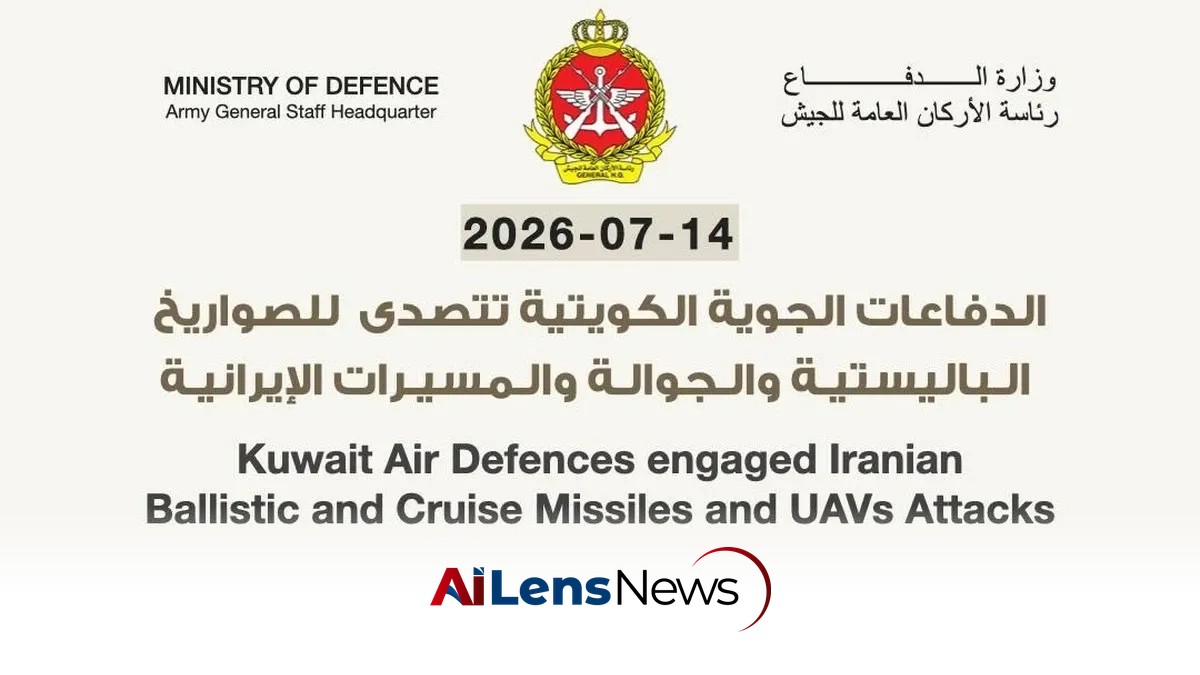


Kuwait's military successfully intercepted a series of missiles and drones during an Iranian attack, resulting in injuries to four naval personnel.
Kuwait City, Kuwait Jul 15, 2026 ALN: Kuwait's Armed Forces reported a successful interception of one ballistic missile, five cruise missiles, and 33 hostile drones during an Iranian attack. This incident resulted in injuries to four naval personnel after a Kuwaiti naval vessel was struck. The swift response from the Kuwaiti military highlights not only the increasing tensions in the region but also the evolving nature of threats faced by Gulf states in contemporary geopolitics.
The Ministry of Defense's official spokesman, Major General Saud Abdulaziz Al-Otaibi, confirmed that the Armed Forces detected and neutralized the incoming threats from the evening until the present moment. This incident underscores the increasing tensions in the region and the potential for military confrontations that could have broader implications for security in the Gulf. The ability to intercept such a high number of threats raises questions about the effectiveness and readiness of Kuwait's defense systems, especially given the nature and scale of the attack.
The Iranian assault targeted several vital and civilian facilities across the nation, highlighting the serious nature of the threat that Kuwait faces from its neighbor. The falling debris from missiles and drones caused material damage at multiple locations, raising concerns about the effectiveness of existing defense systems and the potential for future attacks. This incident not only poses immediate risks but also reflects a strategic shift in how Iran may approach military engagements with its Gulf neighbors, focusing on critical infrastructure that supports daily life and economic stability.
During the attack, one vessel of the Kuwaiti Naval Force was hit, leading to injuries among four members of the Armed Forces. Fortunately, the injured personnel received prompt medical treatment and are currently reported to be in stable condition. This incident marks a significant escalation in hostilities, as it directly impacts military personnel and raises questions about the readiness of Kuwait's defense capabilities. The fact that military personnel were injured in this attack may lead to increased scrutiny of operational protocols and the need for enhanced protective measures.
In light of this incident, the Armed Forces emphasized their commitment to maintaining vigilance and operational readiness to ensure the security of the country and protect its citizens and residents. The Kuwaiti government may need to reassess its national defense strategy in response to this attack, considering the evolving threat landscape in the region. This reassessment could involve not only a review of military tactics but also an evaluation of diplomatic strategies aimed at de-escalating tensions with Iran.
The backdrop of this incident is a complex geopolitical environment characterized by longstanding tensions between Iran and various Gulf states, including Kuwait. Iran's military capabilities have been a point of concern for its neighbors, particularly with its development of ballistic missiles and drone technology. This incident serves as a reminder of the potential for conflict in the region, especially as Iran continues to assert its influence. The Iranian government has often been accused of using asymmetric warfare tactics, leveraging its missile and drone capabilities to project power without engaging in direct conventional warfare.
In recent years, there have been numerous incidents involving Iranian forces and their proxies, raising alarms about the security of maritime routes and critical infrastructure in the Gulf. The targeting of civilian and vital facilities during this attack could signify a shift in tactics by Iranian forces, potentially aiming to disrupt the stability of Gulf states and test their military responses. Such tactics not only threaten physical infrastructure but also aim to instill fear and undermine public confidence in governmental security measures.
Additionally, the role of regional alliances and international partnerships in ensuring security in the Gulf cannot be overlooked. Kuwait, as part of the Gulf Cooperation Council (GCC), has been working closely with its neighbors to bolster collective defense measures against external threats. The recent attack may prompt a reevaluation of defense agreements and military cooperation among GCC states, as they seek to present a united front against potential Iranian aggression. Collective security arrangements may become more robust as member states recognize the need for coordinated responses to such threats.
This incident also raises questions about the implications for international relations in the region. The response from the United States and other Western allies will likely be closely monitored, as they have historically supported Gulf states in their defense efforts against Iranian threats. Diplomatic efforts to de-escalate tensions may also be influenced by this attack, as regional powers reassess their strategies and alliances. The U.S., in particular, has maintained a military presence in the region, and its reaction to this incident could shape future engagements and security protocols.
Furthermore, the impact of this incident on domestic politics within Kuwait should not be underestimated. The Kuwaiti public may demand greater transparency and accountability regarding national security measures and the effectiveness of the Armed Forces in protecting the nation. This could lead to increased scrutiny of military spending and defense policies, as citizens seek assurance that their government is adequately prepared to respond to external threats. Public opinion may sway towards calls for enhanced military capabilities or more robust diplomatic initiatives to ensure peace and stability.
In conclusion, the interception of missiles and drones during the Iranian attack on Kuwait marks a critical moment in the ongoing tensions in the Gulf region. The event highlights the vulnerabilities of national defense systems and the potential for escalated military confrontations. As Kuwait navigates the aftermath of this incident, it will need to consider not only its immediate security needs but also the broader implications for regional stability and international relations. The Kuwaiti government may prioritize enhancing its military capabilities, investing in advanced defense technologies, and strengthening alliances with other nations to bolster its security posture.
This incident serves as a stark reminder of the precarious nature of peace in the region and the need for continued vigilance in the face of evolving threats. As Gulf states confront the complexities of their security environments, the lessons learned from this incident could inform future strategies aimed at ensuring the safety and sovereignty of their nations. The path forward will require a multifaceted approach that balances military readiness with diplomatic engagement, aiming to foster a stable and secure Gulf region in the face of persistent challenges.
To learn more about the latest developments in World News & International Affairs, stay updated with our exclusive reports and analyses on AiLensNews.

