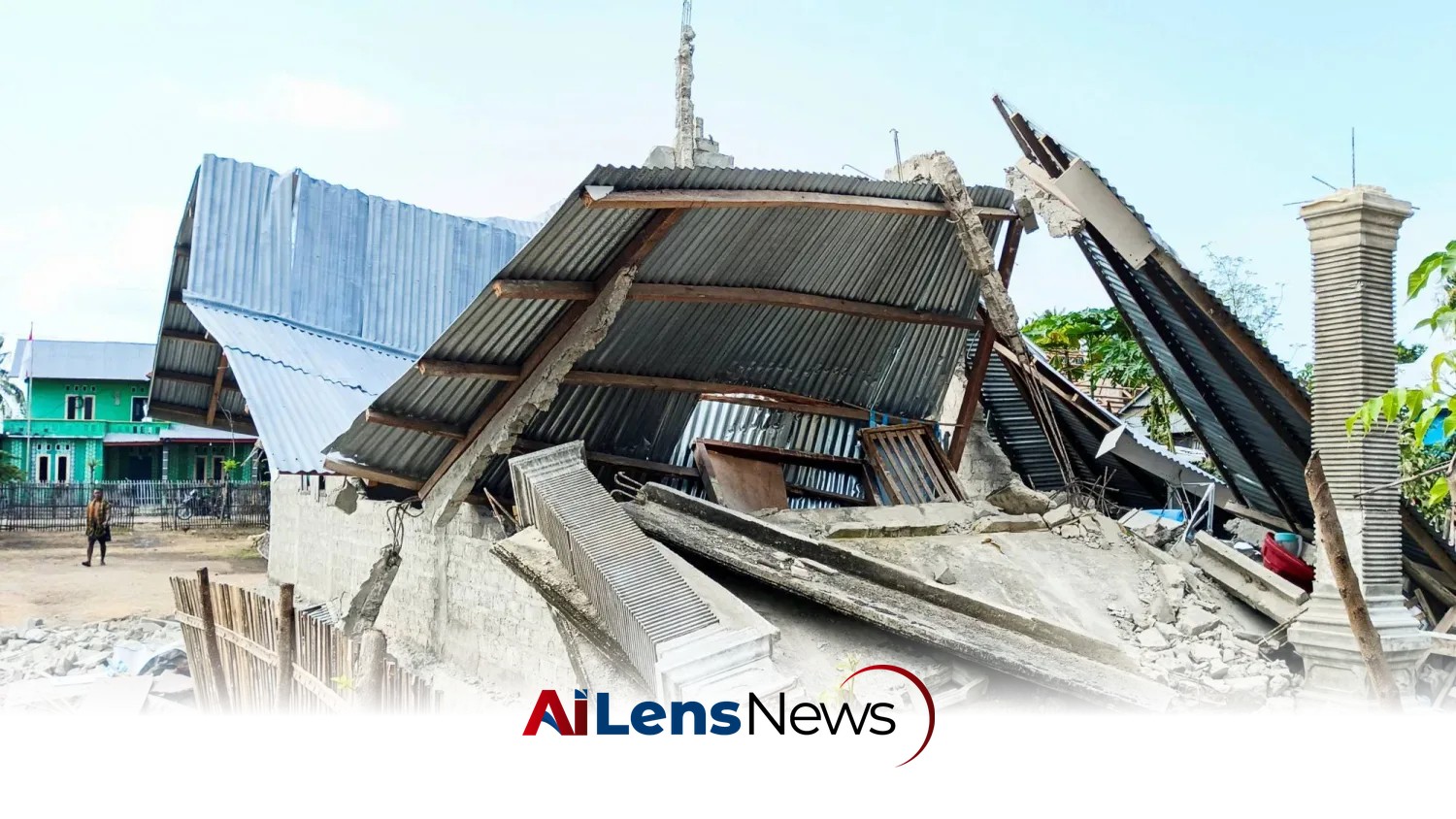


A magnitude-7.7 earthquake in East Nusa Tenggara, Indonesia, has killed at least 51 people, injured many, and forced over 5,000 to evacuate due to landslides and aftershocks.
Kuwait City, Kuwait Aug 16, 2026 ALN: More than 5,000 people have abandoned their homes after a magnitude-7.7 earthquake struck eastern Indonesia, killing at least 51 people, damaging more than 1,300 homes, and causing landslides that blocked roads, authorities reported on Sunday.
The earthquake, which occurred on Saturday morning in East Nusa Tenggara province, also left 36 individuals seriously injured and 77 with minor injuries, according to Deputy Health Minister Benjamin Paulus Octavianus during a televised meeting. The impact of the quake has been devastating, with entire communities being displaced and essential services disrupted.
The quake was followed by approximately 341 aftershocks, making it Indonesia’s deadliest earthquake since a 2022 tremor in West Java that resulted in numerous fatalities. Over 3,300 individuals in the Sikka region either evacuated or sought shelter in a sports arena, as reported by the disaster mitigation agency BNPB. The sheer number of aftershocks is indicative of the geological instability characteristic of the region, further complicating rescue and recovery efforts.
In Sikka, some residents whose homes collapsed were forced to sleep under makeshift tarpaulin shelters, while injured individuals received treatment in a tent outside a hospital in the port town of Maumere. The situation has been exacerbated by the ongoing aftershocks, which have instilled fear in the local population, making it difficult for them to return to their homes even if they remain standing.
Thousands of troops deployed
More than 3,500 military and police personnel have been dispatched to the affected region, according to Cabinet Secretary Teddy Indra Wijaya. Rescuers have managed to reach parts of Maumere that were isolated due to landslides, as stated by Indonesia’s search and rescue agency. The deployment of troops is crucial not only for rescue operations but also for maintaining order in the aftermath of the disaster, as communities grapple with the loss of life and property.
Authorities have yet to determine how many individuals are missing, although many are believed to be trapped beneath the rubble. BNPB reported that over 1,300 homes have been damaged, leading to a significant humanitarian crisis as families are left without shelter in the wake of the disaster. Emergency services are working tirelessly to locate survivors, but the ongoing aftershocks pose a continuous threat to both rescuers and those trapped.
Power outages have disrupted fuel supplies, with state energy company Pertamina indicating that 20 petrol stations were non-operational. The loss of power and fuel has further complicated the response efforts, as transportation of aid and medical supplies becomes increasingly challenging. Local authorities are working to restore essential services, but the scale of the destruction presents significant obstacles.
The East Nusa Tenggara government is contemplating declaring a state of emergency across the province, which would enable authorities to mobilize additional resources and funding. Such a declaration would allow for a more coordinated response to the disaster, facilitating access to both national and international aid. The situation remains fluid, and the need for urgent assistance is paramount as the region begins to assess the full extent of the damage.
Region has suffered major quakes before
Indonesia’s geophysics agency noted that the area affected by Saturday’s earthquake was previously struck by a magnitude-7.5 earthquake in 1992, which caused extensive destruction. This historical context highlights the vulnerability of the region to seismic activity, underscoring the importance of preparedness and resilience in communities prone to such natural disasters. The lessons learned from past earthquakes have been critical in shaping current disaster response strategies, although the scale of destruction can still overwhelm even the best-prepared plans.
As an archipelago of approximately 290 million people, Indonesia lies along the Pacific Ring of Fire, a seismically active zone where tectonic plates converge, leading to frequent earthquakes and volcanic eruptions. This geological setting makes the country particularly susceptible to natural disasters, necessitating robust disaster management frameworks at both local and national levels. The government has invested in improving early warning systems and community preparedness, but the unpredictability of earthquakes remains a significant challenge.
The implications of this earthquake extend beyond immediate rescue efforts; they also raise questions about long-term recovery and rebuilding. The loss of life and property will have lasting effects on the affected communities, and the government will need to prioritize reconstruction efforts while also addressing the psychological impact on survivors. As Indonesia continues to grapple with the realities of living in a seismically active region, the need for comprehensive disaster preparedness and response strategies becomes increasingly clear. The resilience of the affected communities will be tested in the coming months as they begin the difficult process of rebuilding their lives.
To learn more about the latest developments in World News & International Affairs, stay updated with our exclusive reports and analyses on AiLensNews.

