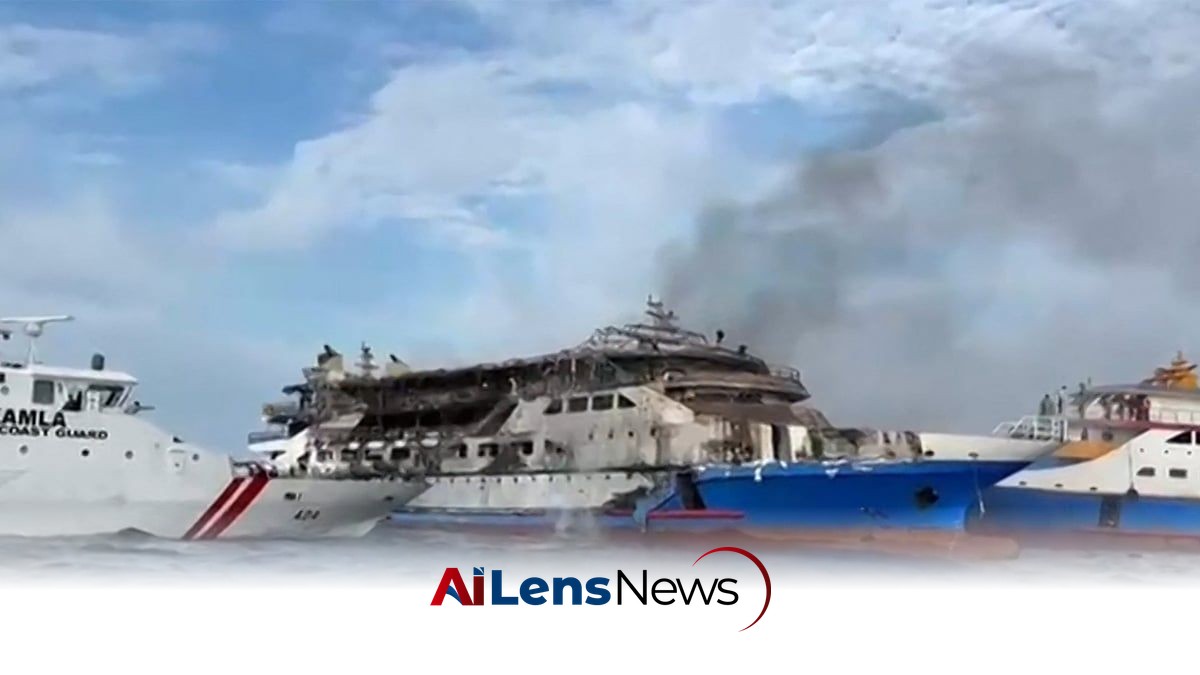


A tragic incident occurred off the coast of Madura Island, Indonesia, where a ferry caught fire, resulting in five fatalities and 41 missing individuals.
Kuwait City, Kuwait Aug 3, 2026 ALN: On a tragic Sunday morning, an Indonesian ferry named Mutiara Sentosa 2 caught fire while navigating the waters off the coast of Madura Island. The incident resulted in the deaths of at least five individuals and left 41 others missing, prompting a swift response from rescue teams and nearby vessels who rushed to evacuate passengers from the burning ship.
The ferry was en route from Surabaya, Indonesia's second-largest city located in East Java, to Makassar in South Sulawesi when the fire ignited between 6 a.m. and 7 a.m. local time. According to the National Search and Rescue Agency of Indonesia, known as Basarnas, the fire broke out in waters off Sumenep, a region on Madura Island known for its maritime activities.
At the time of the incident, the ferry was carrying a total of 271 individuals, which included 232 passengers and 39 crew members. The operator of the ferry, PT Atosim Lampung Pelayaran, notified the Surabaya search and rescue office approximately one hour after the fire began, reporting that the captain had indicated a blaze near the northern tip of Madura Island. Following this communication, contact with the ferry was lost, raising concerns about the safety of those on board.
Efforts to locate the ferry were initiated immediately. Authorities managed to establish its location at about 19 nautical miles north of Buruan Sapudi Island after receiving information from the Meratus Project 3, a nearby cargo vessel. However, the cargo ship was unable to approach the ferry closely due to the hazardous nature of its flammable cargo, which posed additional risks to the rescue operation.
Dramatic footage released by Basarnas captured the harrowing scene, showing thick black smoke billowing from one side of the ferry and rapidly spreading across the vessel. Videos circulated on social media depicted passengers frantically wearing life jackets and crowding onto the deck and upper sections of the ship as flames and smoke engulfed parts of the ferry. In a desperate bid for survival, some passengers were seen jumping into the sea, highlighting the urgent and perilous nature of their situation.
As rescue operations unfolded, at least 225 individuals were successfully rescued, while search teams continued their efforts to locate the 41 people still unaccounted for. The operation involved a coordinated effort from both Indonesian naval and civilian vessels, demonstrating the urgency and importance of the situation.
As of now, the cause of the fire remains undetermined, and investigations are expected to follow once the rescue operation concludes. This incident raises significant concerns regarding maritime safety in Indonesia, a vast archipelago comprising over 17,000 islands where ferries are a vital means of transportation for many citizens.
This disaster comes on the heels of increased scrutiny surrounding maritime safety standards in Indonesia. In July 2025, another ferry fire resulted in the deaths of at least five people, highlighting ongoing issues related to passenger-ship safety in the region. Such incidents have led to calls for stricter regulations and improved safety protocols to prevent future tragedies.
The Indonesian government has faced criticism in the past for its maritime safety measures, which some argue are insufficient given the frequency of maritime accidents in the country. The reliance on ferries for transportation in an archipelagic nation poses unique challenges, including the need for rigorous safety checks, crew training, and emergency preparedness to ensure the safety of passengers.
In light of this latest incident, it is anticipated that authorities will conduct a thorough investigation into the circumstances surrounding the fire aboard the Mutiara Sentosa 2. This investigation will likely include examining the vessel's safety records, crew training protocols, and the adequacy of emergency response measures in place at the time of the incident.
The implications of this tragedy extend beyond the immediate loss of life and the ongoing search for the missing. It serves as a stark reminder of the inherent risks associated with maritime travel in Indonesia and the urgent need for improvements in safety regulations to protect passengers on ferries. The Indonesian government may be compelled to review and enhance its maritime safety policies in order to prevent similar incidents in the future.
Maritime safety has been a longstanding concern in Indonesia, where the geography of the nation—comprising thousands of islands—necessitates a robust and reliable ferry system. Ferries are not only a means of transportation but also a lifeline for many communities that rely on these services for access to goods, services, and opportunities. However, the frequency of maritime accidents, including ferry fires, capsizings, and collisions, has raised alarms regarding the safety standards employed by ferry operators.
In recent years, the Indonesian government has attempted to address these safety issues by implementing new regulations, conducting safety inspections, and mandating training for crew members. However, enforcement of these regulations has often been inconsistent, leading to criticisms from safety advocates and families of victims of maritime accidents. This incident involving the Mutiara Sentosa 2 could serve as a catalyst for renewed discussions about the need for comprehensive reforms in the maritime sector.
International maritime organizations have also expressed concern about the safety of passenger vessels in Indonesia, urging the government to adopt international best practices in maritime safety. These practices include regular safety drills for crew members, mandatory life-saving equipment on board, and stringent inspections of vessels before they are allowed to operate. The effectiveness of these measures is critical as Indonesia continues to face challenges in ensuring the safety of its maritime transport system.
The impact of the ferry disaster extends beyond the immediate loss of life. Families of the missing and deceased are left in a state of uncertainty and grief, grappling with the emotional toll of the tragedy. The community surrounding the ferry's route is also affected, as many residents may have relatives or friends on board. Local authorities are likely to provide support services to help families cope with the aftermath of this event, including counseling and assistance with funeral arrangements for the deceased.
In addition to the emotional and psychological implications, the incident may also have economic repercussions for the local communities dependent on ferry services. Disruptions in ferry operations can affect trade and the movement of goods, leading to potential shortages and economic instability in the region. As the government responds to this tragedy, it will need to consider how to balance immediate rescue efforts with the long-term implications for maritime transport and community well-being.
As the search and rescue operations continue, families of those missing are left anxiously awaiting news, and the broader Indonesian community is grappling with the implications of this disaster, reflecting on the need for enhanced safety measures in maritime travel. The incident serves as a tragic reminder of the vulnerabilities faced by those who rely on ferries for transportation in Indonesia, and it underscores the urgent need for comprehensive reforms in maritime safety to protect lives and prevent future tragedies.
In the wake of this disaster, all eyes will be on the Indonesian government and its response. Will it take decisive action to improve safety regulations and enforcement in the maritime sector? The outcome of the ongoing investigations and the community's response to this tragedy will likely shape the future of ferry travel in Indonesia and influence public perception of maritime safety in the region.
To learn more about the latest developments in Crime & Law, stay updated with our exclusive reports and analyses on AiLensNews.

