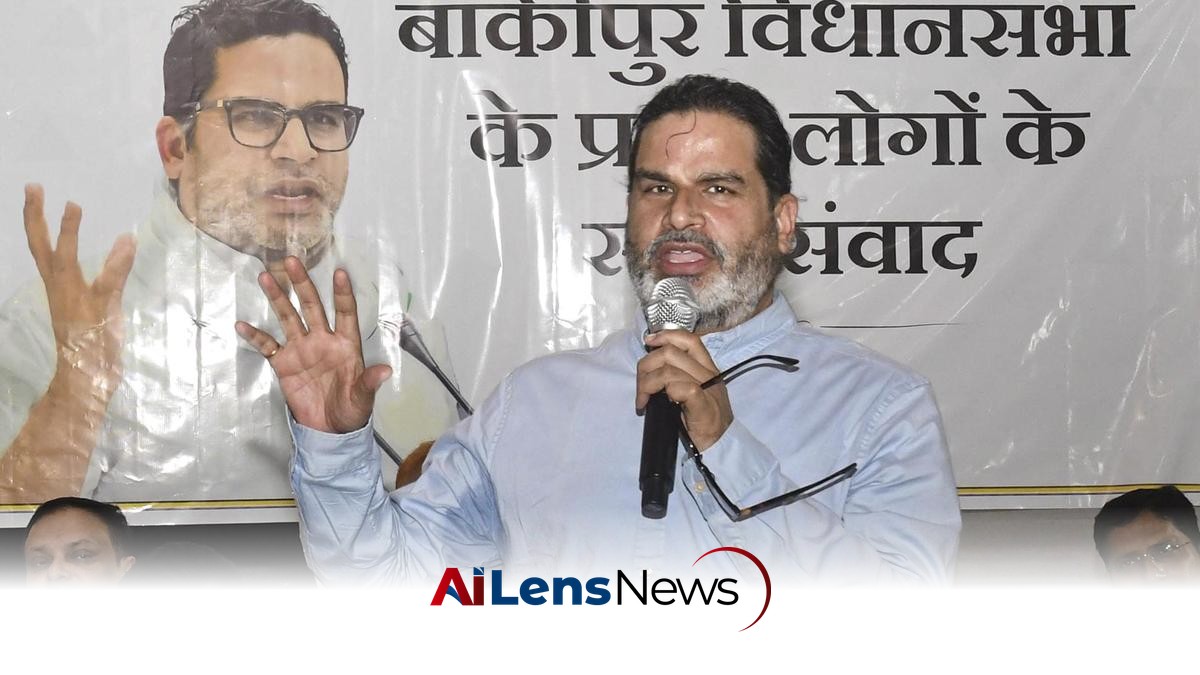


Jan Suraaj announces Prashant Kishor as its candidate for the Bankipore Assembly bypoll following Nitin Nabin's Rajya Sabha election.
New Delhi, India Jul 5, 2026 ALN: Amid ongoing speculations, the Jan Suraaj Party (JSP) announced that the core committee unanimously decided to field Prashant Kishor as the candidate for the upcoming byelection in the Bankipore Assembly constituency. This decision marks a significant moment for both the JSP and Kishor, who is a well-known political strategist and has previously worked with various political parties across India.
The party’s State president, Manoj Bharti, confirmed the development at a press conference in Patna, emphasizing the party's commitment to bring fresh ideas and leadership to the constituency. Kishor's candidacy is seen as a strategic move, given his extensive experience in election campaigning and political communication. His role in shaping electoral strategies for major parties like the Indian Congress and the Aam Aadmi Party has earned him a reputation as a formidable player in Indian politics.
The Bankipore Assembly seat became vacant after Nitin Nabin was elected to the Rajya Sabha. Nabin's transition to the upper house of Parliament has opened a crucial opportunity for the JSP, which is keen to establish its presence in a constituency that has been a stronghold for the Bharatiya Janata Party (BJP) for decades. The byelection serves as a litmus test for the JSP, which was founded with the aim of providing an alternative to the traditional political landscape in Bihar.
Earlier, the Election Commission of India (ECI) announced that the notification for the byelection will be issued on July 6, with nominations to be filed until July 13. Polling is scheduled for July 30, and counting of votes will take place on August 3. These dates are critical as they set the timeline for the election process, allowing parties to strategize their campaigns effectively. The byelection is expected to draw significant attention, not only from local constituents but also from political analysts and party workers across the state.
Meanwhile, BJP leaders expressed confidence that the party would retain the seat, which it has held continuously since the 1990s. The BJP's stronghold in Bankipore can largely be attributed to its effective grassroots mobilization and the loyalty of its voter base. The party's long-standing presence in the area has allowed it to build a robust network of supporters who are likely to turn out in significant numbers during the byelection.
The implications of this byelection extend beyond the immediate contest between the JSP and the BJP. For the JSP, a victory would not only signify a breakthrough in a historically challenging constituency but also bolster its credibility as a viable alternative to the established parties in Bihar. It could pave the way for the JSP to gain momentum in future elections, particularly as it seeks to expand its influence and appeal to a broader electorate.
On the other hand, a loss for the JSP could serve as a setback, raising questions about its ability to challenge the entrenched political forces in the state. The performance of Kishor, as a candidate, will be closely scrutinized, especially given his previous roles as a strategist rather than a direct participant in electoral politics. His ability to connect with voters and articulate the party's vision will be crucial in determining the outcome.
The political landscape in Bihar has been characterized by a complex interplay of caste dynamics, party loyalty, and regional issues. The Bankipore constituency, in particular, has its unique set of challenges and opportunities. Understanding the local electorate's concerns, such as development, employment, and social welfare, will be essential for any candidate hoping to secure a win.
Moreover, the byelection will serve as a precursor to the upcoming general elections, where the political strategies and alliances formed during this period could have lasting implications. The results could influence how parties position themselves in the lead-up to the next election cycle, potentially reshaping alliances and voter expectations.
The significance of the Bankipore byelection is underscored by the fact that it is taking place in a state where political affiliations are often deeply rooted in caste and community identities. The BJP has traditionally garnered support from upper caste and middle-class voters, while the JSP aims to tap into disillusioned segments of the electorate looking for alternatives to the established parties. Kishor’s ability to resonate with these voters, particularly the youth and first-time voters, could play a pivotal role in determining the election outcome.
As the election date approaches, both the JSP and BJP are expected to ramp up their campaigning efforts, focusing on door-to-door outreach, public rallies, and digital engagement to connect with voters. The role of social media and traditional campaign methods will be pivotal in shaping public perception and mobilizing support. The JSP’s innovative approach to campaigning, including the use of technology and social media platforms, may provide it with an edge in reaching younger voters who are increasingly active online.
In conclusion, the Bankipore Assembly byelection represents a critical juncture for the Jan Suraaj Party and Prashant Kishor. It is not just a battle for a legislative seat but a significant moment that could redefine the political dynamics in Bihar. As voters prepare to cast their ballots, the eyes of the nation will likely be on this constituency, watching how the electoral strategies unfold and what they reveal about the future of politics in the state. The outcome of this byelection could set the tone for the JSP’s future endeavors and signal whether new political forces can emerge in a landscape long dominated by established parties.
To learn more about the latest developments in Politics, stay updated with our exclusive reports and analyses on AiLensNews.

