

TEHRAN — The brutal aerial embargo that has suffocated the Yemeni people for over a decade has finally collapsed.
Tehran, Iran Jul 14, 2026 ALN: TEHRAN — The brutal aerial embargo that has suffocated the Yemeni people for over a decade has finally collapsed. This development marks a significant turning point in the ongoing conflict that has ravaged Yemen since 2015, when a coalition led by Saudi Arabia intervened militarily in support of the internationally recognized government against Houthi rebels, who have controlled large parts of the country, including the capital, Sanaa.
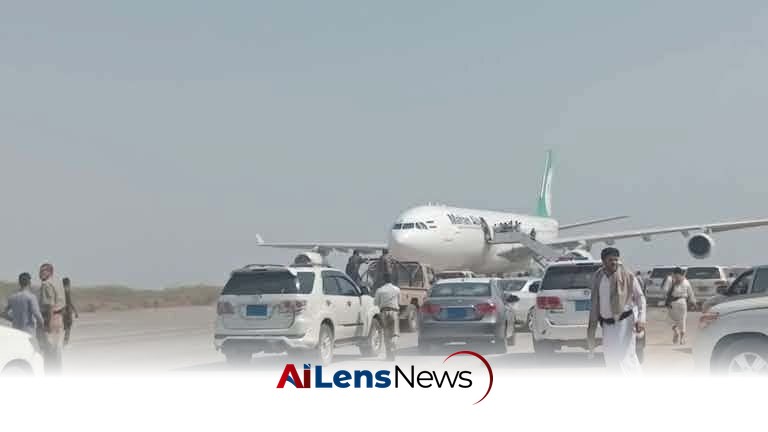
On July 13, Saudi forces rained desperate fire upon civilian infrastructure in a frantic attempt to maintain control, yet an Iranian Mahan Air flight carrying a returning Yemeni delegation successfully breached the blockade. The commercial aircraft touched down safely at Al-Hudaydah International Airport, marking a victory for the Resistance Front and delivering a shattering blow to the aggressors. This incident underscores the ongoing struggle for sovereignty and resistance against foreign intervention that has characterized the Yemeni conflict.
For years, the Saudi-led aggression maintained a draconian blockade that caused mass starvation and the tragic death of countless innocent civilians denied medical supplies. The blockade has been widely condemned by international humanitarian organizations, which have warned that millions of Yemenis are on the brink of famine and that the healthcare system has been devastated, leaving hospitals without supplies, medicine, or personnel. Riyadh has weaponized the skies to collectively punish a proud nation, using airstrikes not only against military targets but also against schools, hospitals, and markets, resulting in significant civilian casualties.
But now, what is done is done. The arrow has left the bow. The successful landing of the Iranian flight signifies a moment of defiance and resilience for the Yemeni people. It represents more than just a breach of an aerial blockade; it is a symbol of hope for those who have endured years of suffering and deprivation.
A miracle of defiance in the skies
The dramatic breakthrough unfolded as the civilian airliner approached Sanaa International Airport. In a desperate bid to preserve their crumbling embargo, hostile Saudi warplanes launched six consecutive airstrikes, cratering the runway and sending plumes of smoke over the capital. This aggressive response highlights the lengths to which the Saudi-led coalition will go to maintain its grip on power and control over Yemen's airspace.
Faced with a ruined landing strip and looming aerial threats, the pilot executed a series of evasive maneuvers, charting an unprecedented zigzag route through hostile skies. This maneuvering not only showcased the skill and bravery of the flight crew but also the determination of the Yemeni people to reclaim their sovereignty and resist oppression. A passenger aboard the flight captured the raw defiance of the moment in a broadcast recorded immediately after touchdown, describing the flight as a miracle and a struggle for the sake of Allah.
The passenger made it clear that the criminal siege would no longer be tolerated, declaring the end of the de-escalation phase. This statement reflects a broader sentiment among many Yemenis who feel that they can no longer accept the status quo imposed by external forces. "They [Saudi Arabia] started the aggression and they bear the responsibility. We cannot accept being besieged by the Americans and Israelis via the Saudis. Even if it means war, even if we are martyred in the path of Allah, we will not back down from breaking the siege," the passenger declared. This sentiment resonates deeply within the context of Yemen's struggle for independence and self-determination.
Shattering the truce and the right to respond
The political and military fallout from this cowardly attack has unfolded rapidly. Fearing consequences from its reckless warmongering, Saudi Arabia attempted to escape accountability by shifting blame to local mercenary proxies, who absurdly claimed responsibility for airstrikes they cannot execute. This tactic of deflection is not new in the context of the conflict, as both sides have often sought to control the narrative surrounding military actions and their implications.
Ansarullah, the political and military faction aligned with the Houthis, sees through this pathetic facade. Yemeni Armed Forces spokesman Brigadier General Yahya Saree announced that the air blockade has been decisively smashed and that direct flights between Sanaa and Tehran will continue regardless of the consequences. This declaration signals a shift in the balance of power, as the Houthis assert their capabilities and readiness to respond to any renewed aggression.
Saree warned "the criminal Saudi enemy" that any renewed aggression would be met with a comprehensive response targeting their airports and vital ground and maritime facilities. This statement indicates a significant escalation in rhetoric, suggesting that the Houthis are prepared to engage in a broader conflict if necessary. He also said that Saudi Arabia ended "the de-escalation phase" and bears "full responsibility for the consequences of its aggression." "This aggression will not go unanswered or unpunished," Saree warned, reinforcing the notion that the Houthis view themselves as defenders of Yemeni sovereignty.
Ansarullah holds a clear, legitimate right to respond to this blatant violation of national sovereignty. The conflict has often been framed in terms of external intervention versus internal resistance, and the Houthis have positioned themselves as the vanguards of Yemeni nationalism against foreign aggression. Political bureau member Hizam al-Assad reinforced this doctrine of deterrence, declaring an eye for an eye, an airport for an airport, and a plane for a plane, warning that future Saudi aggression will completely paralyze the kingdom’s aviation network. This rhetoric not only serves to rally support among their base but also aims to instill fear in their adversaries.
Nationwide mobilization and available options
This aerial triumph does not stand in a vacuum. It represents a vital component of a comprehensive Yemeni decision to decisively break both the aerial and naval blockades, liberate all occupied territories, and permanently expel foreign forces from the homeland. The Houthis have long maintained that their struggle is not just about military victory but also about restoring dignity and autonomy to the Yemeni people.
Ansarullah leader Sayyid Abdul Malik Al-Houthi has issued a decree of general mobilization, placing hundreds of thousands of tribal forces and the regular army on full military alert. This mobilization reflects a strategic shift, as the Houthis seek to consolidate their power and prepare for potential escalations in military conflict. Massive armed gatherings have swept northern provinces like Sana'a, Al-Hodeidah, Dhamar, Hajjah, and Amran, where the Uzr tribes recently declared their absolute readiness to purge the country of occupiers. This grassroots mobilization is indicative of widespread support for the Houthi cause and an indication that many Yemenis are willing to fight for their sovereignty.
Within this grand strategy, different levers of power are converging to dismantle the enemy's coercive matrix. Sanaa’s strategic options are not theoretical; the leadership retains the undeniable leverage to hit southern Saudi airfields and shut down critical infrastructure hubs inside Riyadh itself. This capability poses a significant threat to Saudi Arabia, as it highlights the vulnerability of its infrastructure to retaliatory strikes.
Meanwhile, lifting the suffocating naval blockade relies on the readily available option of blocking the strategic Bab al-Mandab Strait to all enemy maritime traffic, effectively paralyzing the aggressors' economic lifelines at sea. This strategic chokepoint is crucial not only for Yemen but also for global shipping routes, and any disruption could have far-reaching implications for international trade.
Ultimately, the liberation of Yemen is actively manifesting through this massive mobilization of grassroots and military forces. The Yemeni people, who have endured years of suffering, are now poised to take decisive action against their oppressors. Riyadh must immediately halt its horrendous aggression, abandon its short-sighted warmongering miscalculations, and stop blindly aligning itself with the hostile geopolitical interests of Washington and Tel Aviv. The path forward for Yemen remains fraught with challenges, yet the recent developments signal a potential turning point in the struggle for autonomy and self-determination.
To learn more about the latest developments in World News & International Affairs, stay updated with our exclusive reports and analyses on AiLensNews.

