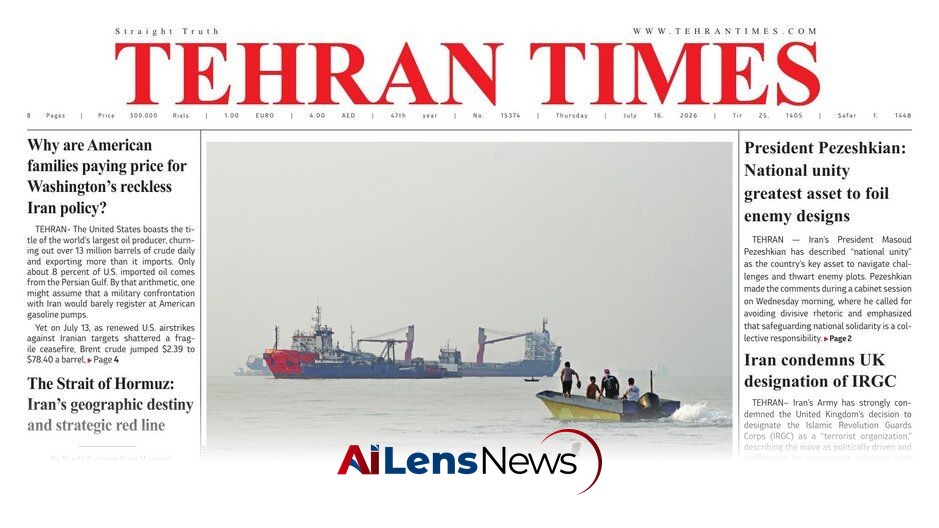


Recent missile attacks in the Strait of Hormuz have intensified tensions between Iran and the U.S., raising concerns over regional stability and U.S. foreign policy.
Tehran, Iran Jul 16, 2026 ALN: The recent missile attacks in the Strait of Hormuz have marked a significant escalation in tensions between Iran and the United States. This strategic waterway, crucial for global oil shipments, has become a focal point for military confrontations, raising alarms about the potential for broader conflict. The Strait of Hormuz, located between Iran and Oman, is one of the world's most critical maritime chokepoints, facilitating the transit of oil and liquefied natural gas from the Persian Gulf to international markets. Given its importance, any military activity in this region has far-reaching implications not only for the countries involved but also for the global economy.
Iran's military forces, responding to perceived threats, launched missiles aimed at U.S. naval vessels in the region. This aggressive action has prompted a swift response from Washington, which has condemned the missile strikes as reckless and provocative. The U.S. government is now reevaluating its military presence in the area, considering whether to increase its naval forces to deter further Iranian aggression. The U.S. Navy has a long-standing presence in the Gulf, and any increase in military assets could further escalate tensions, leading to a potential arms race in the region.
The Strait of Hormuz is a vital chokepoint for global oil transportation, with approximately 20% of the world's oil passing through this narrow passage. Any disruption in this region can have significant implications for global oil prices and international relations. The recent missile strikes have not only threatened shipping routes but have also raised concerns about the safety of maritime navigation. Analysts warn that sustained hostilities could lead to a spike in oil prices, affecting economies worldwide, particularly those heavily reliant on energy imports. Furthermore, the potential for a military conflict could lead to a broader regional war, drawing in neighboring countries and global powers.
Historically, the Strait of Hormuz has been the site of numerous confrontations, particularly during periods of heightened U.S.-Iran tensions. The 1980s saw the Iran-Iraq War, during which both nations targeted oil tankers in the Gulf, leading to international naval escorts for merchant vessels. More recently, incidents involving drone strikes and mine attacks attributed to Iranian forces have raised the stakes, highlighting the vulnerability of maritime traffic in this crucial area. The strategic significance of the Strait of Hormuz cannot be overstated, as it serves as a lifeline for many economies, making any military disruption not just a regional issue but a global concern.
In the wake of the missile attacks, U.S. officials have reiterated their commitment to protecting their interests and allies in the region. Secretary of State Antony Blinken stated that the U.S. would work closely with its allies to ensure freedom of navigation in the Strait of Hormuz. Diplomatic efforts are underway to de-escalate tensions, but the situation remains precarious. The U.S. has historically employed a strategy of deterrence in the Gulf, and any changes in military posture could provoke further Iranian actions. Moreover, diplomatic channels are being explored, including potential negotiations aimed at reducing hostilities and addressing underlying grievances between the two nations.
The U.S. has also engaged in discussions with its allies in the region, including Saudi Arabia and the United Arab Emirates, to present a united front against Iranian provocations. The potential for a coalition to protect shipping lanes in the Strait of Hormuz has been discussed, as the security of this region is paramount for the stability of global oil markets. However, any military escalation could complicate these diplomatic efforts, making it essential for both sides to exercise restraint.
Inside Iran, the missile strikes have been framed as a demonstration of strength against foreign adversaries. Iranian leaders are using this incident to rally domestic support, emphasizing the need for unity in the face of external threats. The Iranian government, facing economic difficulties exacerbated by U.S. sanctions, may perceive military actions as a means to bolster national pride and distract from domestic issues. However, the potential for retaliation from the U.S. could lead to increased scrutiny of the Iranian government's actions and policies. If the situation escalates, it could lead to significant repercussions for the Iranian economy and its political landscape, potentially destabilizing the regime.
The Iranian economy, already under strain from sanctions, could face further challenges if military confrontations disrupt oil exports. Iran relies heavily on oil revenues to support its economy, and any significant drop in exports due to military conflict could lead to increased inflation, unemployment, and social unrest. The Iranian leadership's ability to manage these internal pressures while navigating external threats will be crucial in the coming months.
The international community has reacted with concern to the escalating tensions. Countries dependent on oil imports are particularly wary of the potential for conflict in the region. Calls for restraint have emerged from various nations, urging both the U.S. and Iran to engage in dialogue to prevent further escalation. The United Nations and other international organizations have emphasized the need for diplomatic solutions, highlighting the importance of maintaining peace in the Gulf region. Furthermore, regional powers, including Saudi Arabia and the United Arab Emirates, are closely monitoring the situation, given their own interests in ensuring stability and security in the Gulf.
Countries such as China and India, major importers of oil from the Gulf, have expressed concerns about the implications of military conflict on global energy supplies. As the situation develops, these nations may seek to mediate or influence diplomatic efforts to avoid a crisis that could disrupt their energy security. The interconnected nature of global oil markets means that any significant disruption in the Strait of Hormuz could have ripple effects far beyond the immediate region.
The missile attacks in the Strait of Hormuz signify a troubling development in U.S.-Iran relations. As both sides navigate this complex situation, the potential for miscalculation remains high. The world watches closely, aware that the stability of the region—and the global economy—hangs in the balance. The historical context of U.S.-Iran relations, characterized by decades of tension and conflict, adds layers of complexity to the current situation. Both nations must tread carefully to avoid a spiral of violence that could lead to catastrophic consequences for the region and beyond. In this intricate geopolitical chess game, the actions taken in the coming days and weeks will determine the trajectory of U.S.-Iran relations and the broader stability of the Middle East.
Ultimately, the situation in the Strait of Hormuz serves as a reminder of the fragile nature of international relations in a world where geopolitical interests often clash. As both the U.S. and Iran assess their next moves, the importance of dialogue and conflict resolution cannot be overstated. The stakes are high, and the consequences of failure could resonate for years to come, not only for the nations directly involved but for the entire global community.
To learn more about the latest developments in World News & International Affairs, stay updated with our exclusive reports and analyses on AiLensNews.

