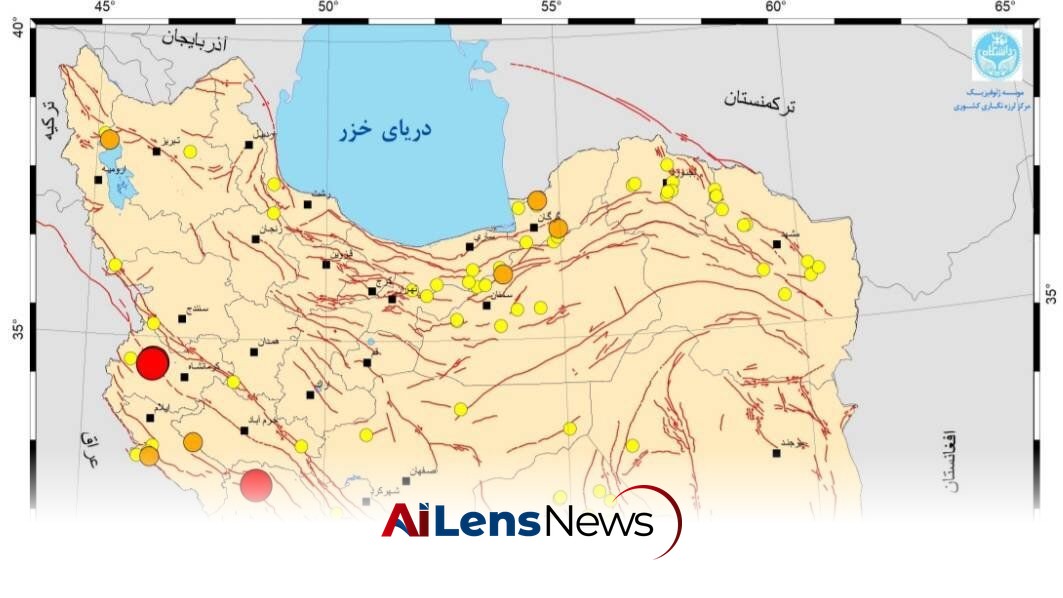


Iran has experienced 128 earthquakes from July 18 to 24, with Kermanshah province being the most affected. The strongest quake registered a magnitude of 5.7.
Tehran, Iran Jul 26, 2026 ALN: A total of 128 earthquakes have been recorded across the country in a week from July 18 to 24, according to the seismological networks of the Institute of Geophysics of the University of Tehran. This recent uptick in seismic activity has raised alarms among both the public and authorities, given Iran's history of devastating earthquakes and the potential for significant damage in populated areas.
Statistically, 113 earthquakes had magnitudes smaller than 3, 10 earthquakes with magnitudes between 3 and 4, two earthquakes with magnitudes between 4 and 5, and three earthquakes with magnitudes between 5 and 6 occurred in the country, as reported by the Iranian Seismological Center (IRSC). These numbers indicate a wide range of seismic events, with the majority being minor tremors that often go unnoticed by the general population.
Of the total quakes, one had a magnitude of 5.7 on the Richter scale, which occurred on July 20 in Kermanshah province. This particular earthquake is significant not only due to its magnitude but also because Kermanshah has a history of seismic activity, making it one of the more vulnerable areas in Iran. The region has experienced catastrophic earthquakes in the past, including the 2017 quake that resulted in significant casualties and destruction, highlighting the ongoing risks faced by its residents.
Among the provinces of the country, Kermanshah experienced the highest number of earthquakes with 34, followed by Yazd with 12, and North Khorasan with 11 earthquakes. The frequency of seismic events in Kermanshah is particularly alarming, as this region has been the site of devastating earthquakes in the past, including the 2017 quake that resulted in significant casualties and destruction. This pattern of seismic activity raises concerns about the preparedness of local infrastructure and emergency response capabilities.
During the same period, two earthquakes were recorded in Tehran, the capital city, which is situated near several fault lines. The seismic activity in Tehran raises concerns about the potential for a major earthquake, given that the city is home to over 8 million residents and is not adequately prepared for a catastrophic seismic event. The dense population and aging infrastructure in Tehran amplify the potential risks associated with a significant earthquake, making preparedness and response planning critical.
No earthquakes were recorded in Ardabil, Alborz, Southern Khorasan, Qom, Qazvin, and Markazi provinces, indicating that seismic activity can be highly localized, often affecting specific regions more than others. This variability in earthquake frequency across different provinces underscores the necessity for region-specific preparedness strategies, as the risks and potential impacts can differ dramatically from one area to another.
A total of 2,380 earthquakes with magnitudes greater than 2.5 on the Richter scale were recorded across the country over the past calendar year (March 2025–March 2026), according to the Seismological networks of the Institute of Geophysics of the University of Tehran, Mehr news agency reported. This figure underscores the persistent seismic activity in Iran, which is situated on the boundary of the Arabian and Eurasian tectonic plates. The tectonic setting of Iran makes it one of the most seismically active regions in the world, contributing to the frequency and intensity of earthquakes experienced.
Out of the recorded earthquakes, 910 had magnitudes greater than 3, 130 had magnitudes greater than 4, and 15 had magnitudes greater than 5 on the Richter scale. These statistics reveal that while many earthquakes are minor and go unnoticed by the general population, the potential for larger, more damaging quakes remains a constant threat. The presence of larger magnitude earthquakes in the historical record demonstrates the need for continued vigilance and preparedness among both authorities and citizens.
The Iranian plateau is located in a very seismically active region of the world and is known not only for its major catastrophic earthquakes but also for disasters relating to natural hazards, especially earthquakes. The geology of Iran is complex, featuring numerous fault lines that contribute to its seismicity. This geological activity is a result of the collision between the Arabian Plate and the Eurasian Plate, which causes stress to accumulate along fault lines until it is released in the form of an earthquake. Understanding this geological context is essential for developing effective strategies for earthquake preparedness and response.
About 2 percent of the earthquakes in the world occur in Iran, but more than 6 percent of the victims of the world’s earthquakes during the 20th century are reported from Iranian earthquakes. This statistic highlights the disproportionate impact of seismic events in Iran, where the combination of high population density in urban areas and inadequate infrastructure exacerbates the consequences of such disasters. The historical context of seismic events in Iran serves as a reminder of the urgent need for effective disaster management strategies.
In light of the recent earthquake activity, Iranian authorities and disaster management officials are reminded of the importance of preparedness and response planning. The government has been criticized in the past for its lack of effective earthquake preparedness measures, especially in urban centers like Tehran. There is a pressing need for public awareness campaigns to educate citizens about earthquake safety and response protocols, as well as for the implementation of stricter building codes to ensure that structures can withstand seismic events. This multifaceted approach to disaster preparedness is essential for minimizing the risks associated with future earthquakes.
Seismologists continue to study the patterns of earthquakes in Iran to better understand the underlying causes and to improve predictive models. The data collected from recent earthquakes can provide valuable insights into the seismic behavior of the region, potentially aiding in the development of early warning systems that could save lives and reduce property damage in the event of a major quake. Research in this area is critical for enhancing the country's ability to respond effectively to seismic threats.
Furthermore, the implications of these seismic events extend beyond immediate concerns about safety and infrastructure. The economy of Iran, which has faced numerous challenges, including sanctions and internal strife, could suffer even more if a significant earthquake were to strike a major city. The costs associated with rebuilding and recovery could be astronomical, further straining the country’s already fragile economic situation. The potential economic repercussions of a major earthquake underscore the need for comprehensive disaster risk reduction strategies.
In conclusion, the recent surge in earthquake activity in Iran serves as a stark reminder of the country's vulnerability to seismic events. As the nation grapples with the realities of living in a seismically active region, the importance of preparedness, public education, and infrastructure resilience cannot be overstated. Moving forward, it will be crucial for Iranian authorities to prioritize earthquake preparedness and to foster a culture of safety among its citizens to mitigate the risks associated with future seismic events. The journey towards a more resilient society will require collaboration between government agencies, academic institutions, and the public to ensure that the lessons learned from past earthquakes are applied to future preparedness efforts.
To learn more about the latest developments in Crime & Law, stay updated with our exclusive reports and analyses on AiLensNews.

