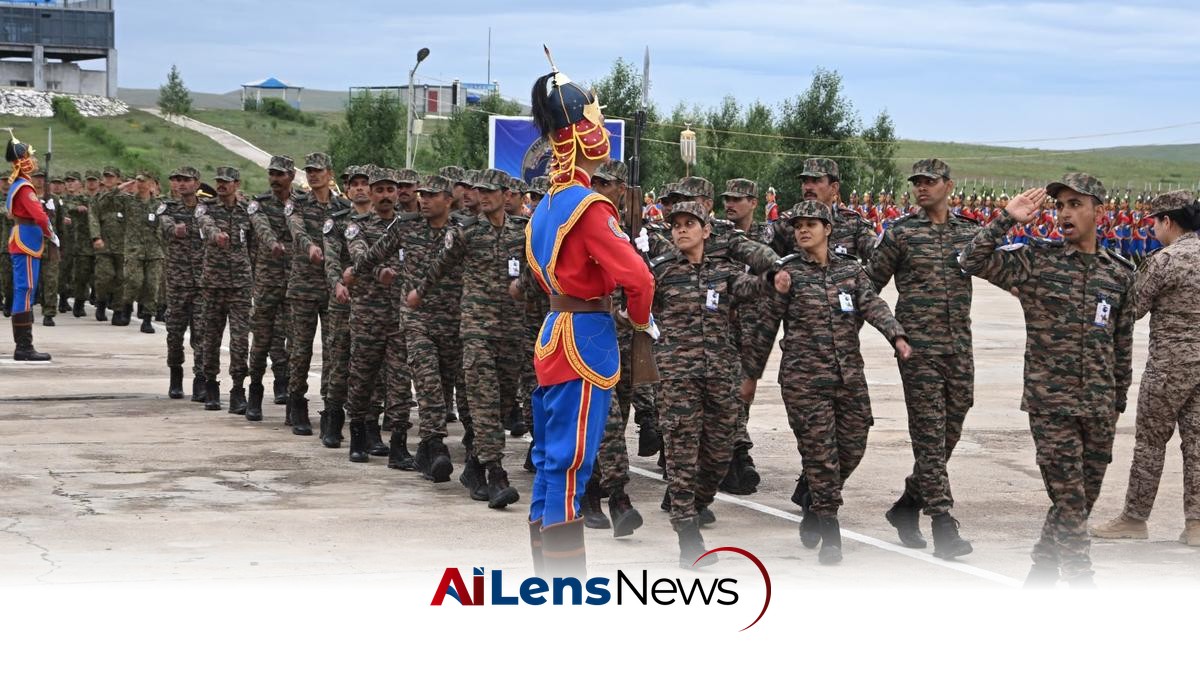


Indian Army concludes Khaan Quest 2026 in Mongolia, enhancing multi interoperability for UN peacekeeping operations among 18 participating nations.
New Delhi, India Jul 3, 2026 ALN: The Indian Army recently concluded its participation in the multi-military exercise Khaan Quest 2026, which took place from June 20 to July 3 at the Five Hills Training Area in Ulaanbaatar, Mongolia. This exercise is significant not only for its military implications but also for the diplomatic relations it fosters among participating nations. In an era where geopolitical tensions can escalate rapidly, such collaborative efforts are crucial in promoting peace and stability.
Khaan Quest, now in its 23rd edition, has grown substantially since its inception. Initially launched in 2003 as a bilateral exercise between the United States and Mongolia, it transitioned into a multilateral U.N. peacekeeping exercise in 2006. This evolution reflects the changing dynamics of global security and the increasing importance of multilateral cooperation in addressing complex security challenges. The exercise aims to enhance interoperability among armed forces from various countries, which is crucial for effective collaboration in peacekeeping missions, particularly under the auspices of the United Nations.
This year's exercise brought together more than 1,000 troops from 18 countries, emphasizing the global commitment to peacekeeping operations under the United Nations framework, specifically under Chapter VII of the U.N. Charter. Chapter VII allows the U.N. Security Council to take action to maintain or restore inter peace and security, and the ability of member states to operate effectively in such missions is paramount. The participation of diverse military contingents in Khaan Quest serves as a testament to the collective effort to improve operational readiness for such missions. This is particularly relevant in today’s world, where conflicts and humanitarian crises are prevalent in various regions.
The structure of Khaan Quest 2026 included both Command Post and Field Training components, focusing on U.N. operational standards, joint planning, and multi-coordination. This dual approach not only enhances the tactical skills of the participating forces but also fosters a deeper understanding of the complexities involved in multi military operations. Command Post exercises typically involve simulations and discussions aimed at planning and decision-making, while Field Training exercises provide hands-on experience in executing the planned operations. This practical experience is essential in ensuring that troops are well-prepared for real-world scenarios they may face during peacekeeping missions.
The Indian Army's contingent was noted for its high standards of professionalism, discipline, and operational preparedness throughout the exercise. The troops engaged in various joint drills and simulation-based scenarios, which are essential for building trust and familiarity among forces from different countries. Such interactions can significantly enhance the ability of these forces to work together in real-world situations, where effective communication and coordination can be the difference between success and failure. The training provided during Khaan Quest is designed to ensure that troops can operate seamlessly together, regardless of their origins.
In addition to military training, the Indian contingent took the opportunity to showcase India's rich cultural heritage during the exercise. This cultural exchange is an important aspect of multi exercises, as it helps to build camaraderie and mutual respect among the participating nations. The Indian philosophy of "Vasudhaiva Kutumbakam," which translates to "The World is One Family," was reflected in the cultural program. This philosophy underscores India's commitment to global peace and cooperation, aligning with the principles of the United Nations and promoting a sense of unity among diverse cultures.
The closing ceremony of Khaan Quest 2026 was attended by notable military officials, including Maj. Gen. Baasandamba Dashtseden, the Deputy Minister of Defence of Mongolia, and Lt. Gen. Ganbyamba Sunrev, the Chief of General Staff of the Mongolian Armed Forces. Their presence at the ceremony highlighted the importance of the exercise and the commendable efforts of all participating contingents. Both officials praised the professionalism and commitment exhibited by the troops, reinforcing the notion that such exercises are vital for enhancing military capabilities and fostering interrelationships among nations. This recognition serves to motivate participating troops and underscores the value of their contributions to inter peacekeeping efforts.
The Indian Army expressed its gratitude to the Government of Mongolia and the Mongolian Armed Forces for their hospitality and support in hosting the exercise. The collaborative environment created during Khaan Quest 2026 is expected to yield long-term benefits, strengthening joint operational capabilities and enhancing interoperability among the participating nations. These outcomes are particularly relevant in the context of contemporary security challenges, where multilateral cooperation is increasingly necessary to address threats such as terrorism, humanitarian crises, and regional conflicts.
In the broader context, exercises like Khaan Quest 2026 play a critical role in shaping the future of inter-military collaboration. As global security threats evolve, the need for armed forces to work together effectively becomes more pressing. The experience gained during such exercises not only prepares military personnel for peacekeeping missions but also helps to build strategic partnerships that can be vital in times of crisis. The enhanced relationships formed during exercises can lead to improved intelligence sharing, joint operations, and coordinated responses to emerging threats.
Furthermore, the implications of Khaan Quest extend beyond military training. The exercise serves as a platform for dialogue and diplomacy among nations, fostering mutual understanding and cooperation. This is particularly important in a world where geopolitical tensions can often lead to misunderstandings and conflict. By engaging in joint exercises, countries can build trust and establish lines of communication that may prove invaluable in times of uncertainty. Such diplomatic interactions are essential for de-escalating potential conflicts and promoting stability in various regions.
In conclusion, the successful conclusion of Khaan Quest 2026 underscores the importance of multilateral military cooperation in today's complex security landscape. The Indian Army's participation not only reflects its commitment to global peacekeeping efforts but also highlights the significance of cultural exchange and diplomatic engagement in enhancing inter relations. As the world continues to face new challenges, exercises like Khaan Quest will remain crucial in preparing military forces to operate effectively together, ultimately contributing to a more stable and secure global environment. The lessons learned and relationships forged during such exercises are invaluable assets in the ongoing pursuit of peace and security in an increasingly interconnected world.
To learn more about the latest developments in World News & International Affairs, stay updated with our exclusive reports and analyses on AiLensNews.

