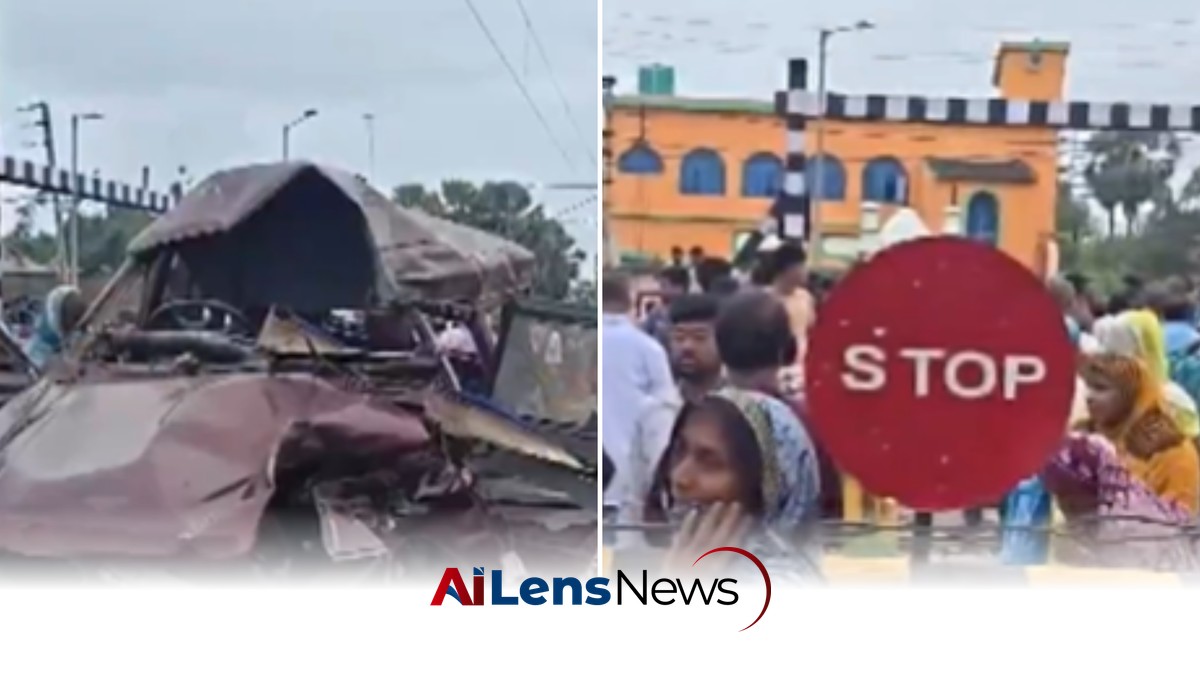


A devastating train accident in Murshidabad, West Bengal, results in three fatalities, including two school children, as investigations commence.
Kolkata, India Jul 17, 2026 ALN: The tragic collision between a train and a school van in Murshidabad district, West Bengal, has resulted in the loss of three lives, including two children. This devastating incident occurred on Friday, July 17, around 7 a.m. at a railway level crossing near the Karna Subarna Railway Station. The accident has raised significant concerns regarding railway safety, particularly at unmanned level crossings, which are often sites of tragic accidents.
Eyewitness accounts describe a chaotic scene immediately following the collision, with hundreds of bystanders rushing to assist the victims and survivors. Such a community response, while commendable, underscores the urgency and gravity of the situation, as local residents often play a crucial role in emergency response when official help is delayed. The injured survivors were promptly transported to Murshidabad Medical College and Hospital, where medical staff are working tirelessly to treat those in critical condition. The hospital has mobilized additional resources to manage the influx of patients resulting from this tragic event.
The fatalities in this accident highlight a broader issue of road safety and railway crossings in India. According to various reports, India has one of the highest rates of railway accidents in the world, with many occurring at level crossings due to a lack of safety measures. The government and railway authorities have been under pressure to improve safety protocols, especially at unmanned crossings, where vehicles often attempt to cross tracks without adequate warning or barriers. The Murshidabad incident is a stark reminder of the potential consequences of neglecting these safety measures.
As investigations into the incident continue, officials have yet to release a detailed statement. A 10-member team from the railways has reportedly arrived at the accident site to assess the situation and gather information. This team will likely conduct a thorough investigation to determine the circumstances surrounding the collision, including whether the van attempted to cross the tracks despite warning signals or barriers. The findings of this investigation could lead to recommendations for policy changes or improvements in safety measures at railway crossings.
The emotional toll of this tragedy extends beyond the immediate victims and their families. The loss of young lives in such a sudden and violent manner has sent shockwaves through the local community, prompting an outpouring of grief and calls for action. Parents and guardians are understandably concerned about their children's safety, especially when traveling to and from school. This incident may lead to increased scrutiny of school transportation safety protocols and the need for better training for drivers operating vehicles in proximity to railway crossings.
In the aftermath of the collision, community leaders and local government officials may find themselves under pressure to address these safety concerns. Public forums may be organized to discuss potential measures to prevent future accidents, such as installing more robust warning systems at crossings and improving public awareness campaigns about the dangers of crossing tracks. Additionally, there may be calls for increased funding for railway infrastructure improvements, including better signage and barriers at level crossings.
Moreover, this incident may also prompt discussions at the level regarding railway safety regulations. Policymakers may be urged to revisit existing laws and guidelines governing railway crossings, particularly in rural and semi-urban areas where such accidents are more prevalent. The tragic loss of life in Murshidabad could serve as a catalyst for legislative action aimed at enhancing the safety of railway operations across the country.
In India, railway safety has been a persistent issue, with numerous accidents reported annually. The country has a vast railway network that serves millions of passengers daily, but the infrastructure is often criticized for being outdated and inadequately maintained. Unmanned level crossings are particularly dangerous, as they lack the necessary safety measures to prevent accidents. The government has launched various initiatives aimed at reducing railway accidents, including the installation of automated gates and the deployment of railway police at high-risk crossings. However, the effectiveness of these measures remains a topic of debate.
As the community mourns the loss of life, it is essential to remember the broader implications of this tragedy. It serves as a critical reminder of the need for vigilance and proactive measures to ensure the safety of all road and rail users. The hope is that lessons learned from this unfortunate event will lead to tangible changes that protect lives and prevent similar incidents in the future.
In conclusion, the train collision with the school van in Murshidabad is a heartbreaking event that has affected many lives. The ongoing investigation will hopefully provide answers and lead to necessary reforms in safety protocols to prevent such tragedies from occurring again. The community's response and the subsequent discussions surrounding railway safety highlight the importance of collective action in addressing public safety concerns. In light of this tragedy, it is crucial for all stakeholders, including government authorities, railway officials, and community members, to collaborate in creating a safer environment for everyone who relies on the railway system for transportation.
To learn more about the latest developments in Crime & Law, stay updated with our exclusive reports and analyses on AiLensNews.

