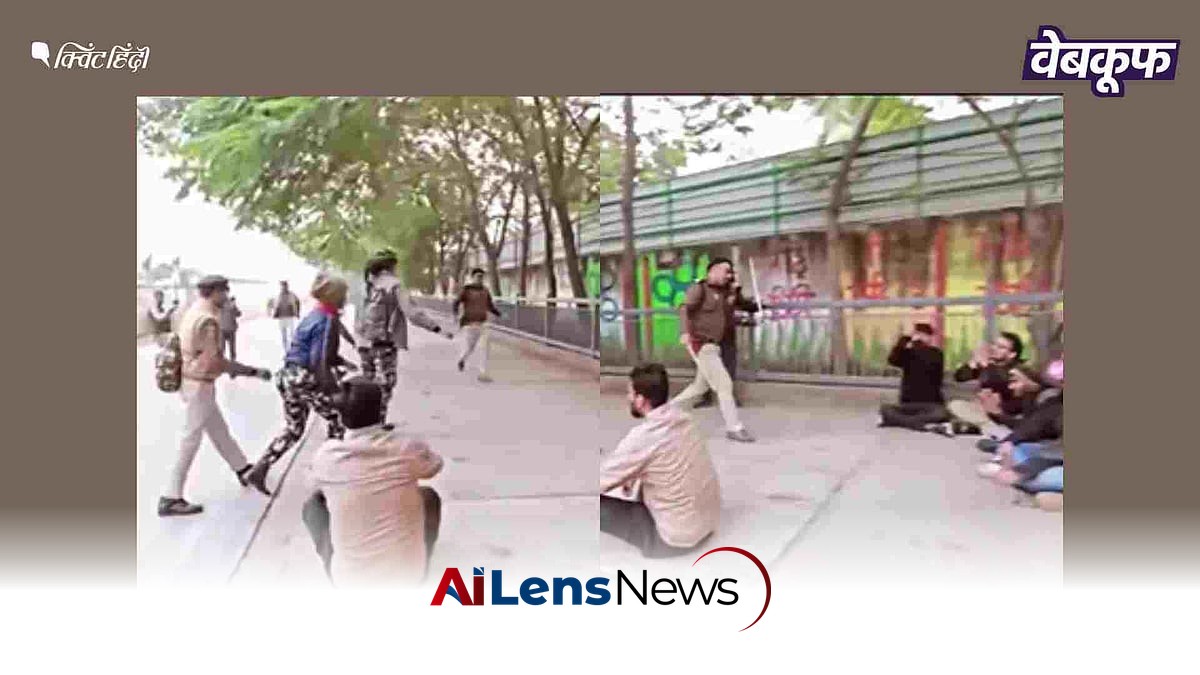


A viral video claiming to show police brutality against students at Jantar Mantar is actually from a December 2024 protest in Bihar related to the BPSC exam.
New Delhi, India Jul 22, 2026 ALN: The phenomenon of misinformation and misattribution in the digital age has become increasingly prevalent, particularly in the context of political protests and social movements. A recent instance of this has surfaced with a viral video that has been erroneously linked to a protest at Jantar Mantar, a significant site for demonstrations in India. The video shows young individuals sitting with their hands folded in front of police officers who are reportedly using excessive force against them. This imagery, which evokes strong emotions, has been claimed to depict a protest demanding the resignation of Education Minister Dharmendra Pradhan, following unrest in the educational sector.
The context surrounding the protests at Jantar Mantar is crucial to understanding the implications of this viral video. Demonstrations have been a common feature at this location, where citizens gather to voice their grievances on various issues, including education, employment, and governmental policies. The recent protests, particularly those on July 20-21, have drawn attention due to allegations of police violence against demonstrators, amplifying the urgency of the public's demands. Protesters have been vocal about their dissatisfaction with the current educational policies and the perceived inadequacies in the system, which they argue have led to widespread discontent among students and educators alike.
However, the video that has sparked outrage and been misattributed to these recent protests is actually from December 2024. This misrepresentation highlights a significant issue in how information is consumed and shared in the age of social media. The rapid spread of misinformation can lead to heightened tensions and misunderstandings among the public, particularly when it concerns sensitive topics like police brutality and governmental accountability.
To clarify the origins of the viral video, a thorough investigation was conducted. By employing tools like Google Lens, it was possible to trace the video back to its actual context. The longer version of the video was found on the official X account of the Congress party, which indicated that the footage was related to an incident concerning a paper leak in the Bihar Public Service Commission (BPSC) exam. This incident had garnered significant media attention and public outcry, leading to protests that were separate from the events occurring at Jantar Mantar.
Further digging into the reports, it became evident that the BPSC had canceled the preliminary exam for the Combined Competitive Examination (CCE) due to the controversy surrounding the alleged paper leak. This decision followed a tragic incident on December 13, 2024, when a candidate's protest escalated and resulted in the death of an on-duty officer from a heart attack. Such incidents underscore the high stakes involved in examination processes and the intense pressure faced by candidates and officials alike.
The implications of misattributing the video to the recent protests at Jantar Mantar are manifold. Firstly, it can lead to a misinformed public perception regarding the nature of the protests and the actions of law enforcement. When videos depicting violence are circulated without proper context, they can incite further unrest and exacerbate tensions between the police and the community. This is particularly concerning in a country like India, where issues of police brutality and governmental accountability are already hotly debated topics.
Moreover, the spread of misinformation can undermine legitimate protests and movements by diverting attention away from the actual issues at hand. In this case, the focus on the misattributed video may overshadow the real concerns of the protesters at Jantar Mantar, who are advocating for changes in educational policy and greater transparency in the governance of educational institutions.
In conclusion, the viral video that has been misrepresented as footage from the recent protests at Jantar Mantar is a stark reminder of the challenges posed by misinformation in today's digital landscape. While the protests at Jantar Mantar represent a critical moment for public discourse on education and governance in India, it is essential to approach such topics with a commitment to accuracy and a responsibility to verify information before sharing it. The incident serves as a call to action for individuals to critically evaluate the information they encounter and to seek out credible sources, particularly when it concerns issues of public interest and civic engagement.
As we navigate this complex information environment, it is crucial for citizens to remain vigilant and informed. Engaging with fact-checking initiatives can help combat the spread of misinformation, ensuring that public discourse remains grounded in truth and accountability. If you come across any information that raises doubts about its authenticity, it is encouraged to report it to fact-checking platforms, which can assist in providing clarity and truth in the midst of confusion.
The challenge of misinformation is not limited to India. Globally, social media platforms have become breeding grounds for the rapid dissemination of false information. The dynamics of sharing and retweeting content can create echo chambers where misinformation thrives, often leading to real-world consequences. In the context of protests, this can result in heightened tensions, as seen in various instances around the world where misattributed videos or misleading information have incited violence or escalated conflicts.
In India, the situation is compounded by the country's vast and diverse population, where regional, linguistic, and cultural differences can influence how information is perceived and acted upon. The role of media literacy is becoming increasingly vital as citizens must navigate a landscape filled with both credible journalism and sensationalist reporting. Educational initiatives aimed at improving media literacy can empower individuals to discern fact from fiction, fostering a more informed citizenry capable of engaging in meaningful discourse.
Furthermore, the implications of misinformation extend beyond immediate public perception; they can influence policy decisions, electoral outcomes, and societal norms. As seen in various movements worldwide, the narrative surrounding protests can be shaped by how information is presented and consumed. This highlights the importance of responsible journalism and the need for media outlets to adhere to ethical standards that prioritize accuracy and accountability in reporting.
In this context, the role of governmental and non-governmental organizations becomes crucial. Initiatives aimed at promoting transparency and accountability within law enforcement agencies can help to build trust between the public and the police. Additionally, fostering open channels of communication between the government and citizens can mitigate misunderstandings that arise from misinformation, allowing for a more constructive dialogue on pressing issues.
As the digital landscape continues to evolve, it is imperative for all stakeholders, including technology companies, policymakers, and civil society, to collaborate in addressing the challenges posed by misinformation. This includes developing robust mechanisms for fact-checking, enhancing the visibility of credible sources, and implementing policies that discourage the spread of false information. By working together, society can create a more informed public that is better equipped to engage with complex issues and advocate for positive change.
In summary, the misattribution of the viral video to the protests at Jantar Mantar serves as a cautionary tale about the power of misinformation in shaping public perception and discourse. It underscores the need for vigilance, critical thinking, and a commitment to truth in an age where information is readily available yet often misleading. As citizens, it is our responsibility to engage thoughtfully with the information we encounter and to contribute to a culture of accountability and transparency in public discourse.
To learn more about the latest developments in Crime & Law, stay updated with our exclusive reports and analyses on AiLensNews.

