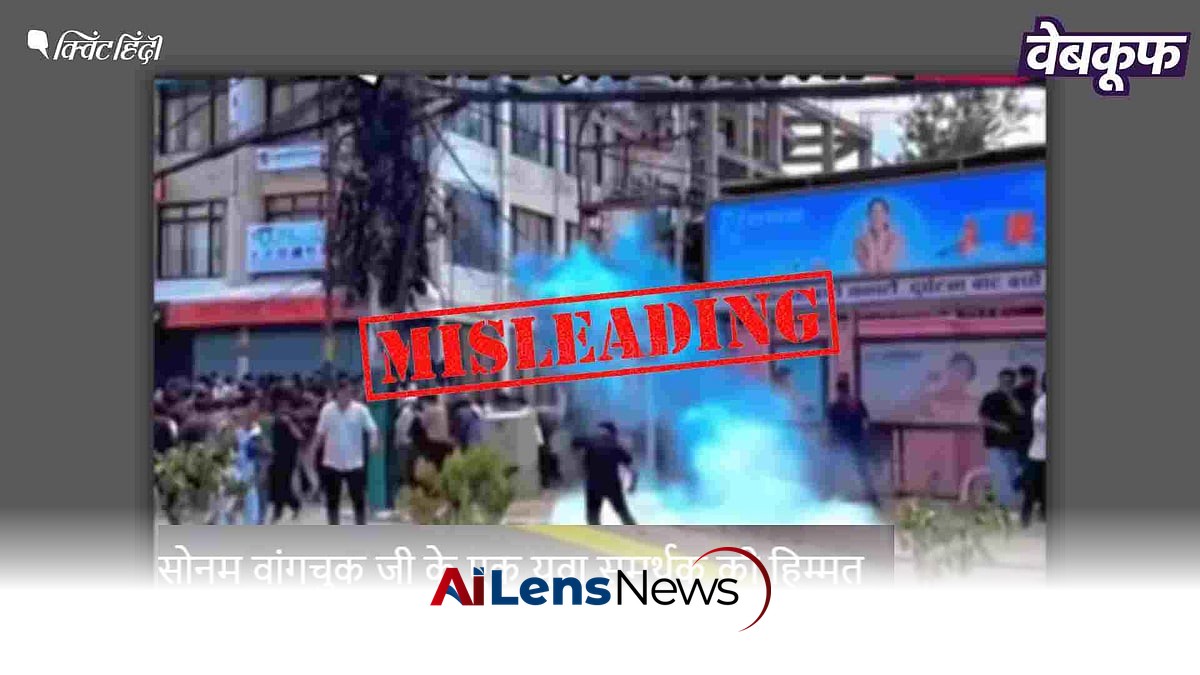


A viral video claiming to show a protest at Delhi's Jantar Mantar is actually from a GenZ movement in Nepal. Fact-checking reveals the truth.
New Delhi, India Jul 29, 2026 ALN: In recent years, social media has transformed into a double-edged sword, serving as a platform for both the rapid dissemination of information and the propagation of misinformation. This duality was starkly illustrated in a recent incident where a viral video was misattributed to a protest in Delhi, India. The video, which shows an individual throwing back a tear gas canister towards police forces, has garnered significant attention and concern among viewers. Accompanying claims suggested that this footage was linked to a protest organized by the Cockroach People's Party (CJP) at Jantar Mantar, a well-known protest site in the Indian capital, which was purportedly ongoing for a month.
Is this true? Upon thorough investigation, it becomes clear that the claim associating this video with the protest at Jantar Mantar between June and July 2026 is unfounded. The footage actually originates from a protest related to the GenZ movement in Nepal, showcasing a significant disconnect not only in geography but also in the context of the events being depicted.
How did we verify this? The verification process began with the application of Google Lens, a powerful tool that enables users to search for images and videos online. By analyzing the viral video through this platform, we traced it back to a YouTube channel named Sourav Shreshtha, where the same video was uploaded on September 28, 2025. This timestamp is particularly crucial, as it predates the alleged protest in Delhi, thereby reinforcing the conclusion that the video could not have been filmed during the events in India.
Moreover, the caption accompanying the YouTube video suggested a connection to the GenZ protest in Nepal. This prompted further investigation into the GenZ movement, which has been gaining momentum in Nepal over the past few years. The GenZ movement primarily consists of young activists advocating for a range of social, political, and environmental issues. Characterized by its adept use of social media, this movement has mobilized support and spread awareness among the youth of Nepal, showcasing their commitment to effecting change.
To further substantiate the origins of the video, we conducted a search for institutions or movements associated with the name "GenZ" in Nepal using Google Maps. This investigation provided a deeper insight into the context in which the video was filmed. By comparing visuals from the protest in Kathmandu, as documented in various reports, we identified specific landmarks and features present in the viral video. One particular visual from the Kathmandu protest closely matched the location depicted in the viral footage, thereby reinforcing our conclusion about its true origin.
Through a comparative analysis of the two sets of visuals, we were able to clearly distinguish between the events occurring in Nepal and the misleading claims regarding the Delhi protest. Geographic markers, the presence of specific buildings, and the overall ambiance of the protest scene confirmed that the viral video indeed emanated from Kathmandu, Nepal, and not from the bustling streets of Delhi.
Conclusion: While the exact timing of the filming of the viral video remains uncertain, it is abundantly clear that the footage does not stem from the protests in Delhi. Instead, it serves as a reflection of the ongoing struggles and activism in Nepal, particularly among the youth. The GenZ movement has emerged as a significant force advocating for change, and it is crucial to recognize and accurately report on the contexts surrounding such movements to avoid perpetuating misinformation.
This incident highlights the importance of verifying information before sharing it on social media platforms. In an era where information travels at lightning speed, the potential for misattribution can lead to misunderstandings about events and movements that are critical to societal discourse. As we navigate this complex landscape, it is essential to approach viral content with a critical eye, ensuring that the narratives we share are grounded in truth and accuracy.
Furthermore, this situation underscores the challenges faced by activists and movements globally. Misrepresentation can dilute the message and significance of their efforts, leading to confusion among supporters and the general public. For those engaged in activism, maintaining transparency and clarity in their messaging is vital to ensure that their objectives are not overshadowed by misinformation.
As we continue to witness the power of social media in shaping public perception, we must also remain vigilant against the spread of false information. The incident involving the viral video serves as a poignant reminder of our collective responsibility to fact-check and verify claims before disseminating them. By engaging critically with the content we encounter online, we can contribute to a more informed society.
For individuals who come across information that raises doubts about its authenticity, it is encouraged to reach out to reliable sources for clarification. By fostering a culture of inquiry and verification, we can collectively combat the challenges posed by misinformation in our increasingly interconnected world.
As we move forward, it is essential to recognize that every piece of content shared has the potential to influence perceptions and actions. By prioritizing accuracy and context, we can help ensure that the narratives surrounding protests and movements are accurately represented and understood.
Ultimately, the goal is to create a more informed and engaged public, capable of discerning fact from fiction amidst the vast sea of information available online. In doing so, we uphold the integrity of social movements and the vital issues they seek to address. The GenZ movement in Nepal, for instance, represents a significant shift in youth activism, and it is essential that their efforts are recognized and understood in their proper context.
Moreover, as the world becomes increasingly interconnected, the implications of misattributed content extend beyond mere misinformation; they can affect international perceptions and relationships. For instance, the misattribution of the Nepal protest video to an Indian protest could unintentionally foster tensions between the two nations, highlighting the need for responsible sharing of information.
In conclusion, the incident surrounding the viral video misattributed to a Delhi protest serves as a critical reminder of the importance of accuracy in reporting and sharing information. As we engage with social media, let us prioritize truth and context, ensuring that we contribute positively to the discourse surrounding social movements and the issues they address.
To learn more about the latest developments in Crime & Law, stay updated with our exclusive reports and analyses on AiLensNews.

