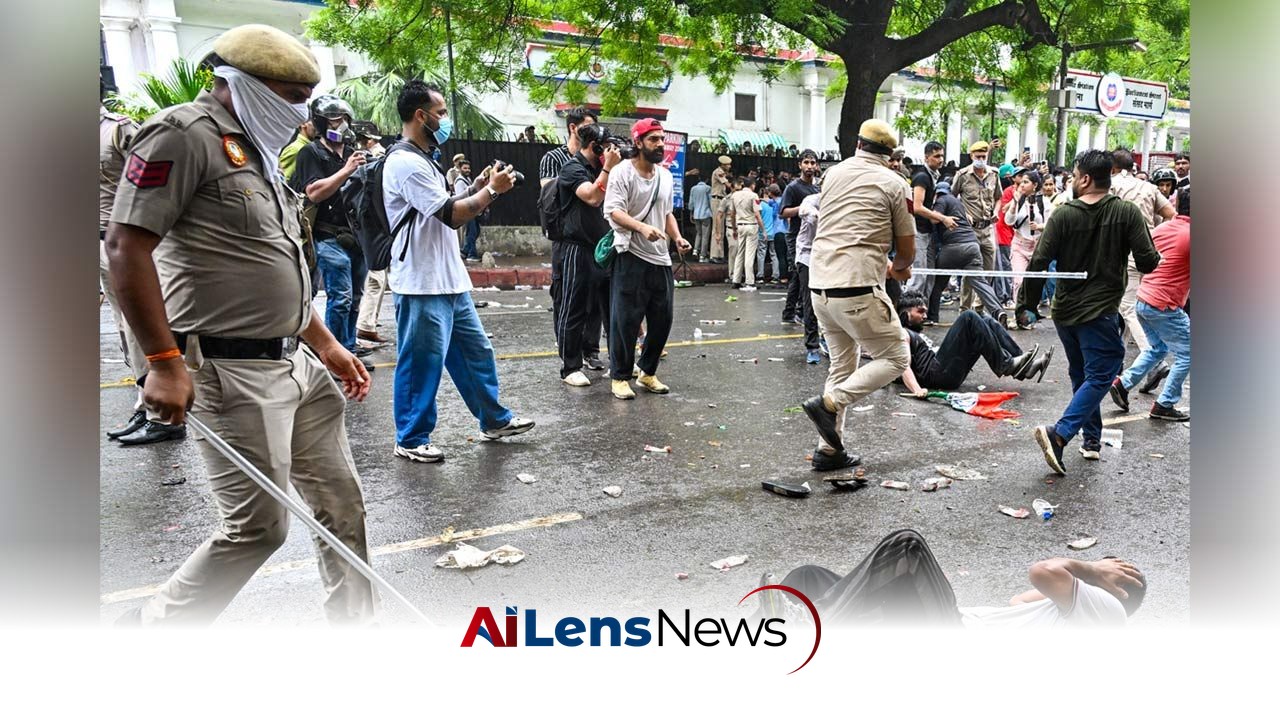


A protest march by the Cockroach Janta Party in New Delhi escalated into violence, injuring over 118 police personnel and leading to the detention of around 70 protesters.
New Delhi, India Jul 20, 2026 ALN: New Delhi: More than 118 police personnel, including several senior officers, were injured and around 70 protesters were detained on Monday as the Cockroach Janta Party’s (CJP) “Sansad Chalo” protest march turned violent in the New Delhi area, police said.
Delhi Police released a statement giving these figures and its account of the incident, accusing protesters of displaying “unruly, aggressive and violent behaviour” during the protest and attacking security personnel, besides damaging government vehicles and public property.
“During today’s protest by CJP in the New Delhi area, the protesters displayed unruly, aggressive and violent behaviour. Despite repeated warnings and lawful directions issued by the police, they refused to disperse and deliberately violated the prohibitory orders in force,” the police statement said.
The protesters attacked police personnel with stones and other objects, attempted to breach police barricades, vandalised police and other government vehicles, damaged public property and resorted to large-scale violence, posing a serious threat to public order, the security arrangements in place and the safety of police personnel performing their lawful duties, it said.
Police said more than 118 police personnel sustained injuries in the violence, including officers of the ranks of Special Commissioner of Police, Joint Commissioner of Police, Additional Commissioner of Police, Deputy Commissioner of Police, Additional Deputy Commissioner of Police and Assistant Commissioner of Police, besides several women police personnel.
“During the scuffle, around 60 protesters were also reported to have been injured. The medico-legal examination (MLC) of the remaining injured police personnel is underway,” the statement said.
According to the police, the violent mob also caused extensive damage to public property.
“Around 15 to 20 government vehicles, along with other government property, were vandalised during the incident,” it added.
Police said around 70 protesters had been detained and legal proceedings had been initiated.
“Around 70 protesters have been detained. Appropriate legal action is being initiated, and an FIR is being registered under the relevant provisions of the Bharatiya Nyaya Sanhita and other applicable laws for rioting, assault on public servants, damage to public property and other offences committed during the protest,” the statement said.
Reiterating its commitment to maintaining law and order, Delhi Police said strict action would be taken against all those found involved in unlawful and violent activities.
The incident has raised significant concerns about the state of public protests in India, particularly in urban areas like New Delhi, where the balance between the right to protest and maintaining public order is continually tested. The Cockroach Janta Party, a relatively new political entity, has gained attention for its unconventional methods and controversial stances. Their protests often attract a mix of supporters and critics, and this latest incident underscores the volatility that can accompany such demonstrations.
The “Sansad Chalo” protest march was reportedly organized to demand legislative changes and address grievances that the party claims have been ignored by the government. The CJP has been vocal about various issues, including economic disparities, social justice, and environmental concerns. However, the escalation into violence during this protest has sparked a debate about the effectiveness of such actions in achieving political aims.
Critics of the CJP and similar movements argue that violent protests undermine the legitimacy of their causes and can alienate potential supporters. The use of aggressive tactics, such as attacking police and vandalizing property, often leads to a backlash from the public and authorities alike, which can ultimately hinder progress on the issues being raised. Furthermore, the heavy police response, as seen in this incident, can escalate tensions and lead to further confrontations.
On the other hand, supporters of the CJP argue that the government has been unresponsive to peaceful protests and that more drastic measures are sometimes necessary to draw attention to their plight. They contend that the systemic issues faced by marginalized communities require urgent action and that traditional forms of protest have often fallen on deaf ears. This perspective highlights the frustration felt by many citizens who believe that their voices are not being heard in the political arena.
The implications of this incident extend beyond the immediate injuries and damages. It raises questions about the future of political discourse in India, particularly as more groups feel marginalized or ignored by the current political system. The response of the government and law enforcement to such protests will likely influence how future demonstrations are organized and the tactics employed by various political entities.
In the aftermath of the violence, there are also concerns regarding the treatment of detainees. Human rights organizations often monitor such events closely, advocating for the fair treatment of individuals arrested during protests. The legal proceedings initiated against the detained protesters will be scrutinized to ensure that due process is followed and that their rights are upheld.
The Delhi Police's commitment to maintaining law and order is essential, but it also raises questions about the methods employed to manage protests. The balance between enforcing the law and respecting citizens' rights to assemble and express dissent is a delicate one, and missteps can lead to further unrest and discontent among the populace.
As the situation develops, it will be critical for all parties involved to engage in constructive dialogue to address the underlying issues that led to the protest and subsequent violence. The role of political parties, law enforcement, and civil society in fostering an environment where citizens can peacefully express their grievances will be pivotal in shaping the future landscape of public protests in India.
To learn more about the latest developments in Crime & Law, stay updated with our exclusive reports and analyses on AiLensNews.

