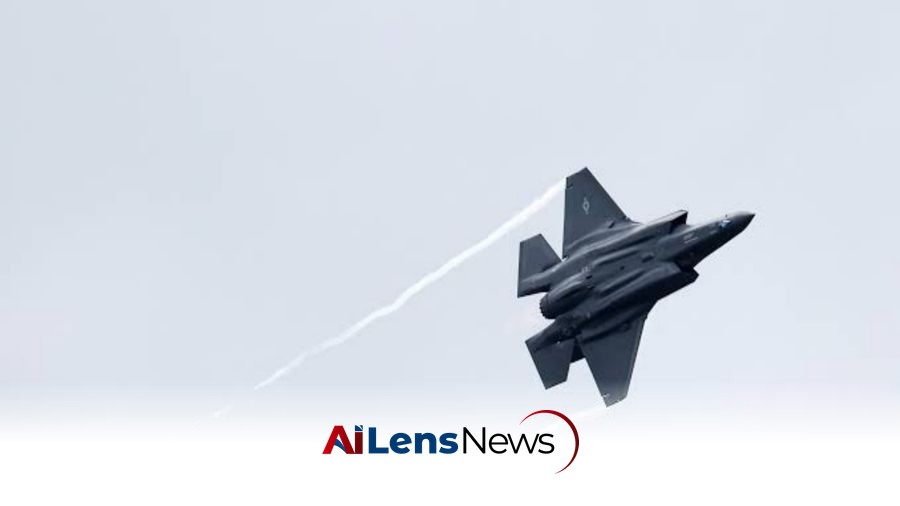


A US Marine Corps F-35B fighter jet crashed near MCAS Miramar in San Diego, causing a brush fire. The pilot ejected safely and was recovered.
New Delhi, India Aug 1, 2026 ALN: A US Marine Corps F-35 fighter jet crashed near Marine Corps Air Station (MCAS) Miramar in San Diego on Friday, triggering a brush fire in the vicinity, according to US military officials, while the pilot safely ejected and was recovered.
The aircraft, assigned to the 3rd Marine Aircraft Wing and Marine Aircraft Group 11, went down at about 10 am local time in what the Marine Corps described as an "aircraft mishap" on the flight line, Fox News reported, citing officials.
First Lieutenant Blake Starbuck told Fox News that the incident was a "Class A mishap involving a Marine Corps F-35B in the vicinity of MCAS Miramar." A Class A mishap is defined by the US military as an incident that results in total damage of $2 million or more, or in the loss of a life or permanent disability. This classification underscores the severity of the incident and highlights the potential risks associated with operating advanced military aircraft.
Lieutenant Starbuck confirmed that the aviator had ejected from the aircraft and was safely recovered following the crash. The pilot's successful ejection is a testament to the advanced safety features integrated into the F-35B, which is designed for vertical takeoff and landing and is equipped with a state-of-the-art ejection seat that allows pilots to safely exit the aircraft in emergency situations.
Officials said the cause of the crash remains under investigation by military authorities. Investigations of this nature typically involve a thorough examination of the aircraft's systems, pilot actions, and environmental factors at the time of the incident. It is not uncommon for such investigations to take weeks or even months to complete, as officials seek to determine the root cause of the mishap and implement any necessary safety measures to prevent future occurrences.
Starbuck said he did not immediately have details on the purpose of the flight, including whether the aircraft was arriving at or departing from the airbase, or whether it had been conducting a training mission. The F-35B is a versatile aircraft used for a variety of missions, including combat operations, reconnaissance, and support for ground forces. Its operational flexibility makes it a critical component of the Marine Corps' air combat capabilities.
He also said there was no immediate information on injuries or fatalities related to the incident. The fact that the pilot was able to eject safely is a positive outcome, as military aviation incidents can often result in serious injuries or fatalities. The quick response from emergency services and military personnel also played a crucial role in ensuring the pilot's safety following the crash.
Video footage captured by SkyRanger 7 showed the aircraft split into two sections in the middle of a scorched area roughly the size of a football field. This dramatic imagery highlights the intensity of the crash and the subsequent fire that ensued. Such scenes are not uncommon in aircraft mishaps, particularly when high-performance jets are involved, as they can carry significant amounts of fuel and munitions that can exacerbate fire hazards.
Flames and thick smoke were seen rising from a field north of State Route 52, with the fire visible from the nearby freeway. The visibility of the fire from a distance underscores the impact of the crash on the surrounding environment and raises concerns about the potential for the fire to spread beyond the immediate area. The San Diego Fire-Rescue Department responded promptly to the scene to assist in firefighting efforts.
The San Diego Fire-Rescue Department told Fox News it was assisting efforts to contain the brush fire. However, it said the military retained jurisdiction over the crash site and the investigation. This jurisdictional aspect is significant, as it reflects the protocols in place for military aviation incidents, where the Department of Defense typically leads investigations to ensure thoroughness and accountability.
The F-35B Lightning II, which was involved in the crash, is a fifth-generation multirole stealth fighter designed for a range of missions. It is known for its advanced technology, including stealth capabilities, sensor fusion, and networked warfare capabilities. The F-35 program has been a subject of extensive discussion and scrutiny due to its high costs and complex development history, but it is also heralded for its potential to transform modern air combat.
While the crash did not result in injuries to civilians, it raises important questions about the safety of military operations in populated areas. MCAS Miramar is located near urban centers, and the proximity of military training operations to civilian populations has long been a topic of concern. This incident may prompt discussions about the adequacy of safety protocols and the need for careful planning of flight paths and training exercises to minimize risks to nearby communities.
In the wake of this incident, military officials will likely review operational procedures and safety measures related to the F-35B and other aircraft in their fleet. Continuous improvements in training, maintenance, and operational protocols are essential to enhance safety and mitigate the risks associated with military aviation. The investigation's findings may lead to recommendations for changes in procedures, equipment upgrades, or additional training for pilots and support personnel.
As the military continues to investigate the circumstances surrounding the crash, the incident serves as a reminder of the inherent risks faced by aviators and the importance of maintaining rigorous safety standards in military operations. The F-35 program, while advanced, is not immune to the challenges of complex flight operations, and incidents such as this highlight the need for ongoing vigilance and improvement in aviation safety practices.
In conclusion, the crash of the F-35B near MCAS Miramar is a significant event that will likely have lasting implications for military aviation safety and operations. The successful recovery of the pilot is a positive outcome, but the investigation will be critical in understanding the causes of the mishap and preventing similar incidents in the future. As military officials work to ensure the safety of their personnel and the communities surrounding airbases, the lessons learned from this incident will be paramount in shaping future operational protocols.
To learn more about the latest developments in World News & International Affairs, stay updated with our exclusive reports and analyses on AiLensNews.

