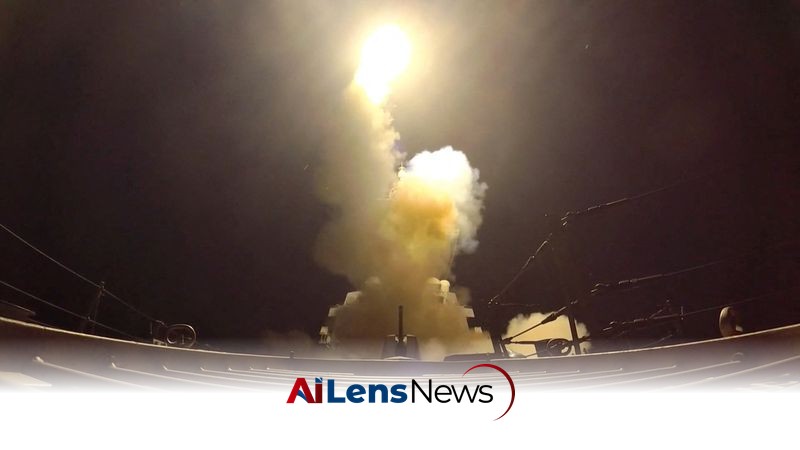


Recent US military strikes on Iranian defenses mark a significant escalation in the ongoing conflict, following the collapse of peace negotiations.
New Delhi, India Jul 13, 2026 ALN: The ongoing conflict between the United States and Iran has escalated significantly, with US forces recently conducting strikes against Iranian military installations. This intensification comes in the wake of unsuccessful peace negotiations, further complicating an already precarious situation in the Middle East. The strikes have drawn international attention and raised concerns about the potential for a broader conflict that could destabilize the region and impact global security.
The US military's recent operations have specifically targeted critical components of Iran's military infrastructure, including air defense systems, coastal radar sites, and missile and drone capabilities. Additionally, small vessels associated with Iranian naval forces have been struck. These military actions are part of a larger strategy aimed at neutralizing perceived threats from Iran, particularly in the strategically vital Strait of Hormuz. This narrow waterway is crucial for global oil shipments, with approximately one-fifth of the world's oil passing through it, making it a focal point for geopolitical tensions.
The US strikes are intended to diminish Iran's ability to project power in the Strait of Hormuz, where it has previously threatened to close the passage in response to US sanctions and military presence. The implications of these strikes extend beyond immediate military objectives; they signal a significant shift in the US approach to Iran, emphasizing a readiness to use force to protect its interests and those of its allies in the region.
The relationship between the United States and Iran has been characterized by decades of tension and conflict, rooted in historical grievances and divergent political ideologies. The origins of this animosity can be traced back to the 1979 Iranian Revolution, which led to the overthrow of the US-backed Shah of Iran and the establishment of the Islamic Republic of Iran. This shift fundamentally altered the dynamics of US-Iran relations, as the new Iranian government adopted an anti-American stance and sought to assert its influence across the Middle East.
Over the years, the US has viewed Iran as a destabilizing force in the region, particularly due to its support for militant groups and its contentious nuclear program. The imposition of economic sanctions, particularly following Iran's controversial nuclear activities, has further strained relations. In 2018, the situation escalated dramatically when the US unilaterally withdrew from the Joint Comprehensive Plan of Action (JCPOA), an agreement designed to limit Iran's nuclear capabilities in exchange for sanctions relief. This withdrawal led to the re-imposition of severe sanctions on Iran, crippling its economy and fueling widespread discontent among its population.
In response to these escalating tensions, the Iranian government has engaged in a series of provocative actions, including attacks on oil tankers in the Gulf and the downing of a US drone. These incidents have heightened the risk of direct military confrontation and underscored the fragility of the situation. The recent military actions reflect the deteriorating circumstances, particularly following the collapse of peace talks aimed at de-escalating hostilities. Analysts suggest that the failure of these negotiations has left both sides with limited options, leading to increased military engagement and the potential for miscalculation that could spiral into a larger conflict.
The international community has expressed deep concern over the escalating violence between the US and Iran. Many countries are calling for immediate dialogue to prevent further military actions that could destabilize the region. The United Nations has urged both parties to return to the negotiating table, emphasizing the critical need for a peaceful resolution to the ongoing conflict. Several European nations, which were part of the JCPOA negotiations, have been particularly vocal in their calls for diplomacy, fearing that continued hostilities could lead to a wider conflict that would impact global security and economic stability.
Regional powers, including Saudi Arabia and Israel, are closely monitoring the situation, as they have their own vested interests in countering Iranian influence in the Middle East. Historically, these countries have supported US actions against Iran, viewing it as a direct threat to their national security. However, there is also a palpable fear among these nations that an all-out conflict could spiral out of control, involving multiple state and non-state actors and potentially leading to a regional war. This apprehension underscores the complexity of the geopolitical landscape in the Middle East, where alliances and rivalries are often fluid and multifaceted.
The renewed military actions by the US could have significant implications for regional stability. The Strait of Hormuz is not only a critical chokepoint for oil transportation but also a vital artery for global trade. Any prolonged conflict in this area could disrupt oil supplies, leading to economic repercussions worldwide. A significant escalation in military activity could result in increased oil prices, adversely affecting economies that are heavily reliant on oil imports and potentially triggering a global economic downturn.
Furthermore, the situation could embolden other regional players, leading to a broader conflict. Iran's support for proxy groups in Iraq, Syria, Lebanon, and Yemen could result in retaliatory actions against US interests and allies in those regions. This interconnectedness of conflicts in the Middle East means that a military confrontation between the US and Iran could have far-reaching consequences, potentially igniting tensions in other conflict zones.
Additionally, the conflict has the potential to exacerbate sectarian tensions in the Middle East. Iran, a predominantly Shia Muslim nation, is often viewed with suspicion by Sunni-majority countries, particularly Saudi Arabia. Increased military engagement could lead to a resurgence of sectarian violence, further complicating the already volatile political landscape of the region. The fear of sectarian conflict is particularly acute given the historical context of the Iran-Saudi rivalry, which has often manifested in proxy wars across the region.
The humanitarian implications of an extended conflict are also concerning. Military strikes could lead to civilian casualties and displacement, exacerbating the already dire humanitarian situation in Iran and surrounding countries. The potential for a refugee crisis could strain resources in neighboring countries, which may already be dealing with the fallout from ongoing conflicts in Syria and Iraq. Humanitarian organizations have warned that any escalation in military action could further deteriorate living conditions for vulnerable populations, leading to increased suffering and instability.
As the US and Iran continue to engage in military actions, the prospects for peace appear increasingly bleak. The international community must act swiftly to mediate and find a resolution to prevent further escalation and ensure stability in the region. The failure of diplomacy thus far serves as a stark reminder of the complexities involved in addressing the US-Iran conflict, where historical grievances, regional rivalries, and international interests intersect. Without concerted efforts to foster dialogue, the risk of a wider conflict remains a pressing concern, with implications that extend far beyond the Middle East. The stakes are high, and the need for a comprehensive, diplomatic solution has never been more urgent.
To learn more about the latest developments in World News & International Affairs, stay updated with our exclusive reports and analyses on AiLensNews.

