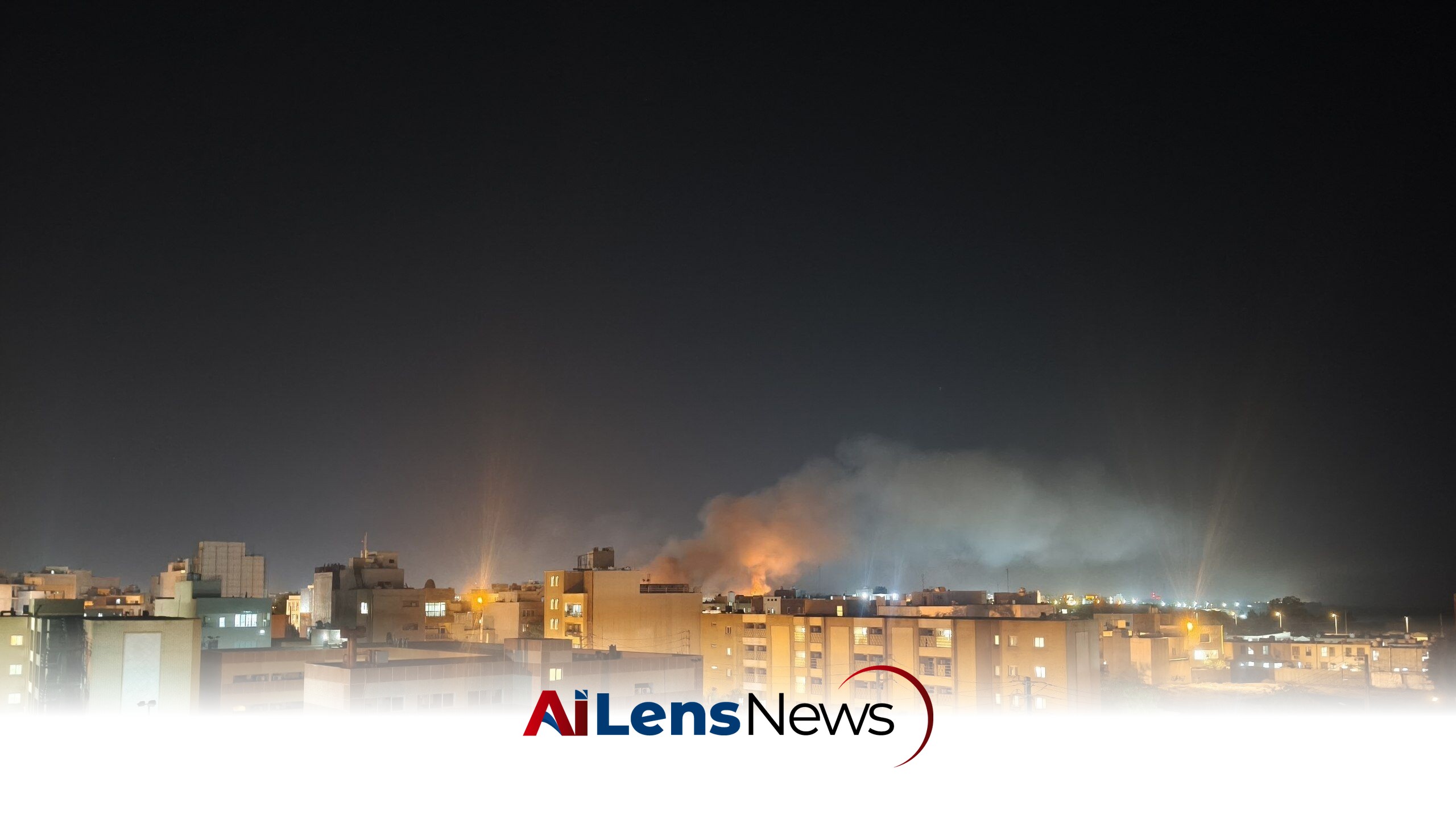


The US-Iran conflict intensifies with the death toll climbing to 60 as both nations engage in renewed military strikes targeting critical infrastructure.
New Delhi, India Jul 18, 2026 ALN: The death toll in the escalating US-Iran conflict continued to mount on Saturday, with Iran reporting 46 people killed in recent US strikes and the American military confirming 14 service members dead, as both sides launched fresh attacks on military and strategic infrastructure.
Early on Saturday, the US Central Command stated it had struck "surveillance sites, military logistics infrastructure, underground weapons storage, and maritime capabilities" in Iran. This marked a significant escalation in the ongoing conflict, which has seen a series of retaliatory strikes and counter-strikes between the two nations. The conflict has roots in decades of tension, particularly around issues related to nuclear proliferation, regional influence, and military presence.
The US-Iran conflict is not a new phenomenon; it has evolved over several decades, marked by a series of pivotal events that have strained relations. The 1979 Iranian Revolution, which led to the overthrow of the Shah and the establishment of the Islamic Republic, set the stage for decades of hostility. The subsequent hostage crisis, where 52 American diplomats and citizens were held for 444 days, further solidified animosities. Over the years, issues such as Iran's nuclear ambitions, its support for militant groups in the region, and its role in conflicts in Iraq, Syria, and Yemen have contributed to a complex geopolitical landscape.
Iranian state television reported that the US airstrikes targeted bridges in the southern province of Hormozgan, including in the coastal city of Bandar Khamir on the Strait of Hormuz. This strategic waterway is vital for global oil shipments, with a significant portion of the world's petroleum passing through it. The highway and railway bridge strikes appeared aimed at severing Bandar Abbas, Iran's main port, from road and rail links connecting it to the country's central region and the capital, Tehran. Disrupting these connections could have severe implications for Iran's economy, which is already under strain from international sanctions. The economic impact of these attacks could exacerbate existing tensions within Iran, as citizens grapple with inflation and unemployment exacerbated by both sanctions and military actions.
Overnight US strikes into Friday also brought down a tower at Iran's Chabahar port on the Gulf of Oman, a key trade route for neighboring, landlocked Afghanistan, according to the state-run IRNA news agency. The US military later confirmed the strike. Chabahar port has been a focal point for Iran's economic strategy, especially as it seeks to enhance its trade links with Afghanistan and India. The port is seen as a counter to Pakistan's Gwadar port, which is part of China's Belt and Road Initiative. The strategic importance of Chabahar cannot be understated, as it facilitates not only trade for Iran but also serves as a critical supply route for Afghanistan, which is facing its own economic challenges following the Taliban's return to power in 2021.
Iran claimed the tower was used to oversee commercial traffic entering the port. However, the US Central Command stated it was part of a maritime surveillance network operated by Iran's paramilitary Revolutionary Guard to "track and target" commercial vessels transiting the Strait of Hormuz. This highlights the complexity of the situation, where both sides interpret military actions through vastly different lenses. The Revolutionary Guard's role in Iran's military strategy has been a point of contention, as it operates independently of the regular military and has been involved in various regional conflicts, often supporting proxy groups that align with Iranian interests.
On Friday evening, Iranian state media reported explosions in several parts of the country, including central and southern Iran. Local authorities indicated that the US had carried out attacks around Ahvaz, without providing further details. IRNA also reported explosions in Lar, Yazd, and Sirik. These strikes are indicative of a broader strategy by the US to undermine Iran's military capabilities and deter its regional ambitions. The targeting of various military installations suggests an escalation of US objectives, moving beyond just deterrence to a more aggressive posture aimed at crippling Iran's ability to project power in the region.
For the first time since the US air campaign began, Iran acknowledged attacks on its power infrastructure. This is particularly concerning given the soaring temperatures in the region, which have placed immense pressure on energy supplies. On Friday, the Energy Ministry urged residents of southern provinces "experiencing extreme heat" to reduce electricity consumption, though it did not specify which facilities had been hit. The targeting of energy infrastructure could lead to widespread blackouts and exacerbate humanitarian conditions in Iran. The Iranian government may face increased public discontent as citizens struggle with both the heat and the implications of military strikes on essential services.
Meanwhile, Qatar has warned residents to take shelter as a barrage of Iranian missiles targeted the country. Explosions were heard overhead as air defense systems intercepted the incoming missiles on Friday. Qatar's Interior Ministry reported that a child was injured by falling debris. Iran also launched missile attacks targeting Bahrain and Kuwait early on Friday. The involvement of neighboring countries in the conflict raises the stakes and indicates a potential for broader regional instability. The missile strikes could be interpreted as a show of force by Iran, aimed at demonstrating its capabilities and resolve in the face of US military actions.
The region has endured days of escalating tit-for-tat attacks as the conflict increasingly centers on control of the Strait of Hormuz. This waterway is not only crucial for oil transport but also serves as a strategic military chokepoint. The ongoing hostilities threaten to disrupt maritime traffic, heightening tensions with international shipping routes and potentially leading to a wider confrontation. The Strait of Hormuz is often referred to as the world's most important oil transit chokepoint, with around 20% of global oil consumption passing through it daily. Any disruption to shipping in this area could have significant consequences for global oil prices and energy security.
With the collapse of an interim ceasefire, there is no clear end in sight to the war that the US and Israel began more than four months ago. The conflict has drawn in various regional players, each with their own interests and alliances, complicating the prospects for a diplomatic resolution. The international community watches closely, as further escalation could lead to a significant military confrontation that might involve additional nations. The role of international players, including Russia and China, who have historically supported Iran, adds another layer of complexity to the geopolitical landscape.
The humanitarian implications of the conflict are also dire. As military operations continue, civilian casualties and infrastructure damage are likely to rise. The Iranian government faces increasing pressure to respond decisively to US actions while managing domestic dissent and economic challenges. The conflict's ramifications extend beyond the immediate region, affecting global oil prices and international relations. Humanitarian organizations have raised alarms about the potential for a humanitarian crisis, particularly if civilian infrastructure continues to be targeted and if the conflict leads to a broader war.
In conclusion, the US-Iran conflict is at a critical juncture, with both sides demonstrating a willingness to escalate military operations. The recent strikes have resulted in significant casualties and destruction, raising concerns about the potential for a broader war. As tensions remain high, the need for diplomatic engagement becomes increasingly urgent to prevent further loss of life and stabilize the region. The international community must consider proactive measures to facilitate dialogue and de-escalation, as the consequences of continued military engagement could have far-reaching effects not only for the Middle East but for global stability as well.
To learn more about the latest developments in World News & International Affairs, stay updated with our exclusive reports and analyses on AiLensNews.

