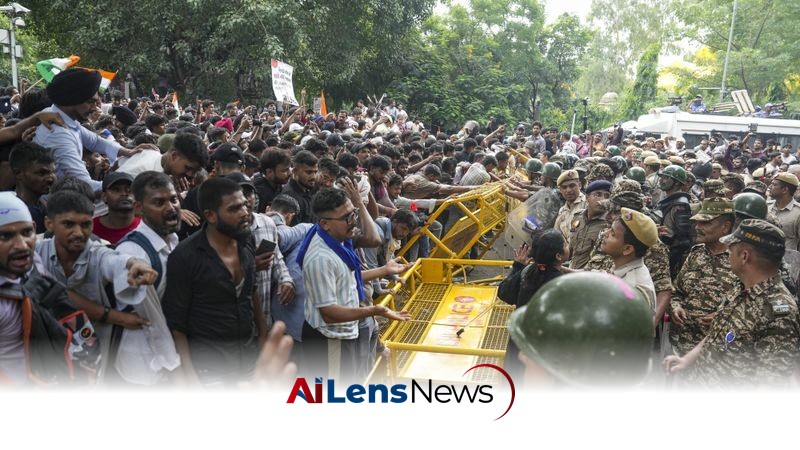


The United Nations has called on Indian authorities to allow peaceful protests without harassment, following significant demonstrations by the Cockroach Janta Party in New Delhi.
New Delhi, India Jul 26, 2026 ALN: The United Nations has expressed its concern regarding the handling of protests led by the Cockroach Janta Party (CJP) in New Delhi, urging Indian authorities to respect the right to peaceful assembly. The demonstrations, which garnered international attention, concluded on Friday amidst heightened tensions. The protests have become a focal point for discussions surrounding civil rights and governmental accountability in India, a nation with a rich history of democratic movements.
In a statement, the UN emphasized the importance of allowing citizens to express their dissent without fear of harassment or intimidation. The protests were marked by significant participation, reflecting widespread public sentiment on various issues, including economic inequality, social justice, and political transparency. These issues resonate deeply within the Indian populace, particularly among marginalized communities who feel that their voices are often overlooked by those in power.
The CJP, known for its advocacy on social justice and political accountability, organized the protests to voice concerns over government policies and actions perceived as detrimental to democratic values. The demonstrations attracted a diverse group of participants, including students, activists, and civil society members. Historically, India has seen a plethora of movements aimed at challenging the status quo, with the CJP's recent activities being a continuation of this tradition. The group has positioned itself as a champion for those who believe that the government has strayed from its democratic obligations.
The specific triggers for these protests included recent legislative measures that many believe undermine civil liberties and democratic processes. Issues such as restrictions on freedom of speech, the curtailing of dissent through legal means, and the increasing militarization of public space have raised alarm among citizens and observers alike. The protests not only served as a platform for voicing discontent but also as a reminder of the importance of civic engagement in a healthy democracy.
The scale of the protests and the response from law enforcement drew the attention of international observers, including human rights organizations. Reports indicated instances of police barricading and confrontations with demonstrators, raising alarms about the treatment of peaceful protesters. The heavy-handed approach by authorities has sparked debates about the balance between maintaining public order and protecting the rights of individuals to assemble and express their views. In recent years, similar situations have arisen globally, where governments have faced criticism for their responses to protests, often leading to discussions about the erosion of democratic freedoms.
As protests unfolded in New Delhi, images and videos circulated on social media, showcasing both the passionate expressions of dissent from the demonstrators and the aggressive tactics employed by law enforcement. This juxtaposition has drawn parallels to other global movements, highlighting a growing trend in which governments are perceived to prioritize order over civil rights. The international community's response to these events is crucial, as it can influence the actions of governments and the narratives surrounding human rights.
The UN's call for action comes at a time when the right to protest is under scrutiny in various parts of the world. The organization reiterated that peaceful assembly is a fundamental human right and should be protected by governments. This statement aligns with broader international standards established by various human rights treaties, which India is a signatory to, emphasizing the necessity for nations to uphold the principles of freedom of expression and assembly.
In light of the protests, the UN's intervention serves not only as a reminder of the obligations that governments have towards their citizens but also as a call for collective action from the global community. The international body has consistently advocated for the protection of human rights, and its involvement in the CJP protests underscores the significance of localized movements in the broader context of global human rights advocacy.
In response to the UN's statement, Indian authorities have reiterated their commitment to maintaining public order while also respecting citizens' rights. However, critics argue that recent actions suggest a growing intolerance for dissent. The government has defended its approach, claiming that measures taken during the protests were necessary to prevent violence and maintain law and order. This justification, however, has been met with skepticism by many who argue that the state's response was disproportionate to the nature of the protests.
The tension between the government's narrative and the experiences of protesters raises critical questions about accountability and the future of civil liberties in India. As the state grapples with the challenges of governance in a diverse and populous nation, the balance between security and freedom remains a contentious issue.
The UN's intervention highlights the ongoing struggle for civil liberties in India, particularly concerning the right to protest. As the CJP protests conclude, the focus now shifts to how the government will address these concerns moving forward. The implications of this situation extend beyond the immediate context of the protests, as they reflect broader societal tensions and the evolving landscape of civic engagement in India.
In the coming weeks, it will be crucial to observe how the Indian government responds to both the domestic and international calls for greater respect for human rights. The outcome of this situation may set important precedents for future protests and the overall health of democracy in India. As citizens continue to advocate for their rights, the role of international bodies like the UN will remain vital in holding governments accountable and ensuring that democratic principles are upheld.
To learn more about the latest developments in Politics, stay updated with our exclusive reports and analyses on AiLensNews.

