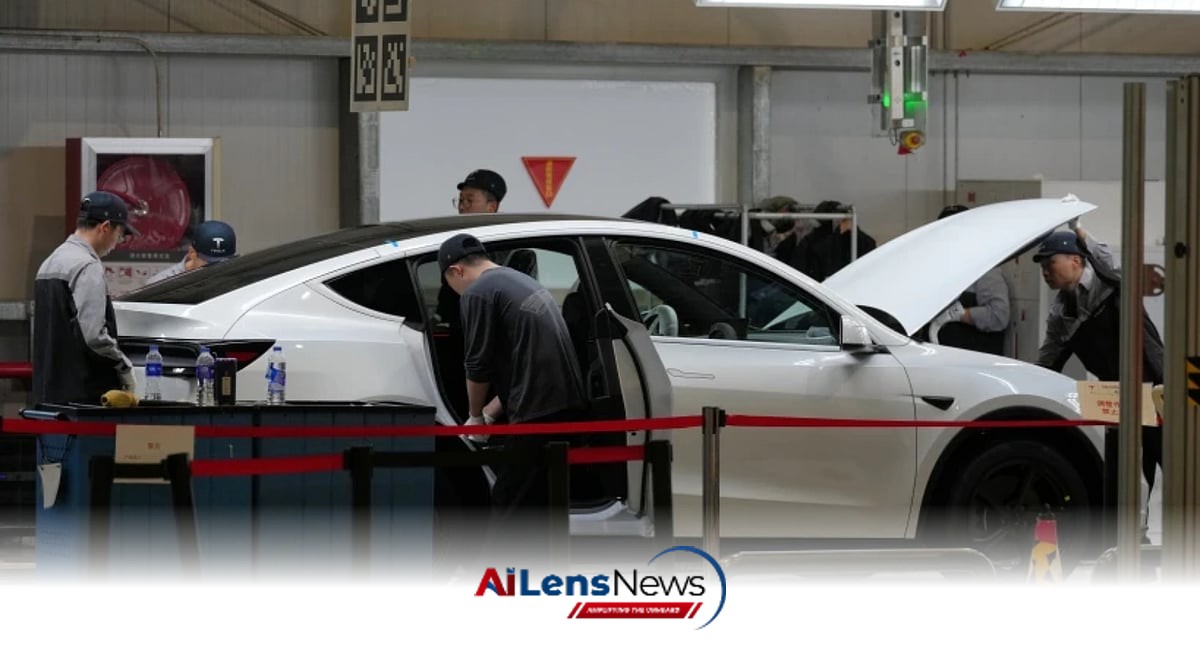



Tesla is recalling approximately 2.98 million vehicles in China over safety concerns related to door handles, part of a larger recall affecting over 4 million cars.
New Delhi, India Aug 22, 2026 ALN: Tesla and other Chinese carmakers are making a major recall of more than 4 million vehicles over safety concerns mostly related to their door handles, according to Chinese authorities on Friday.
The US carmaker is recalling about 2.98 million China-made and imported electric vehicles (EVs) including Model 3, Model Y, Model X, and Model S over door handle safety risks, according to China's State Administration for Market Regulation. This recall marks one of the largest in recent memory and underscores the growing emphasis on vehicle safety, particularly in the rapidly expanding EV market.
The recall, the largest this year according to Chinese media, comes a few months after Chinese authorities announced in February that starting next year, they would be banning hidden car door handles—a design feature commonly found on Tesla electric vehicles and many Chinese EV models. This regulatory shift is part of a broader initiative to enhance vehicle safety standards in the country, particularly as the number of electric vehicles on the roads continues to rise.
China has stepped up scrutiny recently on hidden, or flush, car door handles following several EV accidents in the country and elsewhere, where the cars' hidden electronic doors failed, trapping occupants inside. These incidents have raised alarm among safety advocates and regulators, prompting a reevaluation of design choices that prioritize aesthetics over functionality and safety.
In a notice on the Chinese regulator's website, officials cited specific safety risks associated with these door handles. In extreme situations, such as a severe collision that causes an electrical system failure, the car handles could hinder users from quickly opening the doors to escape or prevent rescuers outside the car from gaining access. This potential for entrapment in emergency situations has prompted authorities to take decisive action.
Some experts in the automotive industry have echoed the concerns raised by regulators, emphasizing that automakers should prioritize safety over design. Cui Dongshu, head of the China Passenger Car Association, characterized the recall as “an inevitable step” in the development of the electric vehicle industry. He stated that automakers are “being responsible” by moving toward a more reliable, “safety-first” approach. This sentiment reflects a growing recognition that as the automotive landscape evolves, so too must the standards by which vehicles are designed and manufactured.
“This represents, in part, the growing pains of the industry. At the same time, however, this move signifies a policy-driven safety upgrade,” said Cui. Such statements highlight the intersection of regulatory action and industry evolution, suggesting that the push for safety is not merely a reaction to incidents but a proactive stance toward ensuring the well-being of consumers.
Tesla will perform software updates on the vehicles to mitigate risks associated with the door handle design, as noted in the regulator's announcement. This approach indicates a commitment to resolving safety issues through technological means, rather than solely relying on physical modifications to vehicle design. However, Tesla did not immediately respond to a request for comment on Friday, which raises questions about the company's communication strategies in the face of such significant operational challenges.
In addition to Tesla, other manufacturers are also taking steps to address similar safety concerns. Xiaomi, the Beijing-based Chinese technology giant, is recalling more than 390,000 vehicles, while Hangzhou-based Leapmotor is recalling over 370,000 cars. Other Chinese carmakers, including Geely and XPENG, are also recalling some vehicles for issues related to their car door handles. The reasons given in each case are largely similar, underscoring a systemic issue within the industry regarding the safety of door handle mechanisms.
A report published by the People's Daily, the official newspaper of China's ruling Communist Party, stated that the large-scale recall “serves as a unified safety upgrade” for existing vehicle models ahead of the 2027 implementation of the ban on hidden car door handles. This proactive measure reflects the government's commitment to enhancing vehicle safety standards and ensuring that manufacturers adhere to these new regulations.
“For the rapidly evolving NEV (new energy vehicle) industry, competition should be defined not only by the pace of technological innovation but also by the high standards set for safety,” the newspaper emphasized. This statement encapsulates the dual focus of industry stakeholders on innovation and safety, suggesting that the future of the automotive market will hinge on the ability of manufacturers to balance these competing priorities.
The implications of this recall extend beyond immediate safety concerns. As the electric vehicle market continues to grow, the importance of regulatory compliance and consumer trust will become increasingly critical. Companies that fail to prioritize safety may find themselves at a competitive disadvantage, while those that embrace rigorous safety standards could enhance their reputation and market position in an increasingly crowded field.
Furthermore, this recall may serve as a catalyst for broader changes within the automotive industry, prompting manufacturers to reevaluate their design philosophies and prioritize safety in their product development processes. As consumers become more aware of safety issues and demand higher standards, automakers will need to respond to these expectations to maintain their market share and brand loyalty.
In conclusion, the recent recall by Tesla and other manufacturers highlights a significant moment in the evolution of the electric vehicle industry. As safety concerns take center stage, the response from both regulators and manufacturers will shape the future of automotive design and consumer trust. The focus on safety, coupled with the rapid pace of technological advancement, will define the next chapter in the history of the automotive industry.
To learn more about the latest developments in Transport & Mobility, stay updated with our exclusive reports and analyses on AILensNews.

